
About Otto Latsis
Lived 1934 – 2005 (aged 71). Otto Latsis was a Russian journalist, politician, opinion journalist and economist.
Otto Rudolfovich Latsis (, ; 22 June 1934 – 3 November 2005) was a Soviet and Russian journalist, of Latvian descent.
Journalist career
After graduating from Moscow State University in 1956, Otto Latsis began working in a local newspaper, "Soviet Sakhalin". His subsequent work at the newspaper "Экономическая Газета" (The Economic Gazette), began build Latsis' reputation as a prominent journalist. At the end of the Khrushchev Thaw, he worked at Izvestia, where he advocated for the loosening of censorship and sought to make the newspaper popular among the intelligentsia.
His liberal views proved unpopular with authorities. Latsis was sent into a so-called "exile of honour", that is, to work in a place where he would not have a platform to spread his ideas. He worked in Prague for a magazine called "Problems of Peace and Socialism", later at the Moscow Institute of the Economy of the World Social System.
From 1987 to 1991 he returned to occupy an important position in the Soviet magazine "Communist"in theory, a magazine intended to be a vehicle for promulgating communist propaganda, but which under Latsis spread the idea of perestroika.
After 1991, he returned to work at Izvestia. In 1996, due to the federal handling of the Kizlyar–Pervomayskoye hostage crisis, he left the Russian Presidential Advisory Board. In 1997, because of a conflict with its new management, he left it to found his own newspaper, "New Izvestia." He subsequently moved to "Russkii Kurier," and lastly, to "Moskovskiye Novosti."
Latsis also wrote and presented papers at academic symposia.
Activities not related to journalism
Under Mikhail Gorbachev, he was a member of the Central Committee of the Communist Party. Under Boris Yeltsin, he was one of his advice councilors. He was a member of the jury of the award "For Journalism as Deed" (За журналистику как поступок). He was a member of the public commission investigating Russian apartment bombings.
Death
On September 10. 2005, while Latsis was driving his Peugeot and turning left at a crossroad, a jeep crashed into his car at a high speed. Latsis and his grandson, as well as the woman who was driving the jeep and her two children, were hospitalized for treatment. Latsis lingered in a coma for more than one and a half months, but finally succumbed to his injuries. He died on November 3, 2005, in Burdenko Main Military Clinical Hospital, Moscow.
Opinions on Otto Latsis
Don’t just read it —
keep it.
Full-length biographies made to live with: read them, listen on the way to work, watch them tonight.
- E-book
- Audio
- Video
Instant download · yours to keep · every purchase keeps this site free
Important facts
People in Otto Latsis's life
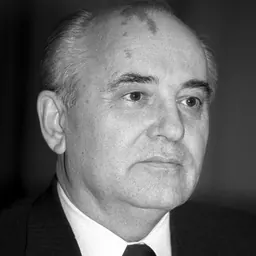
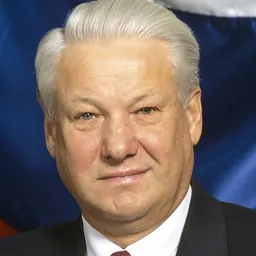
Named in this biography and alive at the same time
Related people
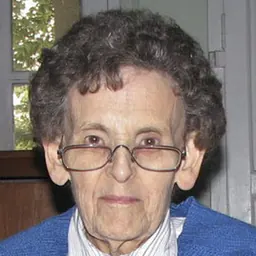
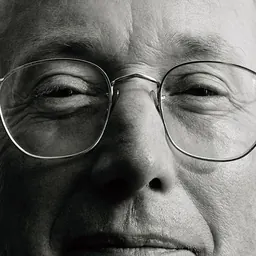
Same field, nearest in time


Contemporaries
People whose lives overlapped Otto Latsis's



Frequently asked questions
Who was Otto Latsis?
Russian journalist (1934–2005)
When was Otto Latsis born?
Otto Latsis was born on 22 June 1934 in Moscow.
When did Otto Latsis die?
Otto Latsis died on 3 November 2005 in Moscow.
What was Otto Latsis's occupation?
Otto Latsis was a journalist, politician, opinion journalist and economist.
What nationality was Otto Latsis?
Otto Latsis was Russian.
Sources & further reading
Cite this page
APA: Biography.guide. (2026). Otto Latsis. https://biography.guide/otto-latsis/
MLA: "Otto Latsis." Biography.guide, https://biography.guide/otto-latsis/.
Chicago: "Otto Latsis." Biography.guide. https://biography.guide/otto-latsis/.
Data last updated: 2026-09-20 · Spot an error? Report a correction.
Page generated 2026-09-27 05:05 UTC