
About Oswaldo Payá
Lived 1952 – 2012 (aged 60). Oswaldo Payá was a Spanish and Cuban politician, human rights defender, founder and dissident, known for Cuban Communist Party and Varela Project.
Early life Oswaldo Payá was born on 29 February 1952 in Cerro, Havana. The fifth of seven children, he was brought up as a Roman Catholic The school was later closed. He was offered an opportunity to leave Cuba in the 1980 Mariel boatlift, but chose to remain in Cuba and work for change. He also began a magazine for Catholics titled People of God (Pueblo de Dios), calling for Christians to lead the struggle for human rights. However, the magazine was shut down the following year by Cuba's bishops under government pressure. Payá attempted to run for the National Assembly of People's Power (NAPP) in 1992, but was not allowed to stand. the Project took advantage of a clause in the Cuban Constitution requiring a national referendum to be held if 11,000 signatures are gathered.
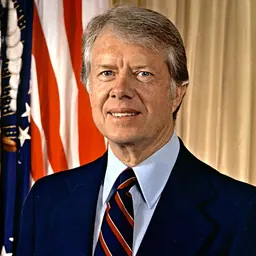
In May 2002, Payá presented NAPP with 11,020 signatures calling for a referendum on safeguarding freedom of speech and assembly, Former U.S. president Jimmy Carter endorsed the petition when granted a chance to speak on Cuban television, bringing Payá's efforts to the attention of a wide Cuban audience. Cuban President Fidel Castro described the petition drive as a U.S.-backed conspiracy to overthrow his government.
According to the Los Angeles Times, the petition drive was "the biggest nonviolent campaign to change the system the elder Castro established after the 1959 Cuban revolution", giving Payá an international reputation as a leading dissident. Fellow dissident Rene Gomez Manzano, on the other hand, was critical of the Project, stating that appeals to the Communist-Party-controlled NAPP were futile; similarly, other Cuban exiles criticized the initiative for what they considered its implicit acceptance of the legitimacy of the Castro regime and its constitution.
Later that year, Payá's efforts were recognized by the European Parliament, which awarded him its Sakharov Prize for Freedom of Thought, The Varela Project progress was blocked when the government launched its own petition drive to declare the socialist state "irrevocable".
Later activism During Castro's illness, which culminated in his 2008 resignation, Payá continued to criticize the Cuban government as it transferred power to Castro's brother Raúl. and delivered a petition asking that the Cuban people be granted freedom of travel.
In the years before Payá's death, his influence was said to be waning, and attention shifted to younger activists such as blogger Yoani Sanchez. However, many of the younger generation of dissidents cited him as a role model and expressed grief at his death.
He also maintained his distance from Cuban political groups based in the U.S.
Opposition to government cooperation In 2005, he also feuded with democracy activist Marta Beatriz Roque, accusing her of collaborating with security forces to provide justification for a further crackdown. Although his political activity was tolerated and on a few occasions he was allowed to travel abroad, Payá reported that both he and his family were subject to routine intimidation: "I have been told that I am going to be killed before the regime is over but I am not going to run away." All four were taken to Professor Carlos Manuel Clinical Surgery Hospital in Bayamo, though Payá was dead on arrival. In late February 2014, the High Court of Spain upheld the decision of Judge Eloy Velasco, taken in September 2013, not to accept the complaint filed by the family of Oswaldo Payá against two senior Cuban military officers for the death of Payá. Carromero went on trial in Cuba, where he was convicted of non-planned murder.
At a press conference arranged by Cuban authorities on 30 July, Modig and Carromero stated that the crash was an accident and no other car was involved. Speaking in 2013 to the Washington Post, Carromero denied this version of events, stating that he had been drugged and threatened by Cuban authorities who had forced him to make a false statement. He stated instead that the car had been rammed by another vehicle with Cuban government license plates, causing the fatal crash.
Payá's daughter Rosa María stated that her father died after the rental car in which he was traveling was rammed several times by another car. The MCL stated that "the circumstances of these deaths have not been cleared up and are open to hypothesis" and demanded a "transparent" inquiry into the accident. On 27 July, the Cuban Interior Ministry forwarded an official report to foreign press, blaming driver error and quoting Carromero as saying that the car had skidded off the road due to poor road conditions and bad weather. Payá's widow rejected the report, stating that the crash was not an accident and that a government report could not be trusted.
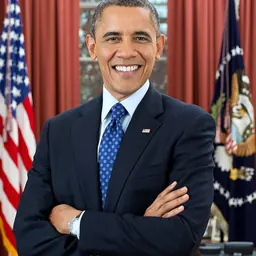
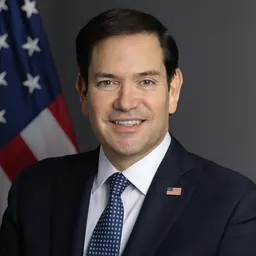
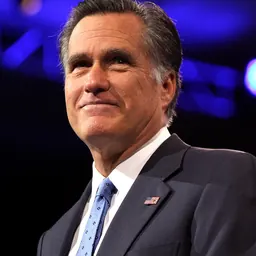
U.S. President Barack Obama released a statement praising Payá as "a tireless champion for greater civic and human rights in Cuba". U.S. Senator Marco Rubio and Republican presidential candidate Mitt Romney called for an independent investigation into the crash, imploring the international community to "demand that the facts concerning Paya's death be accurately determined and that the surviving witnesses be protected". The European Union issued a statement recognizing Payá's dedication "to the cause of democracy and human rights in Cuba". Elizardo Sanchez, president of the Cuban Commission for Human Rights, stated that "This is tragic for the family and the human rights and pro-democracy movement in Cuba ... Payá was considered the most notable political leader of the Cuban opposition." Ladies in White president Berta Soler described the death as "a terrible blow". including Félix Navarro Rodríguez and Guillermo Fariñas. A scuffle also broke out between activists and state security agents at the funeral itself. Amnesty International and the U.S. criticized the arrests, with the White House describing them as "a stark demonstration of the climate of repression in Cuba." The dissidents arrested in Payá's funerals were freed the following day.
In June 2023, the Inter-American Commission of Human Rights (IACHR) ruled that the Cuban state was responsible for the murder of Oswaldo Payá and Harold Cepero, concluding that "there were serious and sufficient indications to conclude that State agents directly participated in the deaths of Payá and Cepero", as well as responsible for violations of the due process right to and judicial guarantees of Ángel Carromero.
Awards and recognition The Homo Homini Award of People in Need, a Czech NGO, 1999 The Sakharov Prize for Freedom of Thought of the European Parliament, 2002 W. Averell Harriman Democracy Award from U.S. National Democratic Institute for International Affairs, 2003 Nominated for the Nobel Peace Prize by the former Czech President Václav Havel, with fellow Cuban dissidents Raul Rivero and Óscar Elías Biscet
Don’t just read it —
keep it.
Full-length biographies made to live with: read them, listen on the way to work, watch them tonight.
- E-book
- Audio
- Video
Instant download · yours to keep · every purchase keeps this site free
Important facts
Family & relationships
People in Oswaldo Payá's life
Named in this biography and alive at the same time


Related people
Same field, nearest in time




Contemporaries
People whose lives overlapped Oswaldo Payá's

Frequently asked questions
Who was Oswaldo Payá?
Cuban activist (1952-2012)
When was Oswaldo Payá born?
Oswaldo Payá was born on 29 February 1952 in Cerro.
When did Oswaldo Payá die?
Oswaldo Payá died on 22 July 2012 in Bayamo.
What was Oswaldo Payá's occupation?
Oswaldo Payá was a politician, human rights defender, founder and dissident.
What was Oswaldo Payá known for?
Oswaldo Payá was known for Cuban Communist Party and Varela Project.
What nationality was Oswaldo Payá?
Oswaldo Payá was Spanish and Cuban.
Sources & further reading
Cite this page
APA: Biography.guide. (2026). Oswaldo Payá. https://biography.guide/oswaldo-paya/
MLA: "Oswaldo Payá." Biography.guide, https://biography.guide/oswaldo-paya/.
Chicago: "Oswaldo Payá." Biography.guide. https://biography.guide/oswaldo-paya/.
Data last updated: 2026-09-22 · Spot an error? Report a correction.
Page generated 2026-09-27 05:09 UTC