
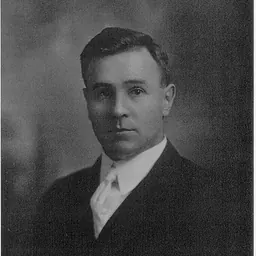
Osvaldo Zubeldía
Argentine footballer
About Osvaldo Zubeldía
Lived 1927 – 1982 (aged 54). Osvaldo Zubeldía was an Argentine association football player and association football coach.
Osvaldo Juan Zubeldía (24 June 1927 – 17 January 1982) was an Argentine football player and coach.
Playing career
Zubeldía had a respectable playing career with Vélez Sársfield, Boca Juniors, Atlanta and Banfield and the Argentina national football team. He was known as an intelligent player who was always well positioned on the field. His legacy, however, would come from his career as a manager.
Managerial career Early career
His managing career started at Atlanta between 1961 and 1963, he led the team to two respectable finishes in the league. He then had an unsuccessful stint on the managing team of the Argentina national team in 1965.
Estudiantes
His managerial career took off with Estudiantes de La Plata. He was hired by the club in 1965 to help the team stave off relegation; he combined many prospects from Estudiantes' la tercera que mata ("the killer juveniles") with a small number of outside talent, and built one of the most successful teams in the history of Argentine football.
The first championship of the so-called "Golden Era" came in 1967, when Estudiantes became the first "small" team to win an Argentine championship. The team came back from three goals down to beat Platense in the semifinal 4–3, then took the crown with a convincing 3–0 victory over Racing Club.
Estudiantes then took second place in the Nacional championship, qualifying for the 1968 Copa Libertadores, which Estudiantes won after defeating Brazilian side Palmeiras.
In that year's Intercontinental Cup, Estudiantes defeated Bobby Charlton's Manchester United 1–0 in Buenos Aires, and achieved a 1–1 tie at Old Trafford on 16 October 1968. The Intercontinental title remains the highest achievement in Estudiantes' history.
The team would go on to win the Copa Libertadores twice more, in 1969 against Nacional from Uruguay and in 1970 against Peñarol also from Uruguay.
Estudiantes lost their Intercontinental Cup finals to A.C. Milan and Feyenoord, respectively, but they did win the less prestigious Copa Interamericana in 1969.
1974–1982 In 1974, Zubeldía coached the San Lorenzo de Almagro team that won the Nacional title. He also won two Colombian League titles with Atlético Nacional in 1976 and 1981.
On 17 January 1982 Zubeldía died of a heart attack in Medellín, Colombia at the age of 54, while setting a bet on a horse race.
Legacy Zubeldía's legacy was carried to fruition by the key tactical player of his Estudiantes, Carlos Bilardo, who went on to become one of the most successful coaches in Argentine history. Bilardo dedicated to his mentor both the 1982 Metropolitano title won by Estudiantes and the 1986 FIFA World Cup title won by Argentina.
Don’t just read it —
keep it.
Full-length biographies made to live with: read them, listen on the way to work, watch them tonight.
- E-book
- Audio
- Video
Instant download · yours to keep · every purchase keeps this site free
Important facts
People in Osvaldo Zubeldía's life
Named in this biography and alive at the same time




Related people
Same field, nearest in time





Contemporaries
People whose lives overlapped Osvaldo Zubeldía's


Frequently asked questions
Who was Osvaldo Zubeldía?
Argentine footballer (1927-1982)
When was Osvaldo Zubeldía born?
Osvaldo Zubeldía was born on 24 June 1927 in Junín.
When did Osvaldo Zubeldía die?
Osvaldo Zubeldía died on 17 January 1982 in Medellín.
What was Osvaldo Zubeldía's occupation?
Osvaldo Zubeldía was an association football player and association football coach.
What nationality was Osvaldo Zubeldía?
Osvaldo Zubeldía was Argentine.
Sources & further reading
Cite this page
APA: Biography.guide. (2026). Osvaldo Zubeldía. https://biography.guide/osvaldo-zubeldia/
MLA: "Osvaldo Zubeldía." Biography.guide, https://biography.guide/osvaldo-zubeldia/.
Chicago: "Osvaldo Zubeldía." Biography.guide. https://biography.guide/osvaldo-zubeldia/.
Data last updated: 2026-09-20 · Spot an error? Report a correction.
Page generated 2026-09-27 05:19 UTC