
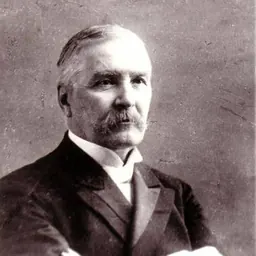
Ostap Veresai
Ukrainian kobzar and folk musician
About Ostap Veresai
Lived 1803 – 1890 (aged 86–87). Ostap Veresai was a Russian kobzar, folk musician and traditional folk singer.
Ostap Mykytovych Veresai (1803–April 1890) was a renowned minstrel and kobzar from the Poltava Governorate (now Chernihiv oblast) of the Russian Empire (now Ukraine). He helped to popularize kobzar art both within Ukraine and beyond. He is noted for influencing both scholarly and popular approaches to minstrelsy.
Biography Childhood Veresai was born in 1803 in the village of Kaliuzhentsi, Pryluky county, Poltava Governorate into a family of musicians. He was the only child of a serf family. His father, Mykyta Veresai, was a congenitally blind violinist. At age 4, Veresai fell ill and lost his sight.
From an early age, Veresai was interested in music and the bandura. He was quoted later in life: "...when a kobzar came to my father's house, I would stand near him, and I do not know who was more excited. The kobzar would suggest: 'You Mykyto give this boy to learn, maybe he becomes a kobzar.'"
At age 15, Veresai's father apprenticed him to a kobzar in the village of Berezivka, where Veresai spent only one week. After spending four years at home, Veresai again attempted to undertake studies under a kobzar; he and a neighbor traveled to the market in Romen, where many kobzars would gather. There, Veresai met the kobzar Yefym Andriyshevsky and became formally apprenticed to him. For several months, the apprenticeship was successful with Veresai learning much from his mentor.
After Andriyshevsky's death, Veresai was apprenticed to Semen Koshoviy from the nearby village of Holinka. Veresai spent 9 months apprenticed to Koshoviy, who he found to be strict and exploitative. Veresai thus spent a total of nine months in apprenticeship instead of the traditional three years. It was covered by the London magazine Atheneum, which published both a summary of the conference as well as an article by the folklorist and writer William Ralston Shedden-Ralston, which compared Veresai to the rhapsodes of ancient Greece. French conference delegate Alfred Rambaud also wrote of Veresai's performance in an article titled "Ukraine and its historic songs": One wonderful summer evening we gathered in the University garden to listen to the kobzar; he was seated on a stool, and the listeners, whose numbers continued to grow, sat down around him. One lamp, hiding in the greenery, lit up the face of the kobzar, whose voice sounded clearly like the song of a nightingale ... When Ostap performed one of his humorous songs, it is worth while looking at the way he would dance to the accompaniment of the music, while playing difficult notes on the bandura. The same can be said about the dancing motive, to which he would beat time with his foot; at this time one could take him as a young kozak, watching how he would make knee bends as if doing kozak dances ... His life is different from those Homeric tales. The villager Ostap Veresai is a direct descendant of the ancient Slavonic singers, he is the legal inheritor of the Boyan and other nightingales of the past...
In February 1875, Veresai was invited by the ethnographic sector of the Russian Geographical Society to Saint Petersburg. There, he performed at meetings of the ethnographic sector and the painters' guild; at a breakfast organized in memory of Taras Shevchenko; and at the Winter Palace before Princes Sergey and Pavel Alexandrov. Veresai was received by full halls and positive reviews by Saint Petersburg press outlets. The newspaper Novosti wrote: The singer—a seventy-year-old man, is able to capture the listeners sympathy, and his singing, which is marked by deep artistry and much feeling leaves a deep impression with the listeners. According to the experts, Veresai as a singer, was born with a talent and through his dumas would bring to life ancient Ukraine, with numerous reminiscences of the past
Veresai's popular success in Saint Petersburg allowed him to pay for the construction of a larger house for his family of 15 in Sokyryntsi. Like Hnat Honcharenko, Veresai was persecuted in Russia as a propagator of Ukrainian interest and historical memory.
Later life and death In the autumn of 1881 and spring of 1882, Veresai traveled to Kiev, where the folklorist K. Ukhach-Oxorovych made a complete recording of his repertoire; in comparison with that made by Pavlo Chubinsky in 1873, it showed that the 70-year-old kobzar was able to expand his repertoire to include three additional dumy. At the beginning of the 1880s, Veresai had in his repertoire nine dumy: Storm on the Black Sea The recruitment of the Kozak The Escape of the three brothers from Oziv The poor widow and her three sons The Hawk and the Hawklette Fedir the one without Kin The Captive's lament, son of a widow Ivan Konovchenko
Veresai died in April 1890 at the age of 87 in Sokyryntsi.
Cultural impact Through his performances, Veresai inspired the creation of the genre known as dumky (small dumy). Following his performances in Saint Petersburg, Eastern European composers such as Antonín Dvořák, Peter Tchaikovsky, Modest Mussorgsky, Leoš Janáček, Bohuslav Martinů, Mykola Lysenko, Vasyl Barvinsky, Mily Balakirev, Maria Zawadsky, Vladislav Zaremba, and Sylvia Zaremba wrote many dumky.
Veresai's performances in Saint Petersburg may have influenced the creation of the Ems ukaz in 1876, which banned the use of the Ukrainian language in print. Paragraph 3 specifically banned the performance of vocal works in the Ukrainian language on stage, which may have been a direct response to Lysenko and Veresai's lectures and performances. Stage performances by kobzars were only allowed again in 1902 after the XIIth Archeological conference.
Books Mishalow, V. and M. - Ukrains'ki kobzari-bandurysty – Sydney, Australia, 1986
Don’t just read it —
keep it.
Full-length biographies made to live with: read them, listen on the way to work, watch them tonight.
- E-book
- Audio
- Video
Instant download · yours to keep · every purchase keeps this site free
Important facts
People in Ostap Veresai's life
Named in this biography and alive at the same time






Related people
Same field, nearest in time
Contemporaries
People whose lives overlapped Ostap Veresai's





Frequently asked questions
Who was Ostap Veresai?
Ukrainian kobzar and folk musician (1803–1890)
When was Ostap Veresai born?
Ostap Veresai was born in 1803 in Kaliuzhyntsi.
When did Ostap Veresai die?
Ostap Veresai died in 1890 in Sokyryntsi.
What was Ostap Veresai's occupation?
Ostap Veresai was a kobzar, folk musician and traditional folk singer.
What nationality was Ostap Veresai?
Ostap Veresai was Russian.
Sources & further reading
Cite this page
APA: Biography.guide. (2026). Ostap Veresai. https://biography.guide/ostap-veresai/
MLA: "Ostap Veresai." Biography.guide, https://biography.guide/ostap-veresai/.
Chicago: "Ostap Veresai." Biography.guide. https://biography.guide/ostap-veresai/.
Data last updated: 2026-09-20 · Spot an error? Report a correction.
Page generated 2026-09-27 05:33 UTC