
About Oskar Vierling
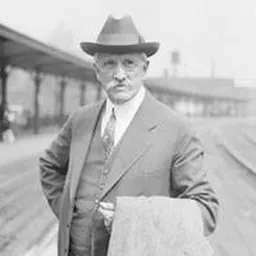
Lived 1904 – 1986 (aged 81–82). Oskar Vierling was a German physicist, university teacher, entrepreneur and inventor.
Oskar Walther Vierling (born 24 January 1904 in Straubing, died 1986) was a German physicist, inventor, entrepreneur and professor in high-frequency technology. Vierling was an important inventor and engineer of electronic and electro-acoustic instruments between the 1930s and 1950s.
Life
Oskar Vierling attended school in Regensburg, and graduated with the Obersekundareife. In 1925 he graduated as an engineer at the Technische Hochschule Nürnberg in Nuremberg in Nuremberg, and later attending the Telegrafen technische Reichsamt in Berlin. Vierling then took a position at the Heinrich Hertz Institute. Fritz Sennheiser was his student and joined him in the founding of the high-frequency institute of the University of Hannover.
Vierling was married and had two sons. The children took over the kind of Vierling Group.
Career
In 1929, Vierling along with Walther Nernst, created the Neo-Bechstein Electric Grand piano design, that divided the strings into groups of five, with their own electrostatic pickups. With amplification the strings were thinner and shorter. The Neo-Bechstein piano was eventually manufactured by the C. Bechstein piano factory company in 1932 after completion of development, but proved a commercial disappointment due to financial difficulties in the Bechstein company.
In 1925, Vierling was promoted to Phd with a thesis titled, The Electroacoustic Piano. In 1938, Vierling was promoted to a full professorship at the Technical University of Hannover, and founded an Institute for the study of high-frequency technology and electro-acoustics.
Wehrmacht In 1941, he was commissioned by the Wehrmacht to create the Vierling Group. For this high frequency and electroacoustic armament research, Vierling built the research laboratory Feuerstein Castle in Ebermannstadt, which was located centrally in Germany and disguised as a Franconian castle and hospital. Vierling also worked on the improvement of the encryption machine, Lorenz SZ 42. Vierling later worked on the testing of the acoustic ignition of mines, and collaborated in the invention of an anti-radar coating for submarines, with the code name chimney sweep. In addition, Vierling and his team developed radios and electric calculators.
Vierling had an ambivalent relationship to Nazism. On the one hand he was a member of the Nazi party, on the other hand he worked largely independently and was negative in the party apparatus as he was not regularly present at party meetings.
After 1945 During the post war period, Vierling made his intelligence technology, including Covert listening device, available for use to the Gehlen Organization, that enabled his group to survive. In July 1950, the group working on the Hazardo device, moved in secrecy to Kransberg Castle to continue work. In October 1950, the Hazardo produced the first keyhole strip. With the completion of the device, a separate four-person working group called Schlüsselmittelherstllung was formed to exploit the device.
Between 1949 and 1955 Vierling taught as a professor of physics at the philosophical Theological College at the University of Bamberg.
The first test of the Deutsche Bundespost with transistors and later on microprocessor-based systems for mail delivery were based on Vierling work.
Awards and honours
1980: Order of merit 1st class of the Federal Republic of Germany 1985: Bavarian Order of Merit
Don’t just read it —
keep it.
Full-length biographies made to live with: read them, listen on the way to work, watch them tonight.
- E-book
- Audio
- Video
Instant download · yours to keep · every purchase keeps this site free
Important facts
People in Oskar Vierling's life
Named in this biography and alive at the same time

Related people
Same field, nearest in time


Contemporaries
People whose lives overlapped Oskar Vierling's



Frequently asked questions
Who was Oskar Vierling?
German physicist (1904–1986)
When was Oskar Vierling born?
Oskar Vierling was born on 24 January 1904 in Straubing.
When did Oskar Vierling die?
Oskar Vierling died in 1986 in Ebermannstadt.
What was Oskar Vierling's occupation?
Oskar Vierling was a physicist, university teacher, entrepreneur and inventor.
What nationality was Oskar Vierling?
Oskar Vierling was German.
Sources & further reading
Cite this page
APA: Biography.guide. (2026). Oskar Vierling. https://biography.guide/oskar-vierling/
MLA: "Oskar Vierling." Biography.guide, https://biography.guide/oskar-vierling/.
Chicago: "Oskar Vierling." Biography.guide. https://biography.guide/oskar-vierling/.
Data last updated: 2026-09-20 · Spot an error? Report a correction.
Page generated 2026-09-27 05:18 UTC