
About Oskar Ursinus
Lived 1877 – 1952 (aged 75). Oskar Ursinus was a German military flight engineer and engineer.
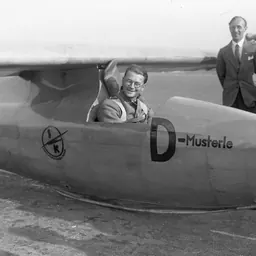
Carl Oskar Ursinus (11 March 1877 – 6 July 1952) was a pioneer of German aviation and is remembered mainly for his contributions to sailplane designs and the sport of gliding. He has been nicknamed the Rhönvater ("Rhön father") because he founded Germany’s first gliding club at the Wasserkuppe in the Rhön Mountains in 1920.
Ursinus was born in Weißenfels and attended Technical College in Mittweida. After graduation, he worked for Borsig on compressors for locomotives, and spent some time working on mining machinery in Romania for the firm.
In 1908, back in Germany, Ursinus began to publish a magazine titled Flugsport (“Sports Flying”), since he had become fascinated by the new technology of flight. The magazine helped establish a network among Germany’s aviation enthusiasts, and led to the organisation of Germany’s first international airshow.
He was conscripted into the German Army in 1914 and requested a position in aircraft design. The request was approved and he was posted to Gothaer Waggonfabrik designing warplanes. The famous series of Gotha bombers used by the German air corps throughout World War I, were all based on an Ursinus design of 1915 that was refined and manufactured as the Gotha G.I. Ursinus' real passion, however, was for seaplanes, and in 1916 he designed a seaplane fighter with retractable floats that was unfortunately destroyed before testing was complete.
Following the war, the Treaty of Versailles prohibited Germany from building powered aircraft, and the attention of German aviators therefore turned to gliding. A plateau particularly suited to gliding, the Wasserkuppe, became a focal point for this activity, and in 1920, Ursinus organized a competition there. Twenty-four people attended the meeting between 15 July and 15 September 1920, including Wolf Hirth and other gliding pioneers. (see also Rhön-Rossitten Gesellschaft.)
Over the next decade, this grew in importance to become an international event. Ursinus also constructed the first clubhouse on the Wasserkuppe in 1924. He was pursuing experiments in human-powered flight when the outbreak of World War II intervened.
Following the war, powered flying was once again forbidden in Germany, but Ursinus lived just long enough to see this prohibition lifted.
Today, he is regarded in Germany as the father of gliding, and Germany’s association for homebuilt aircraft, the Oskar Ursinus-Vereinigung ("Oskar Ursinus Association") bears his name.
Don’t just read it —
keep it.
Full-length biographies made to live with: read them, listen on the way to work, watch them tonight.
- E-book
- Audio
- Video
Instant download · yours to keep · every purchase keeps this site free
Important facts
People in Oskar Ursinus's life
Named in this biography and alive at the same time
Related people
Same field, nearest in time
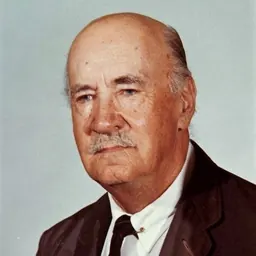
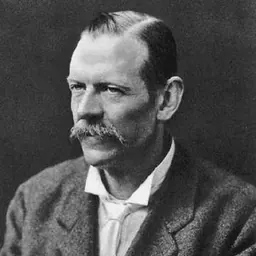
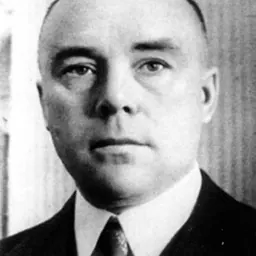
Contemporaries
People whose lives overlapped Oskar Ursinus's





Frequently asked questions
Who was Oskar Ursinus?
German aerospace engineer (1877–1952)
When was Oskar Ursinus born?
Oskar Ursinus was born on 11 March 1877 in Weißenfels.
When did Oskar Ursinus die?
Oskar Ursinus died on 6 July 1952 in Frankfurt.
What was Oskar Ursinus's occupation?
Oskar Ursinus was a military flight engineer and engineer.
What nationality was Oskar Ursinus?
Oskar Ursinus was German.
Sources & further reading
Cite this page
APA: Biography.guide. (2026). Oskar Ursinus. https://biography.guide/oskar-ursinus/
MLA: "Oskar Ursinus." Biography.guide, https://biography.guide/oskar-ursinus/.
Chicago: "Oskar Ursinus." Biography.guide. https://biography.guide/oskar-ursinus/.
Data last updated: 2026-09-25 · Spot an error? Report a correction.
Page generated 2026-09-27 05:11 UTC