
About Oskar Fried
Lived 1871 – 1941 (aged 69). Oskar Fried was a composer, conductor, music arranger, horn player and musician.
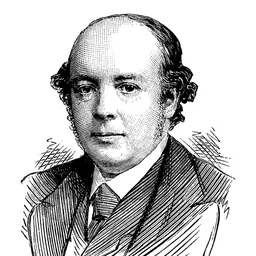
Oskar Fried (1 August 1871 – 5 July 1941) was a German conductor and composer. He was known as a great admirer of Gustav Mahler, whose works he performed many times throughout his life. Fried was also the first conductor to record a Mahler symphony. He held the distinction of being the first foreign conductor to perform in Russia after the Bolshevik Revolution. He eventually left his homeland in 1933 to work in the Soviet Union after the political rise of Adolf Hitler's Nazi Party, and became a Soviet citizen in 1940.
In 1899, Fried married the amateur poet Augusta (Gusti) Rathgeber (1872–1926) and had two daughters with her, Monika and Emerentia (dates are unknown). From 1892, Gusti Rathgeber had been married to German poet Otto Julius Bierbaum but left him when she and Fried met, and fell in love with each other.
Biography Birthday party honoring Maurice Ravel in New York City, March 8, 1928. From left: Oskar Fried, Éva Gauthier, Ravel at piano; Manoah Leide-Tedesco; and George Gershwin. Born in Berlin, the son of a Jewish shopkeeper, he worked as a clown, a stable boy and a dog trainer before studying composition with Iwan Knorr (1891–92, Hoch'sche Conservatory) and Engelbert Humperdinck (as private student) in Frankfurt. He later moved to Düsseldorf to study painting and art history. The meeting resulted in the second complete performance of Mahler's "Resurrection" Symphony in Berlin on 8 November 1905, in the presence of the composer (Otto Klemperer led the offstage band during this performance). On 4 February 1913 Fried conducted the German premiere with the Berlin Philharmonic of Mahler's Ninth Symphony, the second performance of the work. Between 24 September and 18 October 1920 he gave the first (almost complete) Mahler cycle in Vienna, conducting all the symphonies (except the 8th which he apparently never performed), incl. Das Lied von der Erde, Kindertotenlieder, Lieder eines fahrenden Gesellen, and some Wunderhorn songs. The same year, on 7 December, he returned to Vienna, and conducted Mahler's Das klagende Lied.
In 1922, he went to the USSR as the first foreign conductor invited to perform after the Russian Revolution, and was greeted by Lenin on the station platform. and a "highly adventurous undertaking for an acoustic recording" which required "careful planning and experimentation". That same year, he also made the first recording of any complete Bruckner symphony: his Seventh and the first recording of Richard Strauss's Alpine Symphony.
In November 1927, at the invitation of the BBC programme planner and his own former student Edward Clark, he made his British conducting debut, in a program of Delius, Weber, Brahms and Liszt in London.
Driven from Germany by the anti-Semitism of the Nazi regime in 1933, he emigrated to the Georgian city of Tbilisi in the Soviet Union. He conducted the Tbilisi opera and later the Moscow Radio Symphony Orchestra, eventually becoming a Soviet citizen. He died in Moscow in 1941.
Compositions by Oskar Fried The list of Fried’s compositions comprises the following published scores.
3 Lieder, op. 1 for voice and piano (B. Firnberg, Frankfurt) Adagio and Scherzo, op. 2 for wind instruments, 2 horns and kettle-drum (Breitkopf & Härtel) 4 Lieder, op. 3 for voice and piano (A. Dencke, Berlin) 3 Lieder, op. 4 for voice and piano (A. Dencke, Berlin) Drei Lieder, op. 5 for voice and piano (Bote & Bock, Berlin 1901) Leichte vierhändige Klavierstücke, op. 6 for piano four hands (Bote & Bock, Berlin 1901) Sieben Lieder, op. 7 for voice and piano (J. Hainauer, Breslau 1903) 3 two-part songs in canon form op. 8 (J. Hainauer, Breslau) Verklärte Nacht (Rich. Dehmel), op. 9 for mezzo-soprano, tenor and orchestra (Breitkopf & Härtel) Präludium und Doppelfuge, op. 10 for string orchestra (J. Hainauer, Breslau) Das trunk’ne Lied (Fr. Nietzsche), op. 11 for soprano, contralto and bass, mix. choir and orchestra (J. Hainauer, Breslau 1904) Drei Lieder, op. 12 for four-part female chorus (piano ad. lib.) (J. Hainauer, Breslau 1903) Drei Lieder zu alten Wolksweisen, op. 13 for voice and piano (J. Hainauer, Breslau 1904) Lied der Mädchen, op. 14 for four-part women’s chorus and violin solo (harp ad. lib.] (J. Hainauer, Breslau 1904) Erntelied (Rich. Dehmel), op. 15 for male chorus and orchestra (J. Hainauer, Breslau)
Works without opus numbers and unpublished Four orchestral songs (performed 1912). Die Auswanderer (Emil Verhaeren/Stefan Zweig), melodrama for voice and orchestra (performed 1913).
Don’t just read it —
keep it.
Full-length biographies made to live with: read them, listen on the way to work, watch them tonight.
- E-book
- Audio
- Video
Instant download · yours to keep · every purchase keeps this site free
Important facts
People in Oskar Fried's life
Named in this biography and alive at the same time



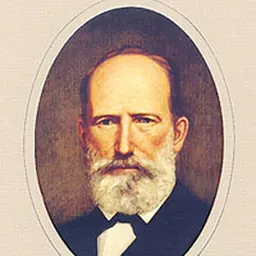


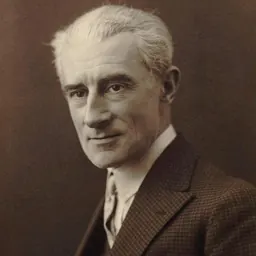
Related people
Same field, nearest in time

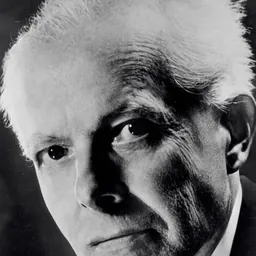
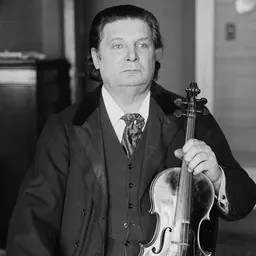

Contemporaries
People whose lives overlapped Oskar Fried's
Frequently asked questions
Who was Oskar Fried?
German composer and conductor (1871–1941)
When was Oskar Fried born?
Oskar Fried was born on 10 August 1871 in Berlin.
When did Oskar Fried die?
Oskar Fried died on 5 July 1941 in Moscow.
What was Oskar Fried's occupation?
Oskar Fried was a composer, conductor, music arranger, horn player and musician.
What nationality was Oskar Fried?
Oskar Fried's recorded nationality: German Reich.
Sources & further reading
Cite this page
APA: Biography.guide. (2026). Oskar Fried. https://biography.guide/oskar-fried/
MLA: "Oskar Fried." Biography.guide, https://biography.guide/oskar-fried/.
Chicago: "Oskar Fried." Biography.guide. https://biography.guide/oskar-fried/.
Data last updated: 2026-09-26 · Spot an error? Report a correction.
Page generated 2026-09-27 05:15 UTC