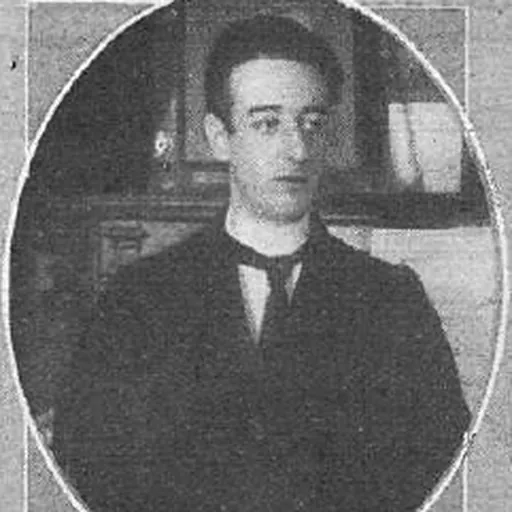
About Óscar Esplá
Lived 1886 – 1976 (aged 89). Óscar Esplá was a Spanish composer.
Óscar Esplá y Triay (5 August 1886 – 6 January 1976) was a Spanish composer. The Conservatorio Superior de Música (conservatory) of the city of Alicante is dedicated to him. The Premio internacional de composición Óscar Esplá (Óscar Esplá international prize for composition) was created in 1955 and is awarded by the city of Alicante.
Life
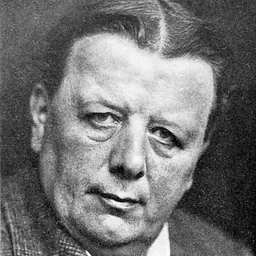
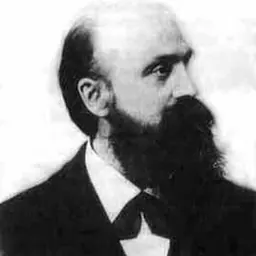
Óscar Esplá was born on 5 August 1886 in Alicante, in the Kingdom of Spain. His early musical studies were with his father, Trino Esplá, and with Fernando Lloret and . In 1903 he went to Barcelona to study industrial engineering, but later changed to study philosophy. He studied composition with Francisco Sánchez Gavagnac. In 1911, after winning an international prize, he went to Austria and Germany; he met Ferdinand Löwe in Vienna, and Max Reger in Meiningen. In 1912–13 he was in Paris; he met Saint-Saëns, but there is no evidence that he studied with him.
In 1936 Esplá was appointed director of the Conservatorio Nacional de Música y Declamación in Madrid, but did not take up the position. Instead, because of the Spanish Civil War, he left Spain and went with his family to Belgium, where he worked for Le Soir, which at that time was under Nazi control. He was not permitted to return to Spain until 1950. With Roberto Gerhard, Frederic Mompou and Adolfo Salazar, he was a part of the Spanish Grupo de los cuatro.
He died in Madrid on 6 January 1976, and was buried in the church of the in Alicante.
Honours Esplá was elected to the Académie des Beaux-Arts de Paris on 9 May 1956. In 1959 he received the Grand Cross of the Orden de Alfonso X el Sabio. He was elected an honorary member of the International Society for Contemporary Music in 1965.
Works El sueño de Eros (1910), symphonic poem Suite levantina (1911) La nochebuena del diablo (1923), cantata Don Quijote velando las armas (1924), symphonic poem Himno republicano (1931), which contributed to the official version of the Himno de Riego under the Second Spanish Republic (1931–1939) Tres Canciones (1952) Sinfonía Aitana (1964) Tres Movimientos para piano Sonata Española para piano Crespusculum op. 15 para piano
Don’t just read it —
keep it.
Full-length biographies made to live with: read them, listen on the way to work, watch them tonight.
- E-book
- Audio
- Video
Instant download · yours to keep · every purchase keeps this site free
Important facts
People in Óscar Esplá's life
Named in this biography and alive at the same time


Related people
Same field, nearest in time

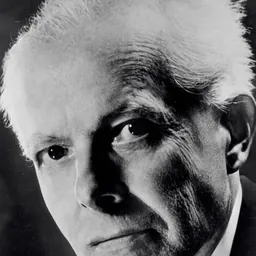

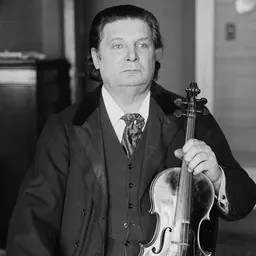
Contemporaries
People whose lives overlapped Óscar Esplá's
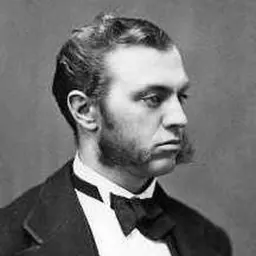


Frequently asked questions
Who was Óscar Esplá?
Spanish composer (1886–1976)
When was Óscar Esplá born?
Óscar Esplá was born on 5 August 1886 in Alicante.
When did Óscar Esplá die?
Óscar Esplá died on 6 January 1976 in Madrid.
What was Óscar Esplá's occupation?
Óscar Esplá was a composer.
What nationality was Óscar Esplá?
Óscar Esplá was Spanish.
Sources & further reading
Cite this page
APA: Biography.guide. (2026). Óscar Esplá. https://biography.guide/oscar-espla/
MLA: "Óscar Esplá." Biography.guide, https://biography.guide/oscar-espla/.
Chicago: "Óscar Esplá." Biography.guide. https://biography.guide/oscar-espla/.
Data last updated: 2026-09-23 · Spot an error? Report a correction.
Portrait: Wikimedia Commons · author & licence
Page generated 2026-09-27 05:08 UTC