
About Oscar Clayton
Lived 1816 – 1892 (aged 75–76). Oscar Clayton was a surgeon.
Sir Oscar Moore Passey Clayton (10 March 1816 – 27 January 1892) was a British surgeon, courtier, and socialite. He was Surgeon-in-Ordinary to Prince Alfred, Duke of Edinburgh, Extra Surgeon-in-Ordinary to the Prince of Wales (later King Edward VII), and Surgeon to the Metropolitan Police and other bodies.
Early life and family Clayton was the eldest son of James Clayton, of Bedford Square, Bloomsbury, by his marriage to Caroline Kent, of Kingston upon Thames. The elder Clayton was also a surgeon and in 1835 was elected a Fellow of the Royal Medical and Chirurgical Society of London.
Clayton was educated at Bruce Castle School, University College, London, and the Middlesex Hospital. and on 11 May 1838 a member of the Royal College of Surgeons. Their father died in 1854. and on 14 March 1843 read a paper to the Society concerning seventeen cases of a hacking cough which he had observed since 1841 as surgeon to the St Pancras School for Female Children, a charity school at St Pancras, London. This was published in that year's volume of Medico-Chirurgical Transactions under the title Some Account of an Hysterical Affection of the Vocal Apparatus, with several cases.
On 13 October 1853 Clayton was elected a Fellow of the Royal College of Surgeons. but most of his later years in practice were spent at Number 5, Harley Street. In his middle years he became a "fashionable" society doctor and was the personal physician of two of the sons of Queen Victoria. In 1868, he was appointed as Extra Surgeon-in-Ordinary to the Prince of Wales (later King Edward VII), and Surgeon-in-Ordinary to his brother, Prince Alfred, Duke of Edinburgh.
Despite the misgivings of the medical press, in 1872 the Prince of Wales fell sick at Scarborough with typhoid fever, and Clayton correctly diagnosed the illness.
Clayton also became Surgeon to the Metropolitan Police, the London Philanthropic Society, and the charity of St George the Martyr, Southwark.
In 1885, under the heading A STAR IN THE MEDICAL FIRMAMENT, the Midland Medical Miscellany reported:
On one occasion, after Clayton had successfully treated Princess Louise, Sir James Reid, Queen Victoria's personal physician, was angry when he heard that Clayton had given the Queen a prescription for her rheumatism. Reid wrote to William Jenner "If he begins that sort of thing, there is no saying where it may end". Clayton hastily responded to Reid to say he had not prescribed for the Queen.
Towards the end of his life, while both were staying with Sydney Stern, Clayton remarked to the American writer Frederick Townsend Martin
Private life Clayton had a house in Hertfordshire at Grove Cottage, Bushey Heath. and at another levée in March 1869, he was presented to Queen Victoria by the Lord Chamberlain, Viscount Sidney.
In 1874, Vanity Fair magazine made Clayton No. 87 in its 'Men of the Day' series, publishing a caricature of him by "Ape" (Carlo Pellegrini) entitled "Fashionable Surgery". Pellegrini's original watercolour is in the National Portrait Gallery, which describes Clayton in its catalogue as "Surgeon and socialite".
In 1880, in a series of sketches called "Our Doctors", Edmund Yates's magazine Time: a Monthly Miscellany published a sketch of a society doctor entitled "Mr Osric Claypole". This piece begins "Gold-rimmed spectacles; hair carefully distributed by the brush... a rosy, healthy face... When Osric Claypole dines out, which he does on every night that he does not entertain at home, he shuffles off the last remnant of the doctoral coil, and is the heartiest and merriest of companions." The sketch also referred to Claypole's "patients of the upper thousand of the upper ten". A few weeks later, The Academy, reviewing the sketch in Time, commented that "Mr. Osric Claypole, with his Louis Seize furniture, his Sèvres, and his "younger Court", might have figured at once in the World as a social "Celebrity at Home". Why not "Mr. Oscar Clayton in Harley Street"?"
In 1890 a portrait of Clayton was painted by Frederick Goodall and exhibited at the Royal Academy. Now in the Hunterian Gallery in Glasgow, this was described in the art journal The Academy:
In his diary for 30 November 1882, the day Clayton was knighted, Lewis Harcourt wrote "Several people went down on the same train to be knighted, among them Oscar Clayton, who is nominally doctor, but really "pimp" to the Prince of Wales".
In a book of memoirs published in 1909, the former actress Lady Bancroft wrote –
Clayton died on 27 January 1892. After the probate of his Will, it was found that he had left more than £150,000, which was a substantial fortune in the 1890s.
Honours After being appointed a Companion of the Order of the Bath and of that of St Michael and St George, and also a deputy lieutenant for Middlesex, Clayton was knighted on 30 November 1882. The same year, the University of Erlangen awarded him the degree of Doctor of Medicine. He was also a Knight of the Order of Leopold of Belgium.
Don’t just read it —
keep it.
Full-length biographies made to live with: read them, listen on the way to work, watch them tonight.
- E-book
- Audio
- Video
Instant download · yours to keep · every purchase keeps this site free
Important facts
People in Oscar Clayton's life
Named in this biography and alive at the same time




Related people
Same field, nearest in time
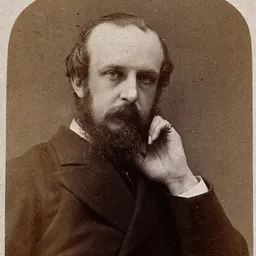



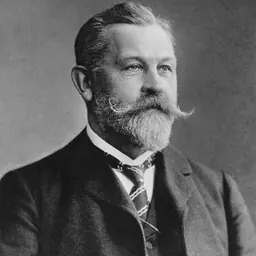
Contemporaries
People whose lives overlapped Oscar Clayton's



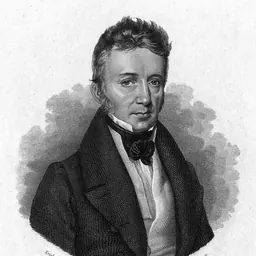
Frequently asked questions
Who was Oscar Clayton?
English surgeon
When was Oscar Clayton born?
Oscar Clayton was born in 1816.
When did Oscar Clayton die?
Oscar Clayton died on 27 January 1892.
What was Oscar Clayton's occupation?
Oscar Clayton was a surgeon.
Sources & further reading
Cite this page
APA: Biography.guide. (2026). Oscar Clayton. https://biography.guide/oscar-clayton/
MLA: "Oscar Clayton." Biography.guide, https://biography.guide/oscar-clayton/.
Chicago: "Oscar Clayton." Biography.guide. https://biography.guide/oscar-clayton/.
Data last updated: 2026-09-20 · Spot an error? Report a correction.
Page generated 2026-09-27 05:31 UTC