
About Oscar Charles Badger
Lived 1823 – 1899 (aged 75). Oscar Charles Badger was an American military officer.
Commodore Oscar Charles Badger (August 12, 1823 – June 20, 1899) was an officer of the United States Navy who served in the Mexican–American and American Civil Wars.
Service in Africa and during the Mexican–American War Badger received an appointment as a midshipman in the United States Navy on September 9, 1841, and, after a tour of duty in the , served in along the Atlantic coast of Africa. While serving in the latter ship, he saw his first action in the punitive expedition that landed on the west coast of Africa in 1843 and destroyed the Berribee villages. In the sidewheel steamer , during the Mexican–American War, he participated in the expedition that captured the Mexican town of Alvarado in the spring of 1847.
Attended the Naval Academy at Annapolis, Maryland Badger then attended the Naval School (as the Naval Academy was then called) at Annapolis, Maryland; completed his course of study there; and was warranted a passed midshipman on August 10, 1847.
Posted to the Pacific Squadron By 1850, he was posted to the Pacific Squadron and served successively in the , the frigate , and the sloop . He returned to shore in 1853 for a tour of duty at the United States Naval Observatory located in Washington, D.C. In 1855, he returned to the Pacific Squadron for duty in the sloop and, that autumn, participated in an expedition to the Fiji Islands to redress wrongs suffered by members of the crews of American whalers and merchant ships at the hands of natives. The landing party destroyed the village of Vutia. To round out his pre-Civil War service, Badger was assigned in turn to the , , , and, lastly, to the Washington Navy Yard.
Service in the American Civil War He was serving in the national capital at the outbreak of the Civil War, and took command of the screw steamer early in the conflict. In her, he participated in a series of actions against Confederate batteries along the Virginia bank of the Potomac River. During the Peninsula Campaign, he took part in the siege of Yorktown, Virginia. In 1862, he was transferred to the western theater to superintend the arming of river gunboats. In mid-1863, he was switched to the South Atlantic Blockading Squadron and participated in the attack on shore batteries on Morris Island on July 11, 1863. A week later, he commanded in an attack on Fort Wagner and, a month after that, led the ironclad in a series of operations against Forts Wagner, Gregg, and Sumter. On the night of August 22, 1863, he took command of the ironclad on another assault on Fort Sumter.
Appointed fleet captain of the South Atlantic Blockade Soon thereafter, Badger was appointed fleet captain, ad interim, of the South Atlantic Blockading Squadron and, in that office, took part in another attack on Fort Sumter while in the flagship on the night of September 1, 1863. During that action, he was severely wounded in the leg by a flying metal splinter.
He spent the remaining years of the Civil War ashore performing ordnance duty at the Philadelphia Navy Yard and serving as inspector of cannon at Pittsburgh, Pennsylvania. After the war, he became a companion of the District of Columbia Commandery of the Military Order of the Loyal Legion of the United States.
Family Badger married Margaret M. Johnston, daughter of Captain Z. F. Johnston, USN. Their son, Charles Johnston Badger, pursued a naval career and retired as a rear admiral.
Memberships Commodore Badger was a member of the Aztec Club of 1847, the Military Order of the Loyal Legion of the United States and the Military Order of Foreign Wars.
Honored in ship naming The Badger (Destroyer No. 126) (1919–1945) was named for Commodore Oscar C. Badger, while his son, Admiral Charles Johnston Badger was similarly honored by the naming of the destroyer (1943–1957). The destroyer escort (subsequently rerated as a frigate) (1970–1991) honors the commodore, his son, his grandson, Admiral Oscar C. Badger II, and his cousin George Edmund Badger, the 12th United States Secretary of the Navy.
Don’t just read it —
keep it.
Full-length biographies made to live with: read them, listen on the way to work, watch them tonight.
- E-book
- Audio
- Video
Instant download · yours to keep · every purchase keeps this site free
Important facts
People in Oscar Charles Badger's life
Named in this biography and alive at the same time

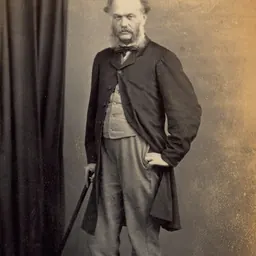
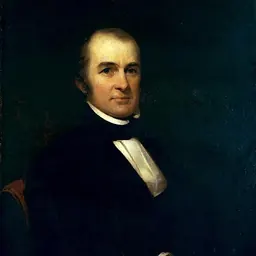
Related people
Same field, nearest in time
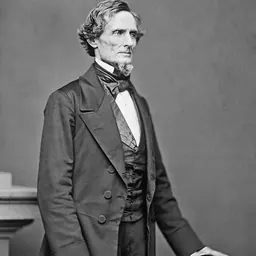

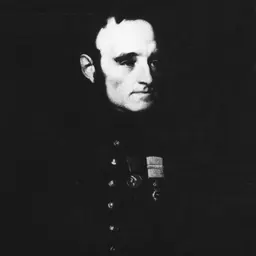
Contemporaries
People whose lives overlapped Oscar Charles Badger's




Frequently asked questions
Who was Oscar Charles Badger?
United States Navy admiral (1823-1899)
When was Oscar Charles Badger born?
Oscar Charles Badger was born on 12 August 1823 in Mansfield.
When did Oscar Charles Badger die?
Oscar Charles Badger died on 20 June 1899 in Concord.
What was Oscar Charles Badger's occupation?
Oscar Charles Badger was a military officer.
What nationality was Oscar Charles Badger?
Oscar Charles Badger was American.
Sources & further reading
· Wikipedia: Oscar Charles Badger
Cite this page
APA: Biography.guide. (2026). Oscar Charles Badger. https://biography.guide/oscar-charles-badger/
MLA: "Oscar Charles Badger." Biography.guide, https://biography.guide/oscar-charles-badger/.
Chicago: "Oscar Charles Badger." Biography.guide. https://biography.guide/oscar-charles-badger/.
Data last updated: 2026-09-20 · Spot an error? Report a correction.
Page generated 2026-09-27 05:27 UTC