
About Óscar Acosta
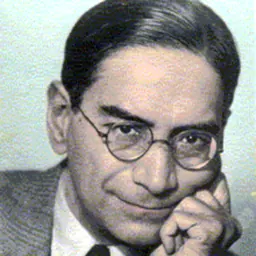
Lived 1933 – 2014 (aged 81). Óscar Acosta was a Honduran politician, diplomat, writer, literary critic, poet and literary scholar.
Óscar Acosta Zeledón (14 April 1933 – 15 July 2014) was a Honduran writer, poet, critic, politician and diplomat.
Biography He was born in the Las Delicias neighborhood of Tegucigalpa, Honduras, on 14 April 1933.
Acosta began his career as a journalist in Peru for Tegucigalpa Magazine. He founded la Editorial Nuevo Continente, las revistas Extra, Presente, la Editorial Iberoamericana, and Honduras Literaria y Extra. He was director of the University Press of the Universidad Nacional Autónoma de Honduras.
He came to notice in the 1950s and 1960s, with his short stories and poetry collections. In 1964, he published an essay on the Honduran writer Rafael Heliodoro Valle, to which he added later works such as "Anthology of the New Honduran Poetry" with the poet Roberto Sosa, "Honduran Poetry Today", and "Anthology of the Honduran Short Story".
He ran the literary sections of the newspapers El Día, now defunct, and El Heraldo. He was also a founder of Editorial Nuevo Continente, and the magazines Extra and Presente.
As a diplomat, Acosta represented his country in the Honduran legations in Spain, Italy, Peru and the Vatican. In 2000, when he was director of the Honduran Academy of Language, he nominated the Tegucigalpa-born Guatemalan writer Augusto Monterroso for the Prince of Asturias Award.
Acosta died in Tegucigalpa at the age of 81 on 15 July 2014. This selection of exclusive and intimate poetry by the author contains 111 poems, separated into the following classifications:
Poesía menor, a book that was published in the year 1957. In the essay "Anticipación el geranio" by Dr. Hector M. Leyva, which was published in the text "Lucidez Creativa", addresses the idea that short poems contain an affirmative action, in the sense that it can reclaim those things that may be despised, or negatively discriminated against. Short poetry, of the most basic, and modest. Modest poetry that alludes to bombast, in low key. Poetry spoken softly but not simply. If in the slightest it refers to the conscience, of the barely perceptible accidents of the world, then that poetry can be one of the most important.
In the case of the woman that is loved in Óscar Acosta's collection of poetry, the primary motive of his song in Formas del amor (1959), Escritura amorosa (1962) and Poemas para una muchacha (1963), the poet is convinced that he received the woman as a gift from heaven and that there may be no feeling as important as love.
Awards 1960: Premio Rubén Darío 1979: Premio Nacional de Literatura Ramón Sosa
Don’t just read it —
keep it.
Full-length biographies made to live with: read them, listen on the way to work, watch them tonight.
- E-book
- Audio
- Video
Instant download · yours to keep · every purchase keeps this site free
Important facts
People in Óscar Acosta's life
Named in this biography and alive at the same time




Related people
Same field, nearest in time



Contemporaries
People whose lives overlapped Óscar Acosta's




Frequently asked questions
Who was Óscar Acosta?
Honduran writer, critic, politician and diplomat (1933–2014)
When was Óscar Acosta born?
Óscar Acosta was born on 14 April 1933 in Tegucigalpa.
When did Óscar Acosta die?
Óscar Acosta died on 15 July 2014 in Tegucigalpa.
What was Óscar Acosta's occupation?
Óscar Acosta was a politician, diplomat, writer, literary critic, poet and literary scholar.
What nationality was Óscar Acosta?
Óscar Acosta was Honduran.
Sources & further reading
Cite this page
APA: Biography.guide. (2026). Óscar Acosta. https://biography.guide/oscar-acosta-politician/
MLA: "Óscar Acosta." Biography.guide, https://biography.guide/oscar-acosta-politician/.
Chicago: "Óscar Acosta." Biography.guide. https://biography.guide/oscar-acosta-politician/.
Data last updated: 2026-09-20 · Spot an error? Report a correction.
Page generated 2026-09-27 05:09 UTC