
About Orval Grove
Lived 1919 – 1992 (aged 72). Orval Grove was an American baseball player.
Orval Leroy Grove (August 29, 1919 – April 20, 1992) was an American professional baseball player. He was a pitcher in Major League Baseball (MLB) for ten seasons in the American League with the Chicago White Sox. In 207 career games, Grove pitched 1,176 innings and posted a win–loss record of 63–73, with 66 complete games, 11 shutouts, and a 3.78 earned run average (ERA).
The only freshman on the Proviso Township High School varsity baseball team, Grove's pitching ability attracted the attention of the White Sox. After signing with the team in 1937, Grove moved between the major leagues and minor leagues for a few seasons until 1943, when he found a solid place in the White Sox's pitching rotation. Grove had a career-year in 1943, finishing the season with career-bests in ERA, wins, and complete games; in 1944, he made his only All-Star appearance.
Grove spent four more full seasons with the White Sox, and after pitching one game in 1949, was sent to the Sacramento Solons of the Pacific Coast League. After playing four seasons with them, he formally retired from professional baseball. After retirement, he worked with his uncle in a trucking business in Chicago while continuing to pitch at the semi-pro level. In 1992, Grove died at the age of 72.
Early life Grove was born in West Mineral, Kansas, on August 29, 1919, and was raised in Maywood, Illinois. By eighth grade, Grove developed a fondness for baseball and began pitching for the Proviso East High School baseball team. He became the first freshman member of the varsity team in school history. During a high school pitching career of three years, Grove lost only two games and pitched a no-hitter and two one-hitters. He played with the Steers until management began to replace young players with veterans due to the team's struggling form and moved Grove to the Longview Cannibals.
After the 1939 season had begun, Grove became part of the Oklahoma City Indians of the Texas League; St. Paul did not see much potential in him. In 1939, Grove had a peculiar game while pitching against the Tulsa Oilers. Playing in a night game with virtually no light due to storms, Grove did not allow a hit during his time on the mound, but earned the loss because he walked three men in a row, which allowed a run to score. Grove was an official part of the 40-man roster as the 1940 season began (teams started rather than ended the season with 40 men at this time), but had not made an appearance after a month on the roster. The White Sox planned to use three rookie pitchers, including Grove, during the final week of May, as they had three doubleheaders that week. He pitched in two more games for the White Sox that season before being sent back to Oklahoma City. Grove finished 1940 with six innings of major league work over three games, allowing two earned runs. Grove finished the minor league season with nine wins and eight losses, but the team saw issues with his control, and as a result he spent most of the next season in the minor leagues. Grove concluded the year at Oklahoma City with a 17–7 record, an improvement over the previous season. However, Grove received a knee injury late in the season, which he did not think much of at the time.
The following season, Grove was provided an opportunity to be a starting pitcher for the White Sox. Over the course of the season, he started eight games and played in four more en route to a 4–6 record and a 5.16 ERA. Grove was scheduled for knee surgery, which necessitated two months of recovery, effectively ending his season. Issues with his knee drew concern both during and after the season. Dr. Kruescher stated that Grove had a "1 in 100" chance of playing again, but the surgery was a success, and by season's end Grove was able to test the knee and do light workouts. After the examination, Grove was classified as 4-F, making him ineligible for military service, which meant that he could continue his baseball career.
Grove took advantage of his place in Chicago's starting rotation by winning nine consecutive decisions to start his season and by not losing a game until a contest against the Yankees, which he lost as the result of a balk. On July 8, 1943, Grove nearly became one of the few pitchers in baseball history to pitch a no-hitter. In a game against the Yankees, he was one out away from pitching a no-hitter when Joe Gordon came up to bat. Gordon hit a double to left field that was fair by inches, ending Grove's closest bid for a Major League no-hitter. Grove finished the season with career bests in ERA (2.75), wins (15), and complete games (18). Grove's personal life improved along with his career. On January 8, 1944, he married Catherine Sloan, having met her at a party thrown for the White Sox by her father, Francis Sloan, a year and a half earlier.
Grove started the 1944 season with an interesting honor: he was assigned to the 4-F All-Star team, a group of 25 major league players who were the best of those exempt from military service. Grove was given the job of being the Opening Day starting pitcher for the White Sox. He pitched the first game of the season against the Cleveland Indians and their starting pitcher, Al Smith, on April 19, 1944, and won 3–1. Grove also managed to shut out the Yankees on May 18; it was the first time the Yankees had not scored a run in 1944. By mid-season, Grove had seven wins, six losses, five complete games, and a 3.40 ERA. Because of these statistics, he was selected to the American League All-Star team, his first and only career appearance. Five American League pitchers pitched in the All-Star Game on July 11, although Grove was one of the four on the roster who did not; therefore, his lone All-Star appearance was indeed only an appearance. During the second half of the season, Grove performed well at Comiskey Park, but struggled on the road, at one point losing five straight games despite good run support from the White Sox. Grove finished the season with 14 wins, 15 losses, an ERA of 3.72, two shutouts, and a career best of nearly 235 innings pitched. Grove was the workhorse of the White Sox, leading the team in games pitched (33) and started (30), while remaining the youngest pitcher on the roster. He finished the season with 217 pitched innings, a career best four shutouts, a 14–12 record, and a 3.44 ERA. He finished the season with more losses than wins because he was eager to succeed and was trying too hard, and because of this the coaching staff planned to make Grove into "as good a pitcher most of the time as he is some of the time". At the end of the 1946 season, Grove had eight wins and 13 losses, a 3.02 ERA, 10 complete games, and a league-leading 10 wild pitches. As the season began, Grove remained part of the rotation, which was led by Lopat and included Joe Haynes and Frank Papish. While Grove started off the season well, he struggled through the middle of the year, going from May 18 to August 2 without winning a game. As a result, he was benched, and finished the season with 19 starts in 25 pitching appearances. For the first time, Grove finished a full season with an ERA above 4.00. He ended the season with six wins, eight losses, a 4.44 ERA, and six complete games.
In the 1948 season, the White Sox faced difficult decisions regarding their pitching staff and starting rotation. In the midst of Caldwell's departure and Papish's absence for most of the preseason, Grove remained a starter heading into the season, having pitched decently during spring training. In his final exhibition matchup of the season against Johnny Schmitz, Grove pitched the full nine innings and the White Sox defeated the Chicago Cubs 1–0, making Grove the only White Sox pitcher to throw a complete game during the preseason. By the end of May, Grove was the lone White Sox pitcher with a complete game through the first several weeks of the season. However, Grove eventually lost his starting job, and by the end of the season, he had two wins, 10 losses, a 6.16 ERA, and had started 11 games out of 32 total pitching appearances. Grove pitched one game during the season on April 27, 1949, allowing four runs in two-thirds of an inning.
Shortly afterward, Grove was demoted to the Sacramento Solons of the Pacific Coast League, having pitched his final major league game. During his inaugural season at Sacramento, he was part of a pitching quartet that included Ken Holcombe, Bob Gillespie, and Frank Dasso, and was declared by Sporting News sportswriter John B. Old as "the best any Coast League club ever had." Over the course of the next three seasons, Grove continued to pitch for the Solons. He was one of the workhorses of the 1950 squad, finishing the season with 17 victories.
His contract with the Solons promised him part of the purchase price if he was sold to the majors. When this did not occur, he considered quitting baseball and devoting himself full-time to his uncle's trucking business. However, Grove continued to play, and pitched 159 innings in 1951, compiling an 8–9 record. After the season ended, Grove was traded to the Portland Beavers, and refused to report, choosing instead to pitch at the semi-pro level. Grove stated, "I'm now pitching for Earl Smith Motors Pontiac sales service", signaling the end of his professional baseball career.
Later life After his retirement from baseball, Grove continued to work with his uncle. His legacy lived on in his nephew, Wayne Grove. While playing for the Bellwood Lions of the Chicago Little League, Wayne pitched a no-hitter and struck out 15, and narrowly missed a perfect game when a runner got on base with two outs in the bottom of the ninth inning. Despite an unimpressive Major League career, Grove earned a few votes for induction into the Hall of Fame, receiving five votes in the 1958 balloting (1.9% of the required votes needed) and seven in the 1960 balloting (2.6% of the required votes needed).
Grove had four children and four grandchildren, and later was the co-owner of a car wash in Sacramento, California for 20 years. He became close friends with Joe Gordon, the player who broke up Grove's no-hitter, after moving to Sacramento.
Don’t just read it —
keep it.
Full-length biographies made to live with: read them, listen on the way to work, watch them tonight.
- E-book
- Audio
- Video
Instant download · yours to keep · every purchase keeps this site free
Important facts
People in Orval Grove's life
Named in this biography and alive at the same time





Related people
Same field, nearest in time

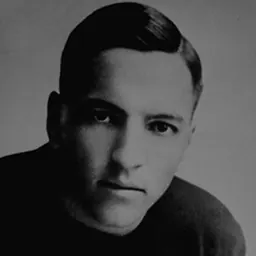
Contemporaries
People whose lives overlapped Orval Grove's



Frequently asked questions
Who was Orval Grove?
American baseball pitcher (1919–1992)
When was Orval Grove born?
Orval Grove was born on 29 August 1919 in West Mineral.
When did Orval Grove die?
Orval Grove died on 20 April 1992 in Carmichael.
What was Orval Grove's occupation?
Orval Grove was a baseball player.
What nationality was Orval Grove?
Orval Grove was American.
Sources & further reading
Cite this page
APA: Biography.guide. (2026). Orval Grove. https://biography.guide/orval-grove/
MLA: "Orval Grove." Biography.guide, https://biography.guide/orval-grove/.
Chicago: "Orval Grove." Biography.guide. https://biography.guide/orval-grove/.
Data last updated: 2026-09-20 · Spot an error? Report a correction.
Page generated 2026-09-27 05:24 UTC