
About Orrick Glenday Johns
Lived 1887 – 1946 (aged 59). Orrick Glenday Johns was an American poet.
Orrick Glenday Johns (June 2, 1887 – July 8, 1946) was an American poet and playwright. He was one of the earliest modernist free-verse poets in Greenwich Village in 1913–1915 and associated with the artist's colony at Grantwood, New Jersey (sometimes referred to as Ridgefield), where Others: A Magazine of the New Verse was founded and published by Alfred Kreymborg in 1915. Johns's work "Olives", a series of fourteen small poems appeared in the first issue of July 1915. He is part of a coterie of poets and authors sometimes called the "Others" group who were contributors to the magazine or residents at the colony and included: William Carlos Williams, Wallace Stevens, Marianne Moore, Mina Loy, Ezra Pound, Conrad Aiken, Carl Sandburg, T. S. Eliot, Amy Lowell, H.D., Djuna Barnes, Man Ray, Skipwith Cannell, Lola Ridge, Marcel Duchamp, and Fenton Johnson (the only African American published in the magazine). Johns is also associated with poets like Vachel Lindsay and Sara Teasdale and the dramatist Zoe Akins.
Early life Johns was born in St. Louis, Missouri, to George Sibley Johns and Minnehaha McDearmon. George Sibley Johns was the editor of the St. Louis Post Dispatch. George and Minnehaha had six sons. They moved around St. Louis a lot before they settled into a house on Cabanne Place when Orrick was six years old. He lost a leg in a streetcar accident one year later. After the accident, Johns's family had to give up their home on Cabanne Place and move across the tracks to Maple avenue. Johns spent six months in bed recovering from the amputation and spent his time reading and developing a love of writing and publishing. The trolley company was deemed liable for the accident and the family was awarded a small sum. The accident spurred George Sibley Johns as one of Joseph Pulitzer's "Fighting Editors" to start a newspaper campaign to have the trolleys install better brakes and put fenders on the cars.
Johns was educated locally at public schools, including Dozier School, Central High School, and the University of Missouri. After graduating Johns held several jobs and eventually landed at Reedy's Mirror as a drama critic by William Marion Reedy. This position gave him his first experience writing professionally. poetry contest, despite competing against Edna St. Vincent Millay's later famed "Renascence". The backer of the contest, Ferdinand P. Earle, chose Millay as the winner. Earle sent a letter informing Millay of her win before consulting with the other judges, who had previously and separately agreed on criteria for a winner to winnow down the massive flood of entrants. According to the remaining judges, the winning poem had to exhibit social relevance, which "Renascence" did not. Johns's "Second Avenue" was about the "squalid scenes" Johns saw on Eldridge Street and lower Second Avenue on the Lower East Side when he was in New York. It coalesced after seeing a speech by anarchist Emma Goldman on New Year's Eve 1912. The judges had already awarded Johns the win for this reason, and Millay placed fourth. Controversy ensued and played out in newspaper columns and editorial pages and made both Millay and Johns widely known. Johns received hate mail and made clear he felt her poem was the better one and avoided the awards banquet in his honor. Between 1913 and 1915, Johns lived in Greenwich Village in New York City. He then moved back to St. Louis for three years, where he wrote some of his best works. on July 8, 1946.
He is mentioned in Kenneth Rexroth's poem "Thou Shalt Not Kill" as "hopping into the surf on his one leg".
Don’t just read it —
keep it.
Full-length biographies made to live with: read them, listen on the way to work, watch them tonight.
- E-book
- Audio
- Video
Instant download · yours to keep · every purchase keeps this site free
Important facts
People in Orrick Glenday Johns's life
Named in this biography and alive at the same time





Related people
Same field, nearest in time

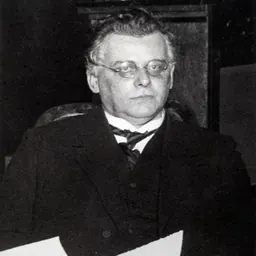
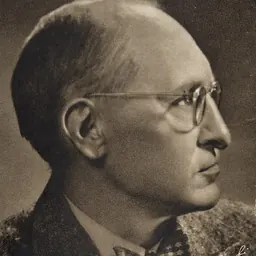
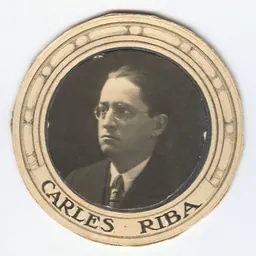
Contemporaries
People whose lives overlapped Orrick Glenday Johns's




Frequently asked questions
Who was Orrick Glenday Johns?
American poet (1887–1946)
When was Orrick Glenday Johns born?
Orrick Glenday Johns was born on 2 June 1887.
When did Orrick Glenday Johns die?
Orrick Glenday Johns died on 8 July 1946.
What was Orrick Glenday Johns's occupation?
Orrick Glenday Johns was a poet.
What nationality was Orrick Glenday Johns?
Orrick Glenday Johns was American.
Sources & further reading
· Wikipedia: Orrick Glenday Johns
· DBpedia: Orrick Glenday Johns
Cite this page
APA: Biography.guide. (2026). Orrick Glenday Johns. https://biography.guide/orrick-glenday-johns/
MLA: "Orrick Glenday Johns." Biography.guide, https://biography.guide/orrick-glenday-johns/.
Chicago: "Orrick Glenday Johns." Biography.guide. https://biography.guide/orrick-glenday-johns/.
Data last updated: 2026-09-20 · Spot an error? Report a correction.
Page generated 2026-09-27 05:00 UTC