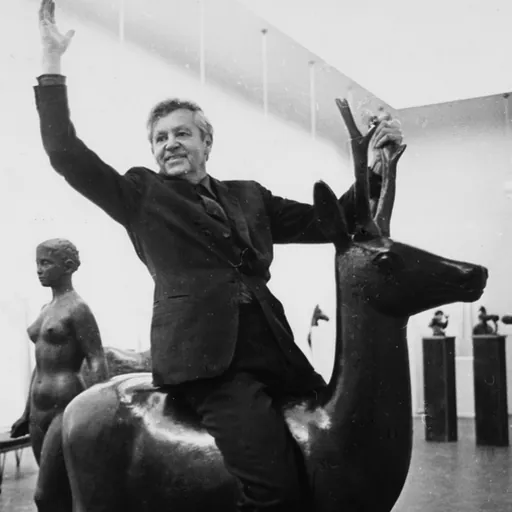
About Ørnulf Bast
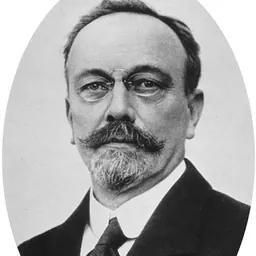
Lived 1907 – 1974 (aged 67). Ørnulf Bast was a Norwegian sculptor, painter and graphic artist.
Ørnulf Bast (25 January 1907 – 28 October 1974) was a Norwegian sculptor and painter particularly known for his public monuments.
Biography Ørnulf Bjarne Bast was born in Oslo. His parents were Halsten Andersen Bast Birklund (1870–1952) and Ida Mathilde Kristensen (1870–1960). Bast studied at the Norwegian National Academy of Fine Arts from 1927 to 1930. He made several study trips, first to France from 1928 to 1929 and later to Britain, Germany, Greece, Italy, Spain and North Africa, including Egypt, 1930 and 1932, and a new journey to Paris 1937.
In 1940, Bast married Lajla von Hanno (1921–2010). During the occupation of Norway by Nazi Germany, he and his wife supplied a cover-up apartment for the Norwegian resistance movement, specifically for the staff of the sabotage squad Aks 13000, for some time. From 1947 until his death in 1974, Bast had a permanent residence in the summer at Fuglevik ved Rakke in Brunlanes Municipality, south of Larvik, where he also had his studio. Ørnulf Bast was awarded the King's Medal of Merit in gold.
Career He completed a wide range of public memorials and decorations in a quiet style, characterized by a French-dominated class flight of sculptural tradition. Of note are in Sarpsborg (1937), in Bragernes square in Drammen (1940–1952), (1947–1949) in Copenhagen, (1948–1949) at in Oslo and (1946–1947) at St. Hanshaugen Park in Oslo, and (1949–1950) in Elverum.
Among his works were the identical bronze statues titles The Norwegian Lady dedicated in 1962, which were placed in Moss, Norway and Virginia Beach, Virginia facing each other across the ocean. The statues were modeled after the figurehead of the Norwegian bark Dictator, home ported in Moss, which foundered and sank in the Graveyard of the Atlantic off the coast of Virginia Beach on 27–28 March 1891. Despite substantial lifesaving efforts from shore, seven people died, including the captain's pregnant wife and four-year-old son. The new statues re-established old ties between the two communities, and in 1974, they became sister cities. Annual events are held at the Bast statues.
Selected works
, 1930–31 , 1936–39 , 1940–52 , 1946–47 , 1947–49 , 1947–49 , 1948–49 , 1949–50 , 1953, Kristian Birkeland, 1960 The Norwegian Lady, 1962 Herman Wildenvey, 1965–67 , 1966–67 , 1967–68 Haakon VII, 1969 , 1970 , 1977
Don’t just read it —
keep it.
Full-length biographies made to live with: read them, listen on the way to work, watch them tonight.
- E-book
- Audio
- Video
Instant download · yours to keep · every purchase keeps this site free
Important facts
People in Ørnulf Bast's life
Named in this biography and alive at the same time


Related people
Same field, nearest in time




Contemporaries
People whose lives overlapped Ørnulf Bast's


Frequently asked questions
Who was Ørnulf Bast?
Norwegian sculptor (1907–1974)
When was Ørnulf Bast born?
Ørnulf Bast was born on 25 January 1907 in Christiania, Oslo Municipality.
When did Ørnulf Bast die?
Ørnulf Bast died on 28 October 1974.
What was Ørnulf Bast's occupation?
Ørnulf Bast was a sculptor, painter and graphic artist.
What nationality was Ørnulf Bast?
Ørnulf Bast was Norwegian.
Sources & further reading
Cite this page
APA: Biography.guide. (2026). Ørnulf Bast. https://biography.guide/ornulf-bast/
MLA: "Ørnulf Bast." Biography.guide, https://biography.guide/ornulf-bast/.
Chicago: "Ørnulf Bast." Biography.guide. https://biography.guide/ornulf-bast/.
Data last updated: 2026-09-24 · Spot an error? Report a correction.
Portrait: Wikimedia Commons · author & licence
Page generated 2026-09-27 05:09 UTC