
About Oriana Bandiera
Born 1971. Oriana Bandiera is an Italian economist.
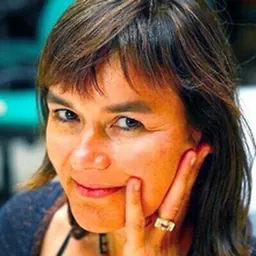
Oriana Bandiera, FBA (born 26 August 1971) is an Italian development economist and academic, who is currently the Sir Anthony Atkinson Professor of Economics at the London School of Economics. Her research focuses on development, labour, and organisational economics. Outside of her academic appointment, she is co-editor of Econometrica, and an affiliate of the Centre for Economic Policy Research and Bureau for Research and Economic Analysis of Development. A fellow of the Econometric Society and the British Academy, she received the Yrjö Jahnsson Award in 2019, an award granted annually to the best European economist(s) under the age of 45.
Early life and education Bandiera was born on 26 August 1971 Bandiera observed in the lecture that Palanpur was in many ways more similar to her native Sicily than Sicily was to Milan, sparking an interest in development economics.
Academic career In September 1999, Bandiera joined the London School of Economics and Political Science (LSE) in England as a lecturer in economics. From January to March 2003, she was a visiting assistant professor at the University of Chicago. where she directs the State Research Program of the International Growth Centre.
Alongside her academic appointments, Bandiera has been co-editor of Econometrica since 2016, the first woman to hold the position, and previously served on the editorial boards of Economica and the Journal of Labor Economics. She was elected Fellow of the Econometric Society in 2016, and is an affiliate of the Centre for Economic Policy Research, Bureau for Research and Economic Analysis of Development, and IZA Institute of Labor Economics (IZA). Since 2022, she has also been a member of the Scientific Council of the Barcelona School of Economics.
In 2022, Bandiera co-founded the Hub for Equal Representation in the Economy, an LSE based research centre, alongside Camille Landais and Nina Rousille. The centre pursues research on the experiences of women and underrepresented minorities in the workplace.
Management in the public sector Much of Bandiera's research examines public service delivery in the developing world, in particular the question of how to reduce corruption and ensure that the incentives of civil servants align with those of the beneficiaries they serve. In work with Nava Ashraf, Edward Davenport, and Scott Lee, Bandiera shows through a randomised controlled trial that advertising career advancement opportunities in a health-worker recruitment drive in Zambia increases the quality of those hired, with better performance on training exams and similar degrees of pro-sociality. She also finds that these "go getters" are more productive, conducting more community health meetings and home visits.
Management in the private sector Bandiera has also pursued research on management in the private and non-profit sectors. In work with Imran Rasul and Iwan Barankay, Bandiera partnered with a British fruit farm to randomly allocate labourers to two different compensation schemes: one in which workers receive bonuses based on their "relative" performance, and one in which they do not. They find that compensation contracts based on relative performance lead to lower productivity,
Finally, in work with Andrea Prat, Stephen Hansen, and Raffaella Sadun, Bandiera leverages detailed data on the diaries of 1,114 CEOs across six countries and machine learning algorithms to classify corporate leadership into archetypes. She shows that executives can broadly be classified into "leaders", who meet primarily with other executives, and "managers", who spend more time with direct reports and other employees. Her work suggests that firms that hire "leaders" are more successful downstream.
Gender pay gap
Bandiera has also pursued research on the gender pay gap in the public and private sectors. In 2016, the London School of Economics (LSE) commissioned her to conduct an internal review of the school's gender pay gap. The report found that among LSE academics with similar research productivity and levels of experience, women earned 11% less on average, with inequities particularly pronounced at the senior level. In response to the report, the university encouraged academic departments to nominate women for pay raises. For example, in Pakistan, where women's labour force participation is low, women make more than men. In 2007, she received the IZA Young Labor Economist Prize, awarded annually to the best paper in labour economics published by young authors. In 2011, she was awarded Carlo Alberto Medal, awarded by the Collegio Carlo Alberto to the best Italian economist under the age of 40. In 2019, she received the Yrjö Jahnsson Award, awarded annually by the Yrjö Jahnsson Foundation to the best European economist(s) under the age of 45. She received the prize alongside her husband Imran Rasul, She is also an honorary foreign member of the American Economic Association. a fellow economist now serving as Professor of Economics at University College London. Together, they have two children.
Selected publications
Don’t just read it —
keep it.
Full-length biographies made to live with: read them, listen on the way to work, watch them tonight.
- E-book
- Audio
- Video
Instant download · yours to keep · every purchase keeps this site free
Important facts
People in Oriana Bandiera's life
Named in this biography and alive at the same time






Related people
Same field, nearest in time



Contemporaries
People whose lives overlapped Oriana Bandiera's



Frequently asked questions
Who is Oriana Bandiera?
Italian economist
When was Oriana Bandiera born?
Oriana Bandiera was born on 26 August 1971 in Catania.
What is Oriana Bandiera's occupation?
Oriana Bandiera is an economist.
What nationality is Oriana Bandiera?
Oriana Bandiera is Italian.
Sources & further reading
Cite this page
APA: Biography.guide. (2026). Oriana Bandiera. https://biography.guide/oriana-bandiera/
MLA: "Oriana Bandiera." Biography.guide, https://biography.guide/oriana-bandiera/.
Chicago: "Oriana Bandiera." Biography.guide. https://biography.guide/oriana-bandiera/.
Data last updated: 2026-09-20 · Spot an error? Report a correction.
Page generated 2026-09-27 05:22 UTC