
Orazio Grassi
Italian Jesuit priest, architect and scientist
About Orazio Grassi
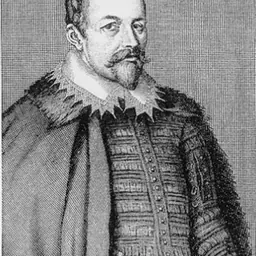
Lived 1583 – 1654 (aged 71). Orazio Grassi was an Italian astronomer, mathematician and architect.
Orazio Grassi (b. Savona 1 May 1583 – d. Rome 23 July 1654) was an Italian Jesuit priest, who is best noted as a mathematician, astronomer and architect. He was one of the authors in controversy with Galileo Galilei on the nature of comets. His writings against Galileo were published under the pseudonym Sarsi.
Early life Grassi was born in Savona, then part of the Republic of Genoa. He entered the novitiate of the Society of Jesus at the Church of Sant'Andrea al Quirinale in Rome in 1600. Following the profession of his first religious vows in 1603, he began studies at the Roman College, where he took courses in philosophy, theology and mathematics. Among his professors were the noted German Jesuit mathematicians, Christopher Clavius, Christoph Grienberger and Odo Van Maelcote. He continued his studies there until 1610.
In 1614, Grassi was assigned to serve as Jesuit college in Genoa in the capacity of assistant Master of novices. He served in that position for two years before being named to the faculty of the Roman College as a professor of mathematics. During that period, his research focused on pure mathematics, as well as on optics and architecture. In 1617, he published a series of lectures he had given on the eye, , under the pseudonym of Galeazzo Mariscotto, as well as the . He pronounced solemn vows in the Society in 1618, at which time he received Holy Orders as a priest, following which he was given the chair in mathematics. He held this position until 1628.
Galileo received a copy of Grassi's lecture and was very angered by it. The notes he scribbled in the margin of his copy are full of insults— ('piece of utter stupidity'), ('buffoon'), ('wicked idiot'), ('bumbling idiot'). Galileo responded with his Discourse on Comets, which was a rebuttal of many of the arguments, advanced by Grassi, but originally made by Tycho Brahe. It suggested that the absence of parallax with comets was due not to their great distance from the Earth, but to their probably being atmospheric effects. Galileo also maintained their paths were straight, rather than circular, as Brahe and Grassi believed. As well as attacking Grassi, the Discourse also continued an earlier dispute with another Jesuit, Christoph Scheiner about sunspots.
Grassi replied in turn with his treatise published under the pseudonym of Lotario Sarsi Sigensano (an anagram of Horatius Grassius Salonensis, his name in Latin). In this Grassi both noted how close the ideas in Galileo's Discourse were to those advanced by Gerolamo Cardano and Bernardino Telesio (which the Church regarded as dangerous) and set out scientific arguments and experimental test results to show that comets were definitely not optical illusions. Grassi's work provoked another furious reaction from Galileo in the shape of his 1623 work Il Saggiatore, in which he was savagely dismissive of Grassi's efforts. Although most scholars do not agree that Grassi was its author, it is noteworthy that his second response to , the (1626), contains many of the same arguments as the anonymous complaint. While Libra had focused mainly on astronomical issues, Ratio focused on doctrinal issues. ... unlike The Assayer, which had recourse to the lethal polemical weapons of satire and the new philosophy, the Ratio used those no-less-lethal weapons of doctrinal and dialectical retort based on religious and philosophical orthodoxy.
No further arguments were published on either side by Grassi or Galileo on these matters after this. In 1632 he was called to Terni to assist with the building of the church of S. Lucia; and soon after, with the college of Montepulciano and a church in Viterbo.
Works
Don’t just read it —
keep it.
Full-length biographies made to live with: read them, listen on the way to work, watch them tonight.
- E-book
- Audio
- Video
Instant download · yours to keep · every purchase keeps this site free
Important facts
People in Orazio Grassi's life
Named in this biography and alive at the same time


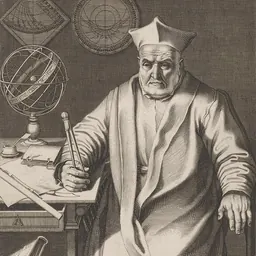
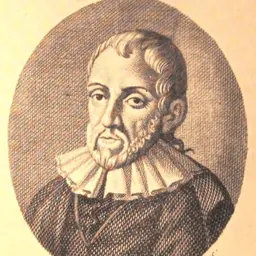

Related people
Same field, nearest in time
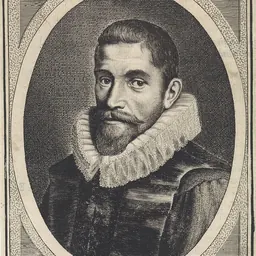
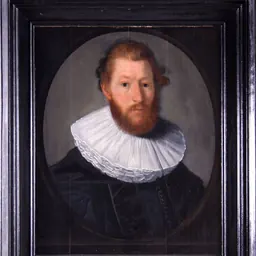


Contemporaries
People whose lives overlapped Orazio Grassi's


Frequently asked questions
Who was Orazio Grassi?
Italian Jesuit priest, architect and scientist
When was Orazio Grassi born?
Orazio Grassi was born on 1 May 1583 in Savona.
When did Orazio Grassi die?
Orazio Grassi died on 23 July 1654 in Rome.
What was Orazio Grassi's occupation?
Orazio Grassi was an astronomer, mathematician and architect.
What nationality was Orazio Grassi?
Orazio Grassi was Italian.
Sources & further reading
Cite this page
APA: Biography.guide. (2026). Orazio Grassi. https://biography.guide/orazio-grassi/
MLA: "Orazio Grassi." Biography.guide, https://biography.guide/orazio-grassi/.
Chicago: "Orazio Grassi." Biography.guide. https://biography.guide/orazio-grassi/.
Data last updated: 2026-09-20 · Spot an error? Report a correction.
Page generated 2026-09-27 05:15 UTC