
Ondřej Sekora
Czech entomologist, rugby union footballer and coach, writer and artist
About Ondřej Sekora
Lived 1899 – 1967 (aged 67). Ondřej Sekora was a Czech writer, journalist, children's writer, painter, rugby union player and entomologist.
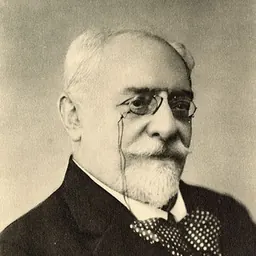
Ondřej Sekora (25 September 1899 – 4 July 1967) was a Czech painter, illustrator, writer, journalist and entomologist. He is known mainly as an author of children books. Sekora was also one of the first propagators of rugby in Czechoslovakia.
Biography In 1919, Sekora graduated from the gymnasium in Vyškov. He then studied at the Faculty of Law of Masaryk University. From 1921, he worked as a sports editor, illustrator, reporter and commentator for Lidové noviny newspaper in Brno. In 1927, the editorial office of Lidové noviny moved to Prague.
Sekora married his second wife, Ludmila Roubíčková, in 1931. A year later they had a son, who was also named Ondřej. In 1941, during World War II, he was forced to leave his job and expelled from the Federation of Czech Journalists. The reason was his mixed marriage. His second wife, Ludmila, was of Jewish origin, and the whole family was persecuted by Germans as racially mixed. From October 1944 to April 1945, he was imprisoned in the German labor camps in Kleinstein (Poland) and Osterode (Germany). In the post-war years he actively participated in the Czechoslovak communist agitation and propaganda.
Sekora trained the first Czech rugby clubs, Moravská Slávie in Brno-Pisárky and AFK Žižka Brno among others. He also created the Czech rugby terminology. He co-founded and edited the magazine Sport.
The Main-belt asteroid 13406 Sekora, discovered in 1999, is named after him.
Rugby Rugby union was introduced to Czechoslovakia (as it was then) by Ondřej Sekora, when he returned from living in France in 1926, with a rugby ball and set of rules. Brno, the Moravian capital is considered the cradle of rugby in Czechoslovakia, and is where the first match took place, between SK Moravská Slávie, based in Brno-Pisárky, and AFK Žižka, based in Brno. Both of these teams were trained by Sekora, who also coined Czech language rugby terminology.
Style Sekora became popular as an author of comic strips, published in Lidové noviny in the 1930s and at the beginning of the 1940s. He was inspired by cartoons of Walt Disney, Wilhelm Busch and Albert Dubout. His short stories were full of humor, with indications of situation comedy. The basis of his style was lively and dynamic drawing with clear contours, accompanied with quatrains. His verses were often inspired by folk speech. He is known as the creator of animated characters Ferda Mravenec ("Ferda the Ant") and Brouk Pytlík ("Pouch the Beetle").
Selected works Books Rugby, jak se hraje a jeho pravidla ("Rugby, How to Play It and the Rules") (1926, translated from French) Ferda Mravenec ("Ferda the Ant") (1936) Ferda Mravenec v cizích službách (1937) Ferda v mraveništi ("Ferda in the Anthill") (1938) Ferdův slabikář ("Ferda's Primer") (1939) Trampoty brouka Pytlíka ("Troubles of Pouch the Beetle") (1939) Malířské kousky brouka Pytlíka (1940) Kuře Napipi a jeho přátelé ("The Chicken Napipi and its Friends") (1941) Uprchlík na ptačím stromě (1943) (awarded at the Expo 58 in Brussels) Ferda cvičí mraveniště (1947) Kronika města Kocourkova ("The Chronicles of the Town of Kocourkov") (1947) Jak se uhlí pohněvalo (1949) Pohádka o stromech a větru ("Fairy Tale about the Trees and Wind") (1949) O zlém brouku Bramborouku (1950) Ferda Mravenec ničí škůdce přírody (1951) Malované počasí ("Painted Weather") (1951) O traktoru, který se splašil (1951) Mravenci se nedají (1954) Na dvoře si děti hrály (1955) Čmelák Aninka ("Aninka the Bumblebee") (1959) Hurá za Zdendou (1960) O psu vzduchoplavci (1961) Pošta v ZOO ("Post in ZOO") (1963)
The first three books about Ferda Mravenec were published in 1960s under the title Knížka Ferdy Mravence (The Book of Ferda the Ant).
Both books of Brouk Pytlík ("Pouch the Beetle") were published since 1969 under the title Brouk Pytlík.
Comics Voříškova dobrodružství (1926) Jak Cvoček honil pytláka (1932) Kapitán Animuk loví v Africe (1934) Hej a Rup (1935) Slavnost u broučků (1938) Kousky mládence Ferdy Mravence (1950) Nápady kuřete Napipi (1961) Kapitán Animuk opět loví v Africe (1972)
Book illustration Jindřich Plachta: Pučálkovic Amina (1931) Vladislav Vančura: Kubula a Kuba Kubikula (1931) Hugo Vavris: František Lelíček ve službách Sherlocka Holmese (1932) František Langer: Bratrstvo bílého klíče (1934) Jiří Weiss: O věrné Hadimršce … a co se kolem ní sběhlo (1935), published by Melantrich Arthur Ransome: Zamrzlá loď kapitána Flinta (1937) Josef Kopta: Smějte se s bláznem (1939) Jarmila Hašková: Z notesu svatého Petra (1940) Jan Karafiát: Broučci (1940) Josef Věromír Pleva: Malý Bobeš (1941) Ema Tintěrová: Veselé příhody kozy Lujzy a kocoura Bobka (1942) Jan Malík: Míček Flíček (1946) Mikhail Zoshchenko: Psí čich (1946) Eduard Štorch: Lovci mamutů na Bílé skále (1946) Václav Čtvrtek: Lev utekl (1948) František Němec: Soudničky (1948) Ema Řezáčová: Dům na kolečkách (1948) Václav Lacina: Slyš a piš ("Listen and Write") (1949) Jarmila Minaříková: Ježourek a Pišta, jeho bratr (1949) Irina Karnauchová: Chytrý sedláček a jiné pohádky ("Clever Peasant and Other Fairytales") (1954) Gianni Rodari: O statečném Cibulkovi ("The Adventures of the Little Onion") (1955) Jan Hostáň: Švitořilky (1961)
Don’t just read it —
keep it.
Full-length biographies made to live with: read them, listen on the way to work, watch them tonight.
- E-book
- Audio
- Video
Instant download · yours to keep · every purchase keeps this site free
Important facts
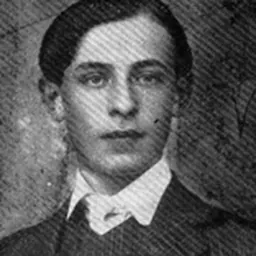
People in Ondřej Sekora's life
Named in this biography and alive at the same time






Related people
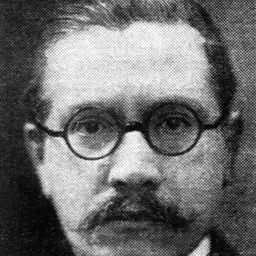
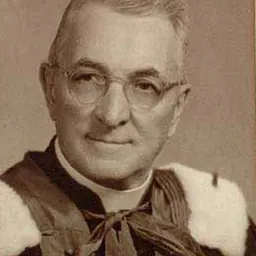
Same field, nearest in time



Contemporaries
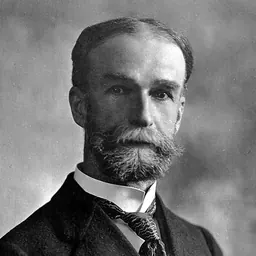
People whose lives overlapped Ondřej Sekora's


Frequently asked questions
Who was Ondřej Sekora?
Czech entomologist, rugby union footballer and coach, writer and artist (1899-1967)
When was Ondřej Sekora born?
Ondřej Sekora was born on 25 September 1899 in Královo Pole.
When did Ondřej Sekora die?
Ondřej Sekora died on 4 July 1967 in Prague.
What was Ondřej Sekora's occupation?
Ondřej Sekora was a writer, journalist, children's writer, painter, rugby union player and entomologist.
What nationality was Ondřej Sekora?
Ondřej Sekora was Czech.
Sources & further reading
Cite this page
APA: Biography.guide. (2026). Ondřej Sekora. https://biography.guide/ondrej-sekora/
MLA: "Ondřej Sekora." Biography.guide, https://biography.guide/ondrej-sekora/.
Chicago: "Ondřej Sekora." Biography.guide. https://biography.guide/ondrej-sekora/.
Data last updated: 2026-09-20 · Spot an error? Report a correction.
Page generated 2026-09-27 05:34 UTC