
About Olivier Le Cour Grandmaison
Born 1960. Olivier Le Cour Grandmaison is a French political scientist.
Olivier Le Cour Grandmaison (born 19 September 1960), is a French political scientist and author whose work chiefly centres on colonialism. He is best known for his book Coloniser, Exterminer - Sur la guerre et l'Etat colonial.
Le Cour Grandmaison is a professor of political science at the Évry-Val d'Essonne University and a teacher at the Collège International de Philosophie. He is the president of the 17 October 1961 Association Against Oblivion, which advocates official recognition for the crimes committed by France during the 1961 Paris massacre.
Coloniser, Exterminer In his book Coloniser, Exterminer (2005), Le Cour Grandmaison states that techniques and concepts used during the period of late 19th-century New Imperialism were later used during the Holocaust. He points to both Tocqueville and Michelet who spoke of "extermination" during the colonization of the Western United States and the removal of Native American tribes. He quotes Tocqueville's 1841 comment on French conquest of Algeria: "In France I have often heard people I respect, but do not approve, deplore [the army] burning harvests, emptying granaries and seizing unarmed men, women and children. As I see it, these are unfortunate necessities that any people wishing to make war on the Arabs must accept... I believe the laws of war entitle us to ravage the country and that we must do this, either by destroying crops at harvest time, or all the time by making rapid incursions, known as raids, the aim of which is to carry off men and flocks"
"Whatever the case, continued Tocqueville, we may say in a general manner that all political freedoms must be suspended in Algeria."
According to LeCour Grandmaison, "De Tocqueville thought the conquest of Algeria was important for two reasons: first, his understanding of the international situation and France’s position in the world, and, second, changes in French society." Tocqueville, who despised the July Monarchy (1830–1848), believed that war and colonization would "restore national pride, threatened, he believed, by "the gradual softening of social mores" in the middle classes. Their taste for "material pleasures" was spreading to the whole of society, giving it "an example of weakness and egotism". Applauding the methods of Thomas Robert Bugeaud, Tocqueville went as far as saying that "war in Africa" had become a "science":
"...war in Africa is a science. Everyone is familiar with its rules and everyone can apply those rules with almost complete certainty of success. One of the greatest services that Field Marshal Bugeaud has rendered his country is to have spread, perfected and made everyone aware of this new science". In the same interview, LeCour Grandmaison, distinguishes between the criticisms of colonial abuse and those of the principle of colonization itself, basing his arguments on Zola, Victor Hugo, Lamartine, Darwin, André Gide, Albert Londres, Jules Verne, Maupassant, Foucault, Barthes and Joseph Conrad. He states how Marx, Engels and their contemporaries were not immune to 19th-century racial ideology, as they too considered colonization as inevitable and justified, and non-European people as "primitives" and "barbarians". It wasn't until the Third International that the socialist movement opposed colonialism and supported national liberation movements.
State racism Following the views of Michel Foucault, LeCour Grandmaison spoke of a "state racism" under the French Third Republic, notable by the example of the 1881 Indigenous Code applied in Algeria. Replying to the question "Isn't it excessive to talk about a state racism under the Third Republic?", he replied: "No, if we can recognize "state racism" as the vote and implementation of discriminatory measures, grounded on a combination of racial, religious and cultural criteria, in those territories. The 1881 Indigenous Code is a monument of this genre! Considered by contemporary prestigious jurists as a "juridical monstruosity", this code planned special offenses and penalties for "Arabs". It was then extended to other territories of the empire. On one hand, a state of rule of law for a minority of French and Europeans located in the colonies. On the other hand, a permanent state of exception for the "indigenous" people. This situation lasted until 1945." The legislation was repealed by president Jacques Chirac in 2006 following criticisms in France from historians and the left-wing, and from abroad, including Algerian president Abdelaziz Bouteflika and Négritude writer Aimé Césaire.
Don’t just read it —
keep it.
Full-length biographies made to live with: read them, listen on the way to work, watch them tonight.
- E-book
- Audio
- Video
Instant download · yours to keep · every purchase keeps this site free
Important facts
People in Olivier Le Cour Grandmaison's life
Named in this biography and alive at the same time

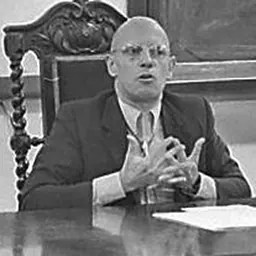



Related people
Same field, nearest in time
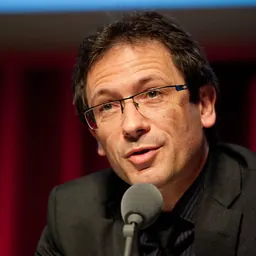



Contemporaries
People whose lives overlapped Olivier Le Cour Grandmaison's


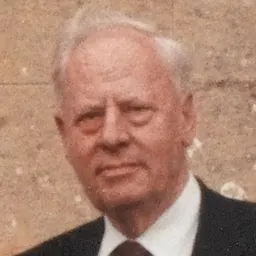
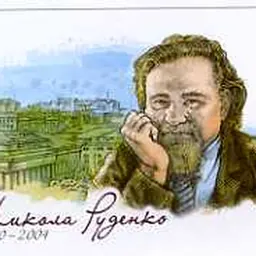

Frequently asked questions
Who is Olivier Le Cour Grandmaison?
French historian
When was Olivier Le Cour Grandmaison born?
Olivier Le Cour Grandmaison was born on 19 September 1960 in Paris.
What is Olivier Le Cour Grandmaison's occupation?
Olivier Le Cour Grandmaison is a political scientist.
What nationality is Olivier Le Cour Grandmaison?
Olivier Le Cour Grandmaison is French.
Sources & further reading
· Wikipedia: Olivier Le Cour Grandmaison
· DBpedia: Olivier Le Cour Grandmaison
Cite this page
APA: Biography.guide. (2026). Olivier Le Cour Grandmaison. https://biography.guide/olivier-le-cour-grandmaison/
MLA: "Olivier Le Cour Grandmaison." Biography.guide, https://biography.guide/olivier-le-cour-grandmaison/.
Chicago: "Olivier Le Cour Grandmaison." Biography.guide. https://biography.guide/olivier-le-cour-grandmaison/.
Data last updated: 2026-09-20 · Spot an error? Report a correction.
Page generated 2026-09-27 05:27 UTC