
About Oliver Ivanović
Lived 1953 – 2018 (aged 64). Oliver Ivanović was a Serbian and Yugoslav politician and economist.
Oliver Ivanović (; 1 April 1953 – 16 January 2018) was a Kosovo Serb politician.
Ivanović served as the State Secretary of the Ministry for Kosovo and Metohija from 2008 to 2012 and was also a member of the Coordination Center for Kosovo and Metohija from 2001 to 2008. He was assassinated by unknown perpetrators on 16 January 2018 in North Mitrovica.
Early life and career Ivanović was born in Rznić, a village near Dečani in the west of SAP Kosovo, FPR Yugoslavia (now Kosovo), on 1 April 1953. His father, Bogdan, was a history professor, and his mother, Olga, was a professor of Serbian language and literature. He also had a brother, Miroslav, and a sister, Nataša. His paternal heritage was Montenegrin. Three years into his studies he was diagnosed with a color vision deficiency and left the Military Academy.
He was appointed as the minister in the newly formed Government of Kosovo and a member of the Presidency of the Assembly of Kosovo on 2 December 2001. In March 2004, a violent unrest in Kosovo broke out, in which Kosovo Albanians took part in wide-ranging attacks on the Kosovo Serbs minority. The Government of Kosovo consisted of Serbian representatives fell soon after.
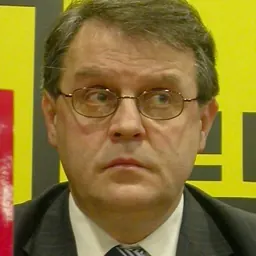
2004–2008 In 2004, Ivanović's party Democratic Alternative (DA) merged into the Social Democratic Party (SDP), and he together with Nebojša Čović became one of the party's leaders.
Also, in the same year he became the director of the National Employment Service for Kosovo and Metohija controlled by the Government of Serbia. The election was massively boycotted by Kosovo Serbs. Eventually, the list won 1,414 votes, thus taking 8 out of 10 Serbian minority places in the Assembly of Kosovo (110 places in total). while all 11 representatives of the Kosovo Serbs minority boycotted the proceedings.
In July 2008, Ivanović joined the Government of Serbia as the State Secretary of the newly formed Ministry for Kosovo and Metohija under Minister Goran Bogdanović. The Ministry took over jurisdictions of disbanded "Coordination Center for Kosovo and Metohija".
In January 2010, the Social Democratic Party ceased to exist, which resulted in an exchange of bitter words between Ivanović and Čović. Soon after, he formed a civic initiative "Srbija, demokratija, pravda" (Eng. "Serbia, democracy, justice"). Since then, he served as president of the civic initiative.
He stayed on the position of the State Secretary until July 2012.
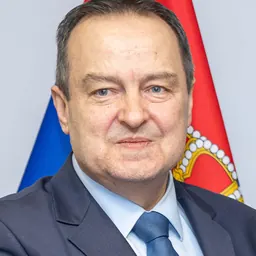
In July 2012, following the 2012 Serbian parliamentary election, the Serbian Progressive Party led by Aleksandar Vučić and Socialist Party of Serbia led by Ivica Dačić formed the Government of Serbia.
2013–2018: Political decline In April 2013, the Government of Serbia and the Government of Kosovo signed the Brussels Agreement on the normalization of their relations.
2013 Local elections In September 2013, Ivanović announced that his civic initiative was forced to change its name from "SDP" - "Srbija, demokratija, pravda" (Eng. "Serbia, democracy, justice"), to "GI SDP - Oliver Ivanovic", following the request of the Central Election Commission of Kosovo, which banned the use of the other countries' name for names of political organizations operating in Kosovo.
Ivanović decided to run in the 2013 Kosovan local elections for the president of North Mitrovica, with his civic initiative "SDP". The election campaign was marked with the Serbian Progressive Party-led Government of Serbia public calls to Kosovo Serbs to come out and vote in Kosovan elections organized by the Government of Kosovo, for the first time since Kosovo gained independence. The Government of Serbia also called the citizens to vote for the Serb List candidates.
2014–17 Imprisonment and threats In January 2014, two months following the local elections, Ivanović was arrested on suspicion over war crimes which occurred in 1999 and 2000. He was sentenced to nine years in jail on 21 January 2016 for war crimes by judges from the EULEX Kosovo. However, the Appeals Court in Pristina annulled the guilty verdict on 12 February 2017 and ordered a new trial. The case was dropped after his assassination. In 2021, Malcolm Simmons, former head judge at the EU’s rule-of-law mission in Kosovo, told Kosovo MPs that he was pressured by EULEX to bring a case against Ivanović for political reasons so that he would not run for office.
In July 2017, his car was burned down by unknown perpetrators.
In September 2017, three months after the 2017 Kosovan parliamentary election, the Serb List with the support of the Serbian political leadership, formed the Government of Kosovo with PANA Coalition, which is formed of former Kosovo Liberation Army leaders (active in Kosovo War).
Ivanović was released from prison in early 2017 and at that time pointed out the poor circumstances in North Kosovo where Serbs formed the majority. In an interview, he stated that Kosovo Serbs in North Kosovo are not afraid of Kosovo Albanians, but rather of, "Serbs, local criminals who ride in SUVs without car plates". He also said that, "Drugs are sold on every corner and parents are very concerned." He pointed that in just a few years, there had been over 50 cases of burned vehicles, many hand grenades thrown, and two unresolved murders committed, and added that, "All this happened on a territory of just two and a half square kilometers, which happens to be completely covered by security cameras".
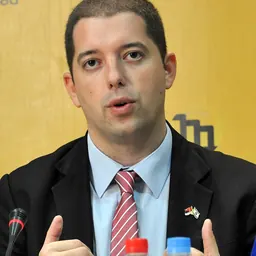
Goran Rakić, a leader of the Serb List and opponent in elections for North Mitrovica, labelled Ivanović as an "irrelevant person" in Kosovo politics. Also, prominent officials of the Government of Serbia among whom was the director of the Office for Kosovo and Metohija Marko Đurić, blatantly discredited Ivanović labeling him as "traitor" and anti-Serbian politician. Ivanović responded by saying: "I have proven my Serbian patriotism in a much more difficult way than those who are accusing me of being anti-Serbian, I hope, will have to prove theirs [Serbian patriotism]. Also, the Serb List won in all 10 Serb-majority municipalities. Resuscitation attempts were performed at Mitrovica Hospital shortly afterwards up to 9:15, but they were unsuccessful.
Autopsy findings revealed that Ivanović had been hit by six 9mm PARA bullets from a Zastava M70A pistol, mainly hitting his upper torso (vital organs – upper aorta, hollow vein and liver). In an interview four days prior to the assassination, he had admitted that he feared for his safety.
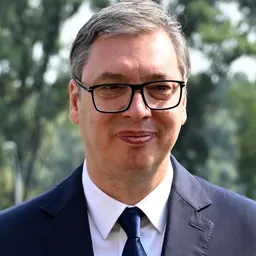
Soon afterwards, President of Serbia Aleksandar Vučić scheduled an emergency session of the National Security Council of Serbia. This was the first assassination of a Serbian politician since the murder of former Prime Minister of Serbia Zoran Đinđić fifteen years earlier, on 12 March 2003.
His funeral took place on Thursday January 18, in the New Cemetery of Belgrade.
Investigation
Investigation in Kosovo Kosovo police arrested four persons on 23 November 2018: three suspected towards involvement in the murder and one for obstruction to police work.
Silvana Arsović, Oliver Ivanović party's administrator, was detained for 48 hours on 26 November 2018 to be questioned under suspicion if she manipulated security cameras outside the party office in Mitrovica before the murder, when the murder took place near the office. Prosecutor Syle Hoxha said that Silvana Arsović was detained only for 48 hours.
Kosovo police officer Dragiša Marković was detained for 1 day on 10 February 2018 under suspicion of manipulating the evidences on the place of the murder of Oliver Ivanović. Then, he was arrested a second time on 23 November 2018.
In February 2020, a new trial began with six Serbs charged with the participation in the assassination of Ivanović. All of them pleaded not guilty of all charges at the preparatory hearing before the Special Court in Pristina. In June 2024, four individuals were convicted and sentenced to prison: Marko Rosić, Nedelko Spasojević, Dragisa Marković and Zarko Ivanović. Silvana Arsović was acquitted during the trial while another one of the suspects, Rade Basara, was also previously acquitted.
Investigation in Serbia Nebojša Stefanović, Serbian Interior Minister, told in January 2019 that Serbia is leading its own investigation towards the murder tracing some persons who were in north Kosovo then moved to Western Europe. He didn't name the suspected.
Personal life Beside his native language Serbian, he also spoke Albanian, English and Italian.
He was in relationship with Milena Popović, with whom he had a son.
Don’t just read it —
keep it.
Full-length biographies made to live with: read them, listen on the way to work, watch them tonight.
- E-book
- Audio
- Video
Instant download · yours to keep · every purchase keeps this site free
Important facts
Family & relationships
People in Oliver Ivanović's life
Named in this biography and alive at the same time



Related people
Same field, nearest in time





Contemporaries
People whose lives overlapped Oliver Ivanović's

Frequently asked questions
Who was Oliver Ivanović?
Serbian politician and economist
When was Oliver Ivanović born?
Oliver Ivanović was born on 1 April 1953 in Irzniq.
When did Oliver Ivanović die?
Oliver Ivanović died on 16 January 2018 in North Mitrovica.
What was Oliver Ivanović's occupation?
Oliver Ivanović was a politician and economist.
What nationality was Oliver Ivanović?
Oliver Ivanović was Serbian and Yugoslav.
Sources & further reading
Cite this page
APA: Biography.guide. (2026). Oliver Ivanović. https://biography.guide/oliver-ivanovic/
MLA: "Oliver Ivanović." Biography.guide, https://biography.guide/oliver-ivanovic/.
Chicago: "Oliver Ivanović." Biography.guide. https://biography.guide/oliver-ivanovic/.
Data last updated: 2026-09-26 · Spot an error? Report a correction.
Page generated 2026-09-27 05:14 UTC