
Oliver Brown
American pastor, welder, and civil rights activist
About Oliver Brown
Lived 1918 – 1961 (aged 42). Oliver Brown was an American welder, known for Brown v. Board of Education.
Oliver Leon Brown (August 2, 1918 – June 20, 1961) was an American welder and episcopal pastor who was the plaintiff in the landmark 1954 United States Supreme Court case Oliver Brown, et al. v. Board of Education of Topeka, et al. In 1959, he was tenured as pastor of the city's Benton Avenue AME Church from 1959 until his death in 1961.
Biography and Supreme Court case Brown was recruited to be part of the Topeka NAACP legal action to desegregate the city's public elementary schools in 1950. At the time, he was a welder for the Atchison, Topeka and Santa Fe Railway and studying to become a minister. Attorney Charles Scott, his childhood friend, asked him to join the roster of parents who would become plaintiffs in the organization's case against the Topeka Board of Education.
By the fall of 1950, the Topeka NAACP had assembled a group of 13 parents to serve as plaintiffs for the case that would eventually be filed under the name of one of the parents, Oliver Brown, becoming known as Oliver L. Brown et al. v. the Board of Education of Topeka (KS). In the Topeka NAACP case, parents involved were concerned that their children had to be bused many blocks away from their neighborhoods when there were schools nearby. However, those schools were segregated, and for white children only. African-American children were assigned to one of the only four segregated schools for them.
After an unsuccessful attempt in federal district court, the NAACP case was appealed to the United States Supreme Court, where it was joined with cases from Delaware, South Carolina, Virginia, and Washington, D.C.
After the initial arguments in early 1953, the high court suffered the loss of Chief Justice Fred Vinson, who died suddenly. President Dwight Eisenhower then appointed former California Governor Earl Warren, who set a schedule for the cases to be reargued in late 1953. After several months of oral arguments, led by attorney Thurgood Marshall, who was director and counsel for the NAACP Legal Defense Fund (and would later be a Supreme Court justice himself), on May 17, 1954, Chief Justice Warren announced the court's landmark unanimous decision in favor of the plaintiffs. The plaintiffs included several hundred parents in addition to the 13 families in the Topeka case.
This decision overturned the "separate but equal" doctrine that had been used as the standard in civil rights lawsuits since the Plessy v. Ferguson case in 1896, in effect declaring it unconstitutional to have separate public schools for Black and white students. The decision is considered a major milestone in the Civil Rights Movement.
Death and legacy Brown was only 42 in 1961, when he became ill and died suddenly of a heart attack on the Kansas Turnpike just outside of Lawrence. He had been riding with fellow pastor Maurice Lange enroute to Topeka where his wife and daughters were visiting her parents.
In 1988, the nonprofit Brown Foundation for Educational Equity, Excellence and Research was founded by Oliver Brown's family, along with Topeka community members, to preserve the legacy of the Brown decision. His daughter Cheryl Brown Henderson is the founding president of the foundation.
On October 26, 1992, after two years of work by the Brown Foundation, President George H. W. Bush signed the Brown v. The Board of Education National Historic Site Act, establishing the former Monroe Elementary School, one of the four formerly segregated African American elementary schools, as a national historic site.
Oliver and Leola’s eldest daughter Linda Brown Thompson died on March 25, 2018, at the age of 75. When she died, the media reported erroneously that she had been the center of the Brown case, when in fact the focus of the arguments was on behalf of numerous plaintiffs from the five cases consolidated by the United States Supreme Court.
Don’t just read it —
keep it.
Full-length biographies made to live with: read them, listen on the way to work, watch them tonight.
- E-book
- Audio
- Video
Instant download · yours to keep · every purchase keeps this site free
Important facts
People in Oliver Brown's life
Named in this biography and alive at the same time

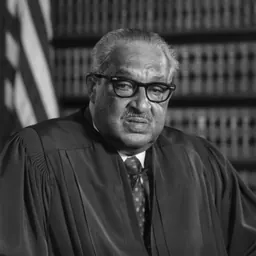

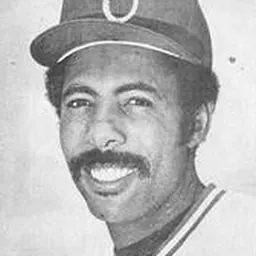
Related people
Same field, nearest in time





Contemporaries
People whose lives overlapped Oliver Brown's


Frequently asked questions
Who was Oliver Brown?
American pastor, welder, and civil rights activist
When was Oliver Brown born?
Oliver Brown was born on 19 August 1918 in Springfield.
When did Oliver Brown die?
Oliver Brown died on 1 June 1961.
What was Oliver Brown's occupation?
Oliver Brown was a welder.
What was Oliver Brown known for?
Oliver Brown was known for Brown v. Board of Education.
What nationality was Oliver Brown?
Oliver Brown was American.
Sources & further reading
· DBpedia: Oliver Brown (American activist)
Cite this page
APA: Biography.guide. (2026). Oliver Brown. https://biography.guide/oliver-brown/
MLA: "Oliver Brown." Biography.guide, https://biography.guide/oliver-brown/.
Chicago: "Oliver Brown." Biography.guide. https://biography.guide/oliver-brown/.
Data last updated: 2026-09-22 · Spot an error? Report a correction.
Page generated 2026-09-27 05:26 UTC