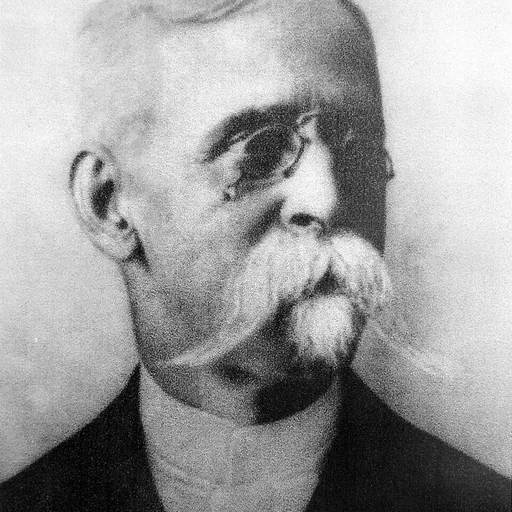
About Olimpio Otero Vergés
Lived 1845 – 1911 (aged 65–66). Olimpio Otero Vergés was an American merchant, composer, civics, editor and lawyer.
Olimpio Otero Vergés (1845 – 7 September 1911) was a merchant, attorney, composer, musical editor, and a civic leader in Ponce, Puerto Rico.
Early years Otero Vergés was born in Ponce, Puerto Rico, in 1845. His parents were Antonio Otero Aquilina y Josefa Verges de Perea. He was one of three children in the family. His siblings were Adquilina and Josefa Verges de Clodomiro.
Merchant, composer, and musical editor
Otero founded the first publishing house to publish and distribute Puerto Rican music, called Bazar Otero, on Calle Atocha. His efforts made possible the circulation and distribution of music from the most important composers of his time, such as Manuel Gregorio Tavarez and Juan Morel Campos. The Bazar was also a gathering point for musicians of the area. One of Otero's better known musical compositions is "La Cuñadita".
Civic leader and political activist
As a civic leader, Otero Verges led the Agricultural and Industrial Tobacco Exposition held in Ponce in 1883, just a year after the successful 1882 Exposition Fair that was held in the same city at Plaza Las Delicias in the building now called Parque de Bombas.
In October, 1887, Otero led a three-member commission that organized an expedition to Madrid, Spain, for Julio Vizcarrondo and Juan Bautista Arrillaga Roque to denounce the injustices perpetrated by Spanish governor General Romualdo Palacio González. It resulted in the removal of General Palacio from office.
Otero is also known for his activism for the creation of a road, now PR-123, to link Ponce and Arecibo in the late nineteenth century. In 1903, the Puerto Rico Legislature named a bridge on the Ponce to Adjuntas section of the road in his memory. The bridge is located in Barrio Magueyes of the municipality of Ponce. A prominent local civic and community leader, Otero was also a member of the organizing board that made possible the 1883 Ponce Fair.
Parque de la Abolicion
In 1880 Otero, together with Juan Mayoral Barnés and Román Baldorioty de Castro, was instrumental in creating the concept for a park in Ponce — known as Parque de la Abolicion — dedicated to the abolition of slavery, at the time the only such memorial in the Caribbean.
Legacy In Ponce, there is a school named after him on Calle Villa (Final). A bridge between Ponce and Adjuntas is called the Otero Viaduct, in his memory. A plaque recognizes him at Ponce's Park of Illustrious Ponce Citizens.
Don’t just read it —
keep it.
Full-length biographies made to live with: read them, listen on the way to work, watch them tonight.
- E-book
- Audio
- Video
Instant download · yours to keep · every purchase keeps this site free
Important facts
People in Olimpio Otero Vergés's life
Named in this biography and alive at the same time

Related people
Same field, nearest in time


Contemporaries
People whose lives overlapped Olimpio Otero Vergés's


Frequently asked questions
Who was Olimpio Otero Vergés?
Puerto Rican politician and businessman
When was Olimpio Otero Vergés born?
Olimpio Otero Vergés was born in 1845 in Ponce.
When did Olimpio Otero Vergés die?
Olimpio Otero Vergés died on 7 September 1911.
What was Olimpio Otero Vergés's occupation?
Olimpio Otero Vergés was a merchant, composer, civics, editor and lawyer.
What nationality was Olimpio Otero Vergés?
Olimpio Otero Vergés was American.
Sources & further reading
· Wikipedia: Olimpio Otero Vergés
· DBpedia: Olimpio Otero Vergés
Cite this page
APA: Biography.guide. (2026). Olimpio Otero Vergés. https://biography.guide/olimpio-otero-verges/
MLA: "Olimpio Otero Vergés." Biography.guide, https://biography.guide/olimpio-otero-verges/.
Chicago: "Olimpio Otero Vergés." Biography.guide. https://biography.guide/olimpio-otero-verges/.
Data last updated: 2026-09-22 · Spot an error? Report a correction.
Portrait: Wikimedia Commons · author & licence
Page generated 2026-09-27 04:57 UTC