
About Olga von Türk-Rohn
Lived 1865 – 1940 (aged 74). Olga von Türk-Rohn was a voice teacher and opera singer.
Olga von Türk-Rohn, also known by her title through marriage as Baroness von Türk-Rohn and by her maiden name Baroness Olga von Rohn (3 June 1865 – 26 February 1940), was an Austrian soprano and voice teacher. She began her career as a concert soprano in 1887 and then worked as an opera singer in Graz from 1888 to 1890. She also sang in one opera with the Vienna State Opera before her marriage to Baron Camillo von Türk in either 1891 or 1897.
After marrying, Türk-Rohn stopped performing in operas, but continued to be a celebrated concert soprano in Europe from the 1890s to the early 1910s. She drew particular acclaim for her performances in oratorios and German lieder. Türk-Rohn was regarded as a leading interpreter of the works of Franz Schubert, a distinction that was acknowledged through several honors, including the Franz Schubert Silver Medal. Her voice from this period is preserved on several recordings she made in Vienna and in Germany from 1905 to 1907. She also taught on the voice faculties of two music schools in Vienna: the Lutwak-Patonay-Konservatorium and the Neues Wiener Konservatorium.
In 1913 Türk-Rohn immigrated with her family to the United States after receiving a contract to perform in operas with a company managed by Oscar Hammerstein I. The planned opera performances never materialized, but Türk-Rohn performed in concerts and recitals in the United States beginning in late 1913. World War I interrupted her performance career. She was living in New York City in 1923 when she relocated to Chicago to join the faculty of Esther Harris's Chicago College of Music. She remained in Chicago for the rest of her professional life, working as a voice teacher both privately and for a variety of different music schools in that city. She ended her teaching career as dean of the vocal department of The Chicago Conservatory College in the mid-1930s. She was also active as a recitalist, concert and radio singer, and conductor while living in Chicago during the 1920s and 1930s. She moved back to New York City late in her life, dying there in 1940.
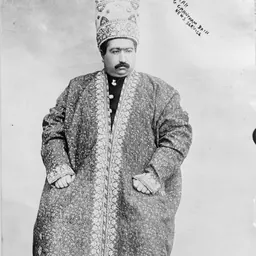
Early life and opera career Born Olga Carolina Ludovika von Rohn in Vienna on 3 June 1865, Türk-Rohn was the daughter of Baron Robert von Rohn (also given as Rohnau) and Carolina Anna Tyll. She was encouraged to pursue vocal training and a career as a singer by Mathilde Marchesi who heard her sing at the age of fifteen. Some sources claim her first lessons were with Marchesi at this age, Some sources claim their marriage took place in Vienna on 6 October 1891, She also developed a close working relationship with Czech composer Rudolf Procházka (1864–1936), and performed his Das Glück in concerts in Vienna, Prague and Pilsen. and in 1912 she was awarded the Franz Schubert Silver Medal She was the recipient of honors from Franz Joseph I of Austria, Carol I of Romania, Ferdinand I of Bulgaria, and Mohammad Ali Shah Qajar, the Shah of Persia. In February 1914 she performed in concert with the French harpist Carlos Salzedo at Brunswick Hall in Brunswick, New Jersey, and the following month performed in a concert of German music sponsored by Wanamaker's at Egyptian Hall, Masonic Temple in Philadelphia. She then embarked on a lengthy concert tour of the United States. This tour was interrupted by World War I, and her performance career mainly ceased.
Türk-Rohn's daughter, Hertha Türk-Rohn, was also a concert and opera singer. At the time of their marriage, Olga von Türk-Rohn was living in New York City at 52 W 37th Street. Later that year, both she and conductor Ernst Knoch were visiting instructors at Esther Harris's Chicago College of Music (CCM), and it was announced at the end of this visit in December 1923 that Türk-Rohn had joined the voice faculty of Harris's school. A 1926 review of a student recital program stated that the concert included performances from all fifty-five of Türk-Rohn's voice students at the CCM. A 1927 advertisement for the school in The Reform Advocate listed her as the head of the voice program of the CCM.
By December 1925, Türk-Rohn was also working as a private voice teacher in Chicago with a studio located at the Congress Plaza Hotel. A June 1928 advertisement for her private studio indicates that it was then located at the Kimball Building (now the Lewis Center at Depaul University). By early 1932 at the latest she had joined the voice faculty of the Bush Conservatory of Music in Chicago. In August 1932 the school merged with The Chicago Conservatory College. She ended her teaching career as the dean of the vocal department of this school in the mid-1930s.
After relocating to Chicago, Türk-Rohn resumed performing on a periodic basis. She gave a recital at Kimball Hall inside the Kimball Building in Chicago on 13 November 1924. By 1925 she had founded her own opera chorus for which she conducted performances from the Drake Hotel for radio broadcasts on WGN (AM) in June, November, and December 1925. In November 1925 she sang in concert with the Gordon String Quartet at Orchestra Hall, Symphony Center, and later sang a concert broadcast on WLS (AM) with The Little Symphony of Chicago on 27 November 1925.
In April 1926 Türk-Rohn performed a program of songs broadcast on WMAQ radio (now WKQX). In 1927 her opera ensemble performed a benefit concert at Kimball Hall to raise money for wounded United States veterans and the Edward Hines Jr. Veterans Administration Hospital. In 1929 she was the assistant music director for a Passion Play staged at the Auditorium Building. In 1935 she conducted a concert of grand opera at the Chicago Commons auditorium. In 1936 she sang at a "peace meeting" in New Brunswick, New Jersey, reuniting with Herman Spielter as her pianist, and also sang with an orchestra led by conductor Fred Hart. The meeting was organized by New Brunswick's mayor Austin Scott. In 1937 she was a judge for The New Jersey Federation of Music Clubs music competition.
At the end of her life, Türk-Rohn lived in New York City where she made her home at 32 E 36th Street. Her daughter Maud was listed as the executor of her estate and her cause of death named as general arteriosclerosis coronary sclerosis. That same record stated she was buried at Tresh Paul Cemetery.
Don’t just read it —
keep it.
Full-length biographies made to live with: read them, listen on the way to work, watch them tonight.
- E-book
- Audio
- Video
Instant download · yours to keep · every purchase keeps this site free
Important facts
People in Olga von Türk-Rohn's life
Named in this biography and alive at the same time




Related people
Same field, nearest in time


Contemporaries
People whose lives overlapped Olga von Türk-Rohn's


Frequently asked questions
Who was Olga von Türk-Rohn?
Austrian soprano and voice teacher
When was Olga von Türk-Rohn born?
Olga von Türk-Rohn was born on 3 June 1865 in Vienna.
When did Olga von Türk-Rohn die?
Olga von Türk-Rohn died on 26 February 1940 in New York City.
What was Olga von Türk-Rohn's occupation?
Olga von Türk-Rohn was a voice teacher and opera singer.
Sources & further reading
· Wikipedia: Olga von Türk-Rohn
Cite this page
APA: Biography.guide. (2026). Olga von Türk-Rohn. https://biography.guide/olga-von-turk-rohn/
MLA: "Olga von Türk-Rohn." Biography.guide, https://biography.guide/olga-von-turk-rohn/.
Chicago: "Olga von Türk-Rohn." Biography.guide. https://biography.guide/olga-von-turk-rohn/.
Data last updated: 2026-09-20 · Spot an error? Report a correction.
Page generated 2026-09-27 05:22 UTC