
Olga Hartman
American invertebrate zoologist
About Olga Hartman
Lived 1900 – 1974. Olga Hartman was an American invertebrate zoologist, zoologist, polychaetologist and biologist.
Olga Hartman (May 17, 1900 – January 5, 1974) was an American invertebrate zoologist and polychaetologist. She was a student of S. F. Light at the University of California, Berkeley, and later a staff researcher at the Allan Hancock Foundation and professor of biology at the University of Southern California.
Active from the 1930s to the 1970s, Hartman specialized in Polychaeta, a class of marine annelid worms, and was known for her work as a cataloger and as a polychaete systematist. She is considered one of the top three most prolific authors in her field, having described 473 polychaete species during her lifetime.
Early life
Olga Hartman was born on May 17, 1900, in Waterloo, Illinois. She attended Waterloo High School (1918), where she was the captain of the girls' athletics team, and on the editorial staff for Periscope, her high school yearbook, where she wrote about tennis. Her senior quote was a poem about having a variety of interests and skills. Upon graduation, she began teaching at a private school, but the school went bankrupt after several years. John L. Mohr, Hartman's colleague and Light's former pupil, notes that Hartman was one of the oldest students in the class at Moss Beach, but also the most nimble on the slippery, algae-covered rocks. While most of the students would fall and bruise themselves, Hartman was one of the few who did not. "...Olga cavorted over them like a gazelle, leaping across channels and up and down the face of boulders covered with glistening algae, always searching for polychaetes, new and old." and her doctoral dissertation, under the supervision of Light, on the Polychaetous annelids of the littoral zone of California (PhD, 1936). Hartman also collaborated with Light on a paper that was later published in 1937.
Just a few years later, S. F. Light would famously publish the Laboratory and Field Text in Invertebrate Zoology (1941), a textbook and field guide for his Berkeley students. The book would later become The Light and Smith Manual, which is still in use today.
Polychaete taxonomy and systematics
Orbinia sertulata. Hartman's work on systematizing Orbiniidae, a taxon of sedentary annelids, is considered "the most comprehensive and detailed work on orbiniids" to date, with subsequent revisions by John H. Day and James A. Blake.
After 1936, Hartman traveled around the world collecting specimens and spent a brief period working at different research institutions. She spent several months as a research zoologist at the Scripps Institution of Oceanography in 1937. Hartman received a Sarah Berliner Research Fellowship grant in 1939, allowing her to travel to study the annelid collections in Europe and the U.S. in preparation for a monograph on the subject. From June 1939 to May 1940, she visited and analyzed the collections at museums around the world, beginning with the Natural History Museum, London, followed by the Swedish Museum of Natural History, the National Museum of Natural History, the Academy of Natural Sciences of Drexel University, the Museum of Comparative Zoology, the American Museum of Natural History, and the Peabody Museum of Natural History. Naturalist Harry C. Yeatman recalls that Hartman once told director Prytherch "that her work on taxonomy... of annelids was 'pure science' and had no practical value to mankind. 'There is no such thing as pure science,' [replied Prytherch].... 'Let's wait and see.' A year later... Hartmann was called upon to identify some annelids found burrowing into oyster shells and weakening them". She identified the culprit, a threat to oyster beds in Milford Harbor, Connecticut, as Polydora websteri, giving it a new name and description to differentiate it from P. caeca and P. ciliata. Hartman's description and morphological illustrations helped contribute to an experiment testing whether the worms increased mortality in infected oysters.
In 1966, Hartman published a comprehensive catalog of polychaetes in the Hawaii region based partly on data from historic expeditions in the early 20th century. These records were later discussed and expanded by Dale Straughan, Peter J. Vine, and Julie H. Bailey-Brock.
Allan Hancock Foundation
Hartman moved to Los Angeles in 1940, and with a recommendation from Light, began working as a research associate for the Allan Hancock Foundation (AHF) at the University of Southern California (USC). She began by studying the collections of AHF expeditions of 1932–1937, with samples taken from the western coast of Mexico, Central America, South America, and the Galápagos Islands, publishing her work in volumes 7, 10, and 15 of the Allan Hancock Expeditions reports from 1939 until 1957. In the early 1950s, the AHF research vessel Velero IV switched from dredging in deeper waters, which limited collections to only larger species, to using bottom samplers to collect biological samples, giving Hartman new species of worms to analyze.
American zoologist Marvalee Wake was at USC at the time and remembers that while Hartman was still a research associate, Ruth B. Weg was the only woman at USC who was a biology faculty member. "It was not a good time", Wake recalls. "There were few women on science faculties in the early 1960s". Eventually, Hartman was made associate professor in the Department of Biological Sciences at USC in 1961. She was the first woman to receive the award as a member of the faculty of the university. Hartman became a professor in 1967 and professor emeritus in 1969. and Kristian Fauchald (PhD, 1969). Reish went on to teach at California State University, Long Beach, for the next three decades.
Personal life
Hartman never spoke about her personal life outside of her research on polychaetes. Her colleagues recall that she was so devoted to her work that she never even mentioned that she was married.
Hartman destroyed most of her personal records before her death, so little is available about her life outside of her work for the Allan Hancock Foundation. In spite of this difficulty, the correspondence others received from Hartman survives. In 1983, the Southern California Association of Marine Invertebrate Taxonomists compiled these letters and began publishing them in their newsletter, primarily focusing on Hartman's travels and research throughout Europe in the early to mid-20th century, just before the outbreak of World War II. She writes about California wildflower season in April; an Allan Hancock Foundation Pacific expedition that encountered unusual indigenous people which baffled ethnologists; her colleagues who received fellowship grants like herself; and the impact of the worsening situation in Europe on her itinerary as she is just about to travel. Hartman took her sole index card catalog of polychaetes with her on her trip, and at one point was separated from the collection for a time; there were no known duplicates. Her work is mostly focused on the polychaetes of California, the Atlantic Ocean, and the Antarctic. Notable works include the Literature of the Polychaetous Annelids (1951),
In 1988, the University of Southern California transferred their polychaete collection from the Allan Hancock Foundation (AHF) to the Natural History Museum of Los Angeles County. The collection had been stored at the AHF since 1941 and was now the second largest in the U.S. It contains the entirety of Hartman's Polychaeta library and her eastern Pacific specimens that she identified, which are considered part of the largest collection of worms of its kind. The Handbook of Zoology (2019) refers to Hartman's cataloging as "an amazing achievement and remarkably accurate given its ad hoc construction from original handwriting".
The species Plagiostomum hartmani was named after her in 1962 by Tor G. Karling,
Expeditions
International Indian Ocean Expedition (1963–1964)
Selected work
Literature of the Polychaetous Annelids. Volume I, Bibliography. Edwards Brothers. 1951. . Catalogue of the Polychaetous Annelids of the World. Three Volumes. Occasional papers of the Allan Hancock Foundation, no. 23. Allan Hancock Foundation. 1965. . Deep-Water Benthic Polychaetous Annelids off New England to Bermuda and Other North Atlantic Areas. University of Southern California Press. 1965. . Atlas of the Errantiate Polychaetous Annelids from California. Allan Hancock Foundation University of Southern California. 1968. . Atlas of the Sedentariate Polychaetous Annelids from California. Allan Hancock Foundation University of Southern California. 1969. . Deep-Water Benthic Polychaetous Annelids off New England to Bermuda and Other North Atlantic Areas. Part II. University of Southern California Press. 1971. .
Notes and references
Don’t just read it —
keep it.
Full-length biographies made to live with: read them, listen on the way to work, watch them tonight.
- E-book
- Audio
- Video
Instant download · yours to keep · every purchase keeps this site free
Important facts
People in Olga Hartman's life
Named in this biography and alive at the same time




Related people
Same field, nearest in time

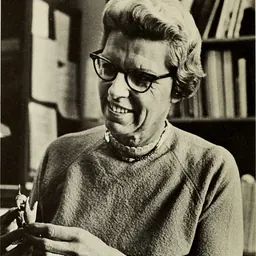

Contemporaries
People whose lives overlapped Olga Hartman's
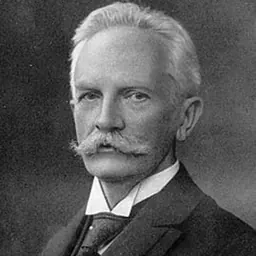


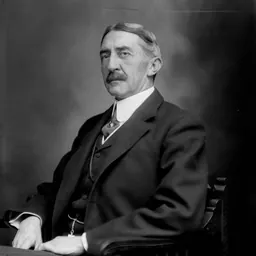

Frequently asked questions
Who was Olga Hartman?
American invertebrate zoologist (1900–1974)
When was Olga Hartman born?
Olga Hartman was born in 1900 in Waterloo.
When did Olga Hartman die?
Olga Hartman died in 1974 in Los Angeles.
What was Olga Hartman's occupation?
Olga Hartman was an invertebrate zoologist, zoologist, polychaetologist and biologist.
What nationality was Olga Hartman?
Olga Hartman was American.
Sources & further reading
Cite this page
APA: Biography.guide. (2026). Olga Hartman. https://biography.guide/olga-hartman/
MLA: "Olga Hartman." Biography.guide, https://biography.guide/olga-hartman/.
Chicago: "Olga Hartman." Biography.guide. https://biography.guide/olga-hartman/.
Data last updated: 2026-09-20 · Spot an error? Report a correction.
Page generated 2026-09-27 05:05 UTC