
About Oleksandr Shumskyi
Lived 1890 – 1946 (aged 55). Oleksandr Shumskyi was a Ukrainian statesperson and politician.
Oleksandr Yakovych Shumskyi , also known as Alexander Yakovlevich Shumsky (; 2 December 1890 – 18 September 1946) was a Ukrainian communist and activist. He was one of the leaders of the national communist movement in Ukraine and actively supported Ukrainization. He was one of the victims of the Stalinist regime, being arrested and killed by the NKVD in 1946. He was rehabilitated in 1958, during the period of De-Stalinization.
Biography Early life and 1905 Revolution Shumsky was born in the village of Turchynka, Volhynian Governorate (today Zhytomyr Oblast) in a family of foresters. The State Archives of Zhytomyr Oblast identify his parents as Yakiv Danylovych and Yeva. Yuriy Shapoval indicates that Shumsky was not fully truthful about his origins, possibly due to the practice of characterising oneself in early Soviet history as coming from the lower class. In 1909, he participated in a strike at a local sawmill. Since 1922 Shumsky was a member of the Ukrainian Central Executive Committee.
Commissar of Education and conflict with Kaganovich Following his return to Kharkiv, then the capital of Ukraine, Shumsky was active in party and trade union work. About that time he also served as a chief editor of a political magazine Chervonyi Shlyakh, or Red Way.
From 29 September 1924 until February 1927 he served as People's Commissar of Education of the Ukrainian Socialist Soviet Republic. In this position he actively implemented reform of the educational system, following the Soviet policy of "Korenizatsiya" that favored recognition of national cultures and languages in educational institutions and state offices, and supported development of Ukrainian culture and literature, particularly writer Mykola Khvylyovy.
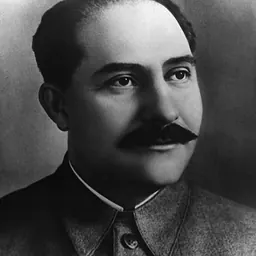
Shumsky came into conflict with the General Secretary of the Central Committee of the Communist Party (Bolsheviks) of Ukraine, Lazar Kaganovich, who was appointed back in April 1925, over these issues of Ukrainization. Shumsky sought to replace Kaganovich with Vlas Chubar, who had earlier opposed the appointment of Vyacheslav Molotov as secretary of the Ukrainian communist party.
Joseph Stalin, the General Secretary of the Central Committee of the Russian Communist Party (Bolsheviks), intervened on the side of his ally Kaganovich in a letter to members of Politburo of the Central Committee of the Communist Party (Bolsheviks) of Ukraine accusing Shumsky of spreading anti-Russian sentiments in Ukraine. In May 1926 at a plenum of the Central Committee of the Communist Party (Bolsheviks) of Ukraine, Shumsky was forced to officially recognize his mistake, but it did not save him.
In 1927 he was removed from office after being accused of engaging in disruptive activities in the People's Commissariat of Education of the Ukrainian Socialist Soviet Republic. In February–March 1927 the plenum of the Central Committee of the Communist Party (Bolsheviks) of Ukraine declared Shumsky guilty of "national deviation", which was labeled "Shumkism". Shumsky's removal was hotly debated in the Communist Party of Western Ukraine, which led to its split into "Shumskists" and supporters of the Stalinist position and the eventual dissolution of the party. After that, Shumsky was forced to leave Ukraine.
Exile and further persecution
From 1927 to 1933 he was a rector of the Leningrad Institute of National Economy, Leningrad Polytechnic Institute, a deputy head of the mass agitation department of the Central Committee of All-Union Communist Party (Bolsheviks), a head of the Central Committee of Trade Union of Education officials, and a Presidium member of the All-Union Central Council of Trade Unions.
Shumsky expected to return to Ukraine, but he continued to be the object of political attacks in Ukraine. In 1930 at the 11th Congress of the CP(b)U the defeat of "Shumskism" was acclaimed, while at the November 1933 party plenum speakers denounced the anti-party Shumsky group and the "counterrevolutionary" essence of its national deviation.
On 13 May 1933 he was arrested on fabricated charges in the 1933 "UVO case" and sentenced to ten years in prison. After spending two years in Solovki prison camp of special assignment, by decision of a Special meeting of the NKVD of the Soviet Union on 10 December 1935 he was sentenced on charges of leadership of a "counterrevolutionary borotbist organization" to ten years exile to Krasnoyarsk.
In 1936, demanding acquittal, Shumsky announced a hunger strike. In October 1937 he was accused in belonging to another nationalist organization of former Borotbists and was arrested in the place of his exile. Only in November 1939 was the case closed due to lack of evidence—but which did not lead to his acquittal.
After the end of his sentence on 13 May 1943, Shumsky was left in Krasnoyarsk because of his ill health. Throughout his time of imprisonment, he did not stop fighting for his public rehabilitation, did not admit to any of allegations, and repeatedly appealed to the Central Committee of the VKP(b). In his letter to Joseph Stalin on 18 October 1945 Shumsky sharply criticized the national policy of the Soviet Union, in particular exaltation of the Russian people as "senior brother".
In the exile he was writing a monograph "Malorosy" (Little Russians), but destroyed it because of the impossibility of publishing it.
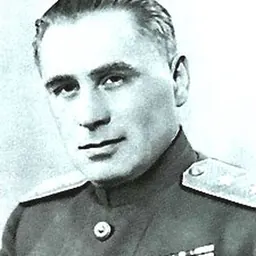
After release In 1946 Shumsky unsuccessfully tried to end his life in suicide twice. In September 1946, on the way from Saratov to Kyiv, he was killed, allegedly by a special group of the Ministry of State Security of the Soviet Union under the direction of Pavel Sudoplatov and Grigory Mairanovsky, at the hands of the personal orders of Stalin, Khrushchev and Kaganovich.
On 11 September 1958 Shumsky was rehabilitated.
Don’t just read it —
keep it.
Full-length biographies made to live with: read them, listen on the way to work, watch them tonight.
- E-book
- Audio
- Video
Instant download · yours to keep · every purchase keeps this site free
Important facts
more
Alexander Yakovlevich ShumskyPeople in Oleksandr Shumskyi's life
Named in this biography and alive at the same time



Related people
Same field, nearest in time



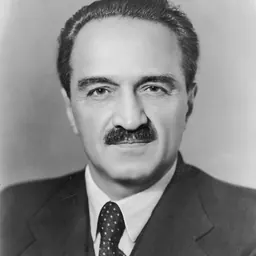
Contemporaries
People whose lives overlapped Oleksandr Shumskyi's


Frequently asked questions
Who was Oleksandr Shumskyi?
Ukrainian Soviet politician and activist (1890–1946)
When was Oleksandr Shumskyi born?
Oleksandr Shumskyi was born on 2 December 1890 in Nova Borova, Turchinka.
When did Oleksandr Shumskyi die?
Oleksandr Shumskyi died on 18 September 1946 in Saratov.
What was Oleksandr Shumskyi's occupation?
Oleksandr Shumskyi was a statesperson and politician.
What nationality was Oleksandr Shumskyi?
Oleksandr Shumskyi was Ukrainian.
Sources & further reading
· Wikipedia: Oleksandr Shumskyi
Cite this page
APA: Biography.guide. (2026). Oleksandr Shumskyi. https://biography.guide/oleksandr-shumskyi/
MLA: "Oleksandr Shumskyi." Biography.guide, https://biography.guide/oleksandr-shumskyi/.
Chicago: "Oleksandr Shumskyi." Biography.guide. https://biography.guide/oleksandr-shumskyi/.
Data last updated: 2026-09-20 · Spot an error? Report a correction.
Page generated 2026-09-27 05:21 UTC