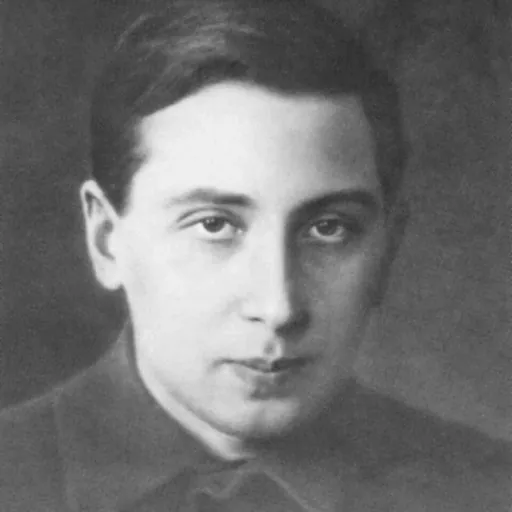
About Oleg Losev
Lived 1903 – 1942 (aged 38). Oleg Losev was a Russian physicist, engineer and inventor, known for Invention, Light-emitting diode and Radio.
Employees of the Central Radio Laboratory, Leningrad, 1930. Losev is in fourth row, third from left.
Oleg Vladimirovich Losev (sometimes spelled Lossev or Lossew in English; ; 10 May 1903 – 22 January 1942) was a Russian and Soviet scientist and inventor who made significant discoveries in the field of semiconductor junctions and the 6 "author's certificates" (the Soviet version of patents) for his discoveries. He observed light emission from carborundum point-contact junctions, constructing a light-emitting diode (LED), did the first research on them, proposed the first correct theory of how they worked, and used them in practical applications such as electroluminescence. He explored negative resistance in semiconductor junctions, and was first to use them practically for amplification, building the first solid-state amplifiers, electronic oscillators, and superheterodyne radio receivers, 25 years before the invention of the transistor. Losev was the first to investigate the effect, propose a theory of how it worked, and envision practical applications.
The series of articles on the LED Losev published between 1924 and 1941 constitute a thorough study of the device. He did extensive research into the mechanism of light emission. At the time, the prevailing theory of point contact junctions was that they worked by a thermoelectric effect,
In the April 2007 issue of Nature Photonics, Nikolay Zheludev gives credit to Losev for inventing the LED. Specifically, Losev patented the "Light Relay" and foresaw its use in telecommunications.
Solid-state electronics "Crystodyne" zinc oxide electronic oscillator constructed by Hugo Gernsback in 1924 to Losev's instructions. The zinc oxide point contact diode which serves as the active device is labeled (9). These devices were the first semiconductor oscillators.
When a DC bias voltage was applied to a cat's whisker detector, in order to increase its sensitivity as a detector in a crystal radio, it occasionally broke into spontaneous oscillation, producing a radio frequency alternating current. This was a negative resistance effect, and had been noticed around 1909 by researchers such as William Henry Eccles and G. W. Pickard. but not much attention had been paid to it. In 1923 Losev began to research these "oscillating crystals" and discovered that biased zincite (zinc oxide) crystals could amplify a signal. Losev was the first to exploit negative resistance diodes practically; he realized that they could serve as simpler, cheaper replacements for vacuum tubes. He used these junctions to build solid-state versions of amplifiers, oscillators, and TRF and regenerative radio receivers, at frequencies up to 5 MHz, 25 years before the transistor. He even built a superheterodyne receiver. However his achievements were overlooked because of the success of vacuum tube technology. The Soviet authorities did not support him, and zincite crystals were hard to come by because they had to be imported from the United States. After ten years he abandoned research into this technology (dubbed "Crystodyne" by Hugo Gernsback), and it was forgotten.
Negative resistance in diodes was rediscovered in 1956 in the tunnel diode, and today negative resistance diodes like the Gunn diode and IMPATT diode are used in microwave oscillators and amplifiers and are some of the most widely used sources of microwaves.
Don’t just read it —
keep it.
Full-length biographies made to live with: read them, listen on the way to work, watch them tonight.
- E-book
- Audio
- Video
Instant download · yours to keep · every purchase keeps this site free
Important facts
People in Oleg Losev's life
Named in this biography and alive at the same time

Related people
Same field, nearest in time

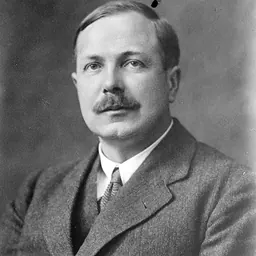
Contemporaries
People whose lives overlapped Oleg Losev's
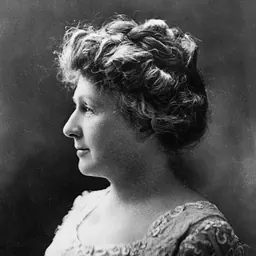
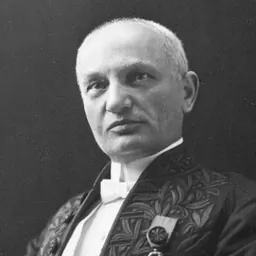
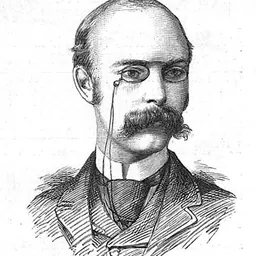
Frequently asked questions
Who was Oleg Losev?
Russian inventor, and physicist (1903–1942)
When was Oleg Losev born?
Oleg Losev was born on 10 May 1903 in Tver.
When did Oleg Losev die?
Oleg Losev died on 22 January 1942 in Saint Petersburg.
What was Oleg Losev's occupation?
Oleg Losev was a physicist, engineer and inventor.
What was Oleg Losev known for?
Oleg Losev was known for Invention, Light-emitting diode and Radio.
What nationality was Oleg Losev?
Oleg Losev was Russian.
Sources & further reading
Cite this page
APA: Biography.guide. (2026). Oleg Losev. https://biography.guide/oleg-losev/
MLA: "Oleg Losev." Biography.guide, https://biography.guide/oleg-losev/.
Chicago: "Oleg Losev." Biography.guide. https://biography.guide/oleg-losev/.
Data last updated: 2026-09-20 · Spot an error? Report a correction.
Portrait: Wikimedia Commons · author & licence
Page generated 2026-09-27 04:58 UTC