
Olavo de Carvalho
Brazilian journalist, writer, astrologer, essayist, polemicist, digital influencer and ideologue
About Olavo de Carvalho
Lived 1947 – 2022 (aged 74). Olavo de Carvalho was a Brazilian essayist, journalist, lecturer, literary critic, astrologer and debater.
Influence on Bolsonaro Dinner at the Brazilian embassy in Washington, D.C., in March 2019, Carvalho between Bolsonaro (right) and Araújo (left).
Carvalho became one of the most influential individuals during the administration of Jair Bolsonaro. According to one account, Bolsonaro got interested in Carvalho's ideas in 2013. In 2014, Bolsonaro and Carvalho started transmitting their live video chats through politically conservative YouTube channels. In 2017, Carvalho was depicted as the "ideologue" of Bolsonaro, a title he refused. Partido dos Trabalhadores, the party of Bolsonaro's opponent Fernando Haddad, is a member of Foro de São Paulo. Shortly before the election, Olavo shared the false information that a book written by Fernando Haddad, the opponent of Jair Bolsonaro during the 2018 Brazilian general election, promoted incest.
In his first live speech on Facebook after being elected, Bolsonaro was pictured next to one of the books written by Carvalho, in what was interpreted as a sign of his influence over the newly elected president. Journalists writing for El País and Folha, respectively, claimed that Carvalho influenced the nomination of two prominent Ministers by Bolsonaro: Ricardo Vélez Rodríguez (Education) and Ernesto Araújo (Foreign Affairs). Leonardo Sakamoto, writing for the website UOL (Universo Online), also made these claims, but emphasized Bolsonaro's responsibility for these ministers.
In November 2018, after the Brazilian presidential election, Carvalho declared that, if nominated by President-elect Jair Bolsonaro, he would accept the role of Brazilian ambassador to the United States. However, in February 2019, Carvalho clashed with some key figures of the Bolsonaro administration, including the vice-president, Hamilton Mourão, whom he accused of being a "traitor" and an "idiot" who is "pro-abortion, pro-disarmament and pro-Nicolás Maduro". Mourão dismissed the criticisms.
On 17 March 2019, Carvalho criticised the presence of military personnel in Bolsonaro's administration, stating: "He didn't choose two hundred generals. Two hundred generals chose him. Those people want to restore the 1964 regime under a democratic aspect. They're ruling and using Bolsonaro as a condom. I'm not saying that it is the reality, but it is what they want. Mourão said that they would return to power democratically. If it is not a coup, it is a coup mentality."
In 2020, Sleeping Giants started a campaign to reduce his influence on Brazilian politics and convinced advertisers to remove their media buying from his online newspaper and YouTube channel. This led to PayPal deciding to cancel their contract with Carvalho, and remove their services from his online seminars, citing violation of terms of use.
Family His eldest daughter, Heloísa de Carvalho Martins Arriba, accused her father of occasional maltreatment of his children. All content was wrapped in a letter that was later shared on Facebook. According to the letter, Olavo had even pointed a gun to the head of one of his children. She made other accusations, such as that, during the time in which Olavo had been a member of a tariqa, he kept a polygamous relationship, living with three wives simultaneously. The accusations were denied by her siblings and by Olavo himself, who initiated a lawsuit against her citing that in her letter she "distances herself from any contact with reality by spreading outrageous lies and vile insults".
Heloísa died on 8 January 2026, at the age of 56.
Death Olavo de Carvalho's family announced his death on social media, on 24 January 2022, eight days after he tested positive for COVID-19. His family's statement did not specify his cause of death, but his daughter Heloísa said that it was from coronavirus. His personal doctor denied it was COVID-19 and stated officially that his death was caused by respiratory stress associated with emphysema, heart failure, bacterial pneumonia, and a generalised infection. Carvalho was known for his vaccine hesitancy and often questioned the severity of COVID-19 pandemic, spreading COVID-19 misinformation on his social media.
According to his family, he died at a hospital outside of Richmond, Virginia. He reportedly confessed his sins to a Roman Catholic priest and received the last rites before his death. At his death he left his widow, eight children, and eighteen grandchildren.
Misinformation Carvalho spread fake news and false information on various topics.
Pepsi sweetener hoax Carvalho helped spread the hoax of Pepsi using cells from aborted fetuses to sweeten soft drinks.
Climate change Carvalho claimed that global warming is a hoax produced by a conspiracy.
Health In a 2016 Twitter post, Carvalho claimed that "vaccines either kill you or drive you crazy. Never vaccinate your children."
He spread a conspiracy theory that AIDS does not pose a risk to heterosexuals. At that date, according to the World Health Organization, there were more than 294,000 cases of the disease and 12,784 deaths from it. He often trivialized the pandemic as the "moronoavirus", even after it killed more than 200,000 Brazilians. He shared a forged picture on social media that purportedly showed a "foreign student" card from Columbia University with Barack Obama's name on it, as well as a different forged hoax that showed a Kenya birth certificate with Obama's name on it.
On the evening of the January 6 United States Capitol attack in 2021, Carvalho was interviewed about the incident by Jovem Pan, Brazil's largest conservative radio station, and repeated falsehoods that had led to the attack.
Inquisition Carvalho advocated a revisionist view of the Inquisition, claiming it is a myth spread by Protestants.
Science disputes Carvalho had various criticisms of science and scientists, often controversial. His daughter described him as "anti-science".
He claimed in a lecture that Albert Einstein's theory of general relativity was plagiarized from earlier theorists such as Poincaré and Lorentz, and argued in a book against Georg Cantor's proof that the set of natural numbers has the same cardinality as the set of even numbers. He claimed in a 2006 essay that Isaac Newton introduced a self-contradictory thesis into the Western mind, which was responsible for spreading a virus of "formidable stupidity". The thesis in question referred to "eternal motion" and the law of inertia: the latter would claim that "the force of its own inertia perpetually maintains each body in its present state, whether at rest or in uniform rectilinear motion", but "if motion is eternal, it makes no sense to speak of a 'present state' except in reference to a living observer endowed with a sense of temporality."
Philosophy Carvalho considered himself a philosopher, and had theories about the definition of philosophy, Aristotle, and epistemology. Martim Vasques da Cunha cited the definition as representing an "interior struggle" that "would be translated, both in concepts and actions, into the 'philosopheme', 'the ideal system of intuitions and thoughts that is hidden behind texts, a system that texts reflect irregularly and unevenly, sometimes with missing parts, and that can only be contemplated by those who reconstruct it'". Cunha, who was otherwise critical of Carvalho, cited Olavo de Carvalho's works "Nova Era e Revolução Cultural" and "A dialética simbólica" in relationship with the definition. This would be in contrast to views which would see poetics and rhetoric as sharply divided from analytical logic. Victor Bruno described Olavo's reading of Aristotle as "idiosyncratic". First, poetic discourse primarily deals with the possible, targeting the imagination and engaging with the realm of presumption. Second, rhetorical discourse seeks to establish plausibility (verossimilhança), aiming to invoke a strong belief and the consent of the will, going beyond mere imaginative presumption. This level of discourse serves to instigate decision-making based on commonly accepted beliefs. coined the term "cognitive parallax" to "designate the structural displacement between the axis of a thinker's actual experience and the axis of their theoretical construction". He wrote that Machiavelli was an example of cognitive parallax because "he taught the Prince to rise to power with the help of allies and then kill them, whereas obviously, he himself, as the author of the plan and therefore one of the Prince's greatest allies, would have been among the first to die if the plan were put into action." He also wrote that Descartes's interpretation of his "Olympian dreams" was an example.
Political philosophy As described by an obituary, Carvalho's political views were summed up in one of his tweets: "Capitalism is the godfather and protector of communism. The war is not between capitalism and communism, it is between CHRISTIANITY and communism." had contributed to a decline of modern politics and culture. He wrote that this mentality had begun to take shape in Europe during the late 18th and early 19th centuries and became more pronounced with the rise of Communist movements in the 20th century.
Carvalho argued that the mentality is supported and propagated by powerful entities including international organizations, wealthy families, and businessmen. which he described as a "shadow capitalism" working in tandem with government power, especially under communist regimes. the journalist João Pedro Sabino Guimarães, writing for O Globo, saw it as a conspiracy theory. work to change people's traditional modes of thought into a revolutionary one, undermining religion and common sense, he said.
Works
Essays
(1980). A Imagem do Homem na Astrologia. São Paulo: Jvpiter. (1983). O Crime da Madre Agnes ou A Confusão entre Espiritualidade e Psiquismo. São Paulo: Speculum. (1983). Questões de Simbolismo Astrológico. São Paulo: Speculum. (1983). Universalidade e Abstração e outros Estudos. São Paulo: Speculum. (1985). Astros e Símbolos. São Paulo: Nova Stella. (1986). Astrologia e Religião. São Paulo: Nova Stella. (1986). São Paulo: Nova Stella. (1992). Símbolos e Mitos no Filme "O Silêncio dos Inocentes". Rio de Janeiro: Instituto de Artes Liberais. (1993). Os Gêneros Literários: Seus Fundamentos Metafísicos. Rio de Janeiro: IAL & Stella Caymmi. (1993). O Caráter como Forma Pura da Personalidade. Rio de Janeiro: Astroscientia Editora. (1994). Rio de Janeiro: Instituto de Artes Liberais & Stella Caymmi [São Paulo: Vide Editorial, 2014]. (1994). Uma Filosofia Aristotélica da Cultura. Rio de Janeiro: Instituto de Artes Liberais. Rio de Janeiro: Topbooks, 1996 [São Paulo: É Realizações, 2007; Campinas, SP: Vide Editorial, 2013]. (1995). Rio de Janeiro: Diadorim [São Paulo: É Realizações, 2000; Campinas, SP: Vide Editorial, 2015]. (1994). Rio de Janeiro: Faculdade da Cidade [São Paulo: É Realizações, 2007; Rio de Janeiro: Record, 2018 ]. (1997). O Futuro do Pensamento Brasileiro: Estudos sobre o Nosso Lugar no Mundo. Rio de Janeiro: Faculdade da Cidade Editora [É Realizações, 2007]. (1998). Rio de Janeiro: Topbooks [São Paulo: É Realizações, 2008; São Paulo: Record (forthcoming) (2013). O Mínimo Que Você Precisa Saber para Não Ser um Idiota. Edited by Felipe Moura Brasil. Rio de Janeiro: Record (2013). Campinas, SP: Vide Editorial. (2013). Campinas, SP: Vide Editorial. (2014). Campinas, SP: Vide Editorial. (2014). A Fórmula para Enlouquecer o Mundo: Cartas de um Terráqueo ao Planeta Brasil, vol. 3. Campinas, SP: Vide Editorial. (2015). A Inversão Revolucionária em Ação: Cartas de um Terráqueo ao Planeta Brasil, vol. 4. Campinas, SP: Vide Editorial. (2016). O Império Mundial da Burla: Cartas de um Terráqueo ao Planeta Brasil, vol. 5. Campinas, SP: Vide Editorial. (2016). O Dever de Insultar: Cartas de um Terráqueo ao Planeta Brasil, vol. 6. Campinas, SP: Vide Editorial. (2017). Breve Retrato do Brasil: Cartas de um Terráqueo ao Planeta Brasil, vol. 7. Campinas, SP: Vide Editorial. (2022). O Imbecil Coletivo III: O Imbecil Juvenil. Campinas, SP: VIDE Editorial. (2022). O Foro de São Paulo: A ascensão do comunismo latino-americano. Campinas, SP: VIDE Editorial.
Other publications
(1973). Tabu, by Alan Watts. São Paulo: Editora Três (translation and preface, with Fernando de Castro Ferreira). (1981). A Metafísica Oriental, by René Guénon. São Paulo: Escola Júpiter (translation). (1984). Comentários à "Metafísica Oriental" de René Guénon, by Michel Veber. São Paulo: Speculum (introduction and notes). (1997). by Arthur Schopenhauer. Rio de Janeiro: Topbooks (introduction, notes and explanatory comments). (1997). O Espírito das Revoluções, by J.O. de Meira Penna. Rio de Janeiro: Faculdade da Cidade Editora (preface). (1998). O Exército na História do Brasil, 3 Vol. Rio de Janeiro/Salvador: Biblioteca do Exército & Fundação Odebrecht (editor). (1998). Teatro Oficina: Onde a Arte não Dormia, by Ítala Nandi. Rio de Janeiro: Faculdade da Cidade Editora (preface). (1999). Ensaios Reunidos, 1942–1978, by Otto Maria Carpeaux. Rio de Janeiro: UniverCidade & Topbooks (introduction and notes). (1999). by Alain Peyrefitte. Rio de Janeiro: Topbooks (introduction). (1999). Aristóteles, by Émile Boutroux. Rio de Janeiro: Record (introduction and notes). (2001). As Seis Doenças do Espírito Contemporâneo, by Constantin Noica. Rio de Janeiro: Record (introduction and notes). (2001). Admirável Mundo Novo, by Aldous Huxley. São Paulo: Editora Globo (preface). (2001). A Ilha, by Aldous Huxley. São Paulo: Editora Globo (preface). (2001). A Coerência das Incertezas, by Paulo Mercadante. São Paulo: É Realizações (introduction and notes). (2001). A Sabedoria das Leis Eternas, by Mário Ferreira dos Santos. São Paulo: É Realizações (introduction and notes). (2002). A Origem da Linguagem, by Eugen Rosenstock-Huessy. Rio de Janeiro: Editora Record (edition and notes, with Carlos Nougué). (2004). Escolha e Sobrevivência, by Ângelo Monteiro. São Paulo: É Realizações (preface). (2008). O Eixo do Mal Latino-americano e a Nova Ordem Mundial, by Heitor de Paola. São Paulo: É Realizações (preface). (2011). O Enigma Quântico, by Wolfgang Smith. Campinas, SP: VIDE Editorial (preface). (2014). Ponerologia: Psicopatas no Poder, by Andrzej Łobaczewski. Campinas, SP: VIDE Editorial (preface). (2015). A Tomada do Brasil, by Percival Puggina. Porto Alegre: Editora Concreta (preface). (2015). Cabo Anselmo: Minha Verdade, by José Anselmo dos Santos. São Paulo: Matrix (preface). (2017). 1964: O Elo Perdido; O Brasil nos Arquivos do Serviço Secreto Comunista, by Mauro "Abranches" Kraenski and Vladimir Petrilák. Campinas, SP: VIDE Editorial (preface). (2019). A Vida Intelectual, by A.-D. Sertillanges. São Paulo: Kírion (preface). (2019). Traição Americana: O Ataque Secreto aos Estados Unidos, by Diana West. São Paulo: Sophia Perennis (preface)
Works in English
(2000). "Otto Maria Carpeaux." Portuguese Literary & Cultural Studies. Special Issue, No. 4. João Cezarde Castro Rocha (org.), University of Massachusetts, Dartmouth. (2005). "From Poetics to Logic: Exploring Some Neglected Aspects of Aristotle's Organon," in Handbook of the First World Congress and School on Universal Logic, UNILOG'05, ed. Jean-Yves Beziau and Alexandre Costa-Leite. pp. 57–59.
Translated works
(2016). Statele Unite și Noua Ordine Mondială: O Dezbatere între Olavo de Carvalho și Aleksandr Dughin. Translated by Simina Popa and Cristina Nițu. Bucharest: Editura Humanitas. Translation of Os EUA e a Nova Ordem Mundial (with Alexander Dugin).
Don’t just read it —
keep it.
Full-length biographies made to live with: read them, listen on the way to work, watch them tonight.
- E-book
- Audio
- Video
Instant download · yours to keep · every purchase keeps this site free
Important facts
People in Olavo de Carvalho's life
Named in this biography and alive at the same time
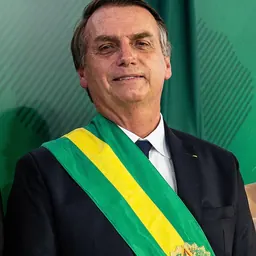

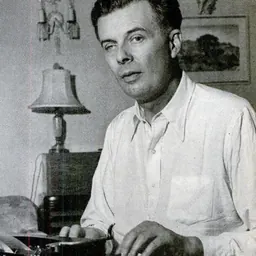




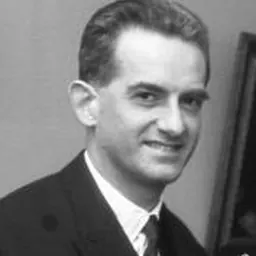
Related people
Same field, nearest in time




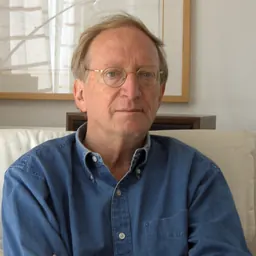
Contemporaries
People whose lives overlapped Olavo de Carvalho's


Frequently asked questions
Who was Olavo de Carvalho?
Brazilian journalist, writer, astrologer, essayist, polemicist, digital influencer and ideologue (1947-2022)
When was Olavo de Carvalho born?
Olavo de Carvalho was born on 29 April 1947 in Campinas.
When did Olavo de Carvalho die?
Olavo de Carvalho died on 24 January 2022 in Richmond.
What was Olavo de Carvalho's occupation?
Olavo de Carvalho was an essayist, journalist, lecturer, literary critic, astrologer and debater.
What nationality was Olavo de Carvalho?
Olavo de Carvalho was Brazilian.
Sources & further reading
· Wikipedia: Olavo de Carvalho
Cite this page
APA: Biography.guide. (2026). Olavo de Carvalho. https://biography.guide/olavo-de-carvalho/
MLA: "Olavo de Carvalho." Biography.guide, https://biography.guide/olavo-de-carvalho/.
Chicago: "Olavo de Carvalho." Biography.guide. https://biography.guide/olavo-de-carvalho/.
Data last updated: 2026-09-20 · Spot an error? Report a correction.
Page generated 2026-09-27 05:24 UTC