
About Ogyū Sorai
Lived 1666 – 1728 (aged 61). Ogyū Sorai was a Japanese linguist, political scientist and philosopher.
, pen name , was a Japanese historian, philologist, philosopher, and translator. He has been described as the most influential such scholar during the Edo period Japan. His primary area of study was in applying the teachings of Confucianism to government and social order. He responded to contemporary economic and political failings of the Tokugawa shogunate, as well as the culture of mercantilism and the dominance of old institutions that had become weak with extravagance. Sorai rejected the moralism of Neo-Confucianism and instead looked to the ancient works. He argued that allowing emotions to be expressed was important and nurtured Chinese literature in Japan for this reason. Sorai attracted a large following with his teachings and created the Sorai school, which would become an influential force in further Confucian scholarship in Japan.
Biography
Sorai was born in Edo the second son of a samurai who served as the personal physician of Tokugawa Tsunayoshi, who was at the time daimyō of Tatebayashi Domain. At an early age, Sorai studied the Zhu Xi version of Neo-Confucianism under Hayashi Gahō and Hayashi Hōkō; however, his father was exiled in 1679 to a rural village what is now Mobara, Chiba after angering Tsunayoshi. In this rustic setting, he continued to study the major Chinese classics, as well as Japanese and Buddhist texts on his own for the next 13 years, which formed the foundations for his later philosophy. In 1692, Sorai's father was pardoned, and the family moved back to Edo. Sorai opened a school near the temple of Zōjō-ji to teach Chinese classics, and in 1696 received a position in the service of Yanagisawa Yoshiyasu, a senior councillor to the now Shōgun Tokugawa Tsunayoshi. Sorai was assigned to serve Yanagisawa in his domain of Kawagoe. Later, he was granted income of 500 koku, and was assigned to Yoshiyasu's Edo residence, where he provide advice on political issues. One of these issues involved the Akō vendetta in which the Forty-seven rōnin avenged their fallen lord by killing Kira Yoshinaka in 1702. Whereas Muro Kyūsō, Hayashi Hōkō and others praised the actions of the rōnin for their loyalty, Sorai took the opposite stance and argued that they should be forced to commit seppuku, for regardless of the "righteousness" of their actions and the weight of public opinion, the fact that they committed a capital offense was undeniable, and the rule of the law must be impartial.
In 1705, Yoshiyasu became daimyō of Kōfu Domain. Sorai remained in Edo, but visited Kai Province in 1706 at the behest of Yoshiyasu, and wrote a travelogue of the journey, In 1709, following the death of Tokigawa Tsunayoshi, Yanagisawa Yoshiyasu fell from favor, and Sorai left his service and relocated to Nihonbashi, where he opened a private school, the Kenenjuku.He gradually turned away from the teachings of Zhu Xi to develop his own philosophy and school.
Teachings Sorai wrote several influential works in which he identified two fundamental weaknesses in the philosophy of Neo-Confucianism. The first was in the bakufu-domain system, which by the eighteenth century was in trouble. As a result, he doubted whether the reliance on finding an individual's ethical good was sufficient. As such he argued that the political crisis of the time required more than perfecting moral character. Moreover, he saw the ancient Chinese sage-kings as concerned not only with morality but also with government itself. His second disagreement with Neo-Confucianism was that he felt putting too much emphasis on morality repressed human nature, which was based on human emotion.
However, these weaknesses he felt stemmed not from a deficiency in Confucianism itself, but rather from a misreading of classic works of the Four Books and the Five Classics by Neo-Confucianists, which he insisted "did not know the old words." Sorai went back to the ancient works for more reliable knowledge, stating "The ultimate form of scholarly knowledge is history." To him, these historical works were the ultimate source, even for an ever-changing present. Sorai thought that study of philosophy began with the study of language. In this he was highly influenced by the Ancient Rhetoric school of the Ming period, which was a neoclassical movement that saw the Qin and Han periods as the model for prose, and the Tang period for poetry. The Sorai school introduced Selections of Tang Poetry, a work thought to have been edited by Li Panlong ( 1514–70), a founder of the Ancient Rhetoric school, to Japan, where it became very popular. As a result, his school is today sometimes also known as the Ancient Rhetoric (kobunji ) school. However it differed in that he saw it mostly as a means of accessing the Five Classics. He would also accuse other Confucianists in Japan, such as Hayashi Razan, of relying too heavily on Song sources such as Zhu Xi.
Don’t just read it —
keep it.
Full-length biographies made to live with: read them, listen on the way to work, watch them tonight.
- E-book
- Audio
- Video
Instant download · yours to keep · every purchase keeps this site free
Important facts
People in Ogyū Sorai's life
Named in this biography and alive at the same time


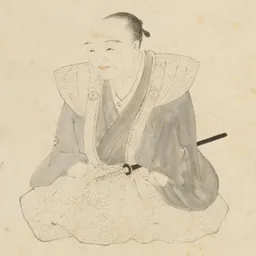
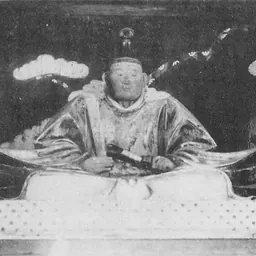
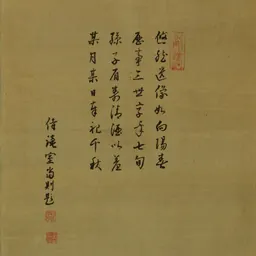

Related people
Same field, nearest in time



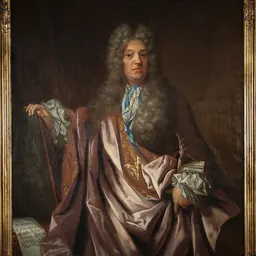

Contemporaries
People whose lives overlapped Ogyū Sorai's




Frequently asked questions
Who was Ogyū Sorai?
Japanese philosopher (1666–1728)
When was Ogyū Sorai born?
Ogyū Sorai was born on 21 March 1666 in Edo.
When did Ogyū Sorai die?
Ogyū Sorai died on 28 February 1728 in Edo.
What was Ogyū Sorai's occupation?
Ogyū Sorai was a linguist, political scientist and philosopher.
What nationality was Ogyū Sorai?
Ogyū Sorai was Japanese.
Sources & further reading
Cite this page
APA: Biography.guide. (2026). Ogyū Sorai. https://biography.guide/ogyu-sorai/
MLA: "Ogyū Sorai." Biography.guide, https://biography.guide/ogyu-sorai/.
Chicago: "Ogyū Sorai." Biography.guide. https://biography.guide/ogyu-sorai/.
Data last updated: 2026-09-20 · Spot an error? Report a correction.
Page generated 2026-09-27 05:32 UTC