
Odilo of Cluny
Benedictine Abbot of Cluny
About Odilo of Cluny
Lived 960 – 1048 (aged 87–88). Odilo of Cluny was a French canon.
Odilo of Cluny (c. 962 – 1 January 1049) was the 5th Benedictine Abbot of Cluny, succeeding Mayeul and holding the post for around 54 years. During his tenure Cluny became the most important monastery in western Europe. Odilo actively worked to reform the monastic practices not only at Cluny, but at other Benedictine houses. He also promoted the Truce of God whereby military hostilities were temporarily suspended at certain times for ostensibly religious reasons. Odilo encouraged the formal practice of personal consecration to Mary. He established All Souls' Day (on 2 November) in Cluny and its monasteries as the annual commemoration to pray for all the faithful departed. The practice was soon adopted throughout the whole Western church. He was lifelong friends with William of Dijon, another Cluniac abbot and reformer.
Early life Odilo was descended from an illustrious noble family of Auvergne (central France). The son of Berald de Mercoeur and Gerberga, his widowed mother became a nun at the convent of St. John in Autun after his father's death. Odilo had eight brothers and two sisters. One of his sisters married and the other became an abbess.
When he was a child, he was partially paralyzed and had to be carried by the family servants on a stretcher. One day while the family was travelling, they came to a church and Odilo was left with the luggage at the church door. The door was open, and little Odilo felt God was calling him to crawl to the altar. He got to the altar and tried to stand up, but failed. He tried again and finally succeeded: he was able to walk around the altar. where he became a specialist in canon law. William of Dijon persuaded him to enter the monastery of Cluny. It was usual with him to say that, of two extremes, he chose rather to offend by tenderness than a too rigid severity. He was known for showing mercy indiscriminately even to those who people said did not deserve it. He would say in response, ‘I would rather be mercifully judged for having shown mercy, than be cruelly damned for having shown cruelty."
Of small stature and insignificant appearance, Odilo was a man of immense force of character. He was a man of prayer and penance, with a great devotion to the Incarnation and to the Blessed Mother. Odilo encouraged the formal practice of personal consecration to Mary. He also encouraged learning in his monasteries, and had the monk Rodolfus Glaber write a history of the time. He erected a magnificent monastery building, and furthered the reform of the Benedictine monasteries. It was during his abbacy that Cluny became the most important monastery in western Europe. During a great famine in 1006, his liberality to the poor was by many censured as profuse; for he melted down the sacred vessels and ornaments to raise funds.
He is also said to have influenced the course of the famous pilgrimage route to Santiago, which runs near the monasteries.
In 1025 Gauzlin, bishop of Mâcon, claimed that the archbishop of Vienne needed his approval to give ordination to monks in Cluny. In answer to this Odilo produced the papal documents granting Cluny freedom from local diocesan control. A council at Ansa in southern Gaul nevertheless condemned Odilo's position because it claimed that the Council of Chalcedon (in 451) had decreed that the ordination of monks had to occur with diocesan consent. In answer to this, the Pope then wrote letters to various parties involved with the dispute and condemned Gauzlin's position. The Pope further decreed that any bishop who tried to enter a Cluniac monastery to even celebrate a mass would suffer automatic excommunication, unless he had been invited by the abbot. The dispute went on for years.
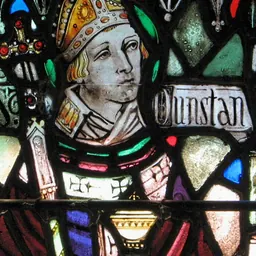
In Germany the Cluny policy had no permanent success, as the monks there were more inclined to individualism. Odilo visited Henry II on several occasions and because of his closeness to him, he was able to intercede on several occasions for people who had disputes with him. When Henry II was crowned King of Italy in 1004, Odilo attended the ceremony. The following day there was a revolt against Henry in Pavia which was quickly crushed and the defeated party went to find Odilo so that he could ask Henry on their behalf for mercy. Odilo agreed and was able to persuade Henry, who respected his holiness so greatly, to hold back his hand and give mercy to the rebels. When Henry was crowned as Holy Roman Emperor in Rome in 1014, Odilo also was present. He arrived in Rome before Christmas and spent several months together with Henry up to his coronation in February 1014. The Pope presented Henry with the gift of a golden apple ('orb') with a cross on it, representing his empire. Henry later sent this gift to Cluny. The abbots of Cluny were constantly called to reform other monasteries; however, many reformed communities soon slipped back into their old ways. Odilo sought to prevent this by making them subject to Cluny: he appointed every prior of every Cluniac house, and the profession of every monk in the remotest monastery was made in his name and subject to his sanction. During his tenure thirty abbeys accepted Cluny as their mother house, and its practices were adopted by many more which did not affiliate. King Robert II of France allied himself with the Reform party. and the Cluniac reform spread through Burgundy, Provence, Auvergne, Poitou, and much of Italy and Spain. The English monastic reform undertaken by Dunstan, Æthelwold of Winchester and Oswald of Worcester under Cluniac influence is a conspicuous instance of Cluny's success by example. On account of his services in the reform Odilo was called by Fulbert of Chartres the "Archangel of the Monks".
Truce of God
The Truce of God arose in the eleventh century amid the anarchy of feudalism as a remedy for the powerlessness of lay authorities to enforce respect for the public peace. There was then an epidemic of private wars, which made Europe a battlefield bristling with fortified castles and overrun by armed bands who respected nothing, not even sanctuaries, clergy, or consecrated days. Massacres and plunders were common in that age, by the right which every petty lord pretended of revenging his own injuries and quarrels by private wars. Odilo actively promoted the Truce of God whereby military hostilities were suspended at certain times for ostensibly religious reasons. The Truce had great economic importance as it allowed commerce to continue so that people could survive; it also guaranteed sanctuary to those who sought refuge in a church. The penalty for violating the ban was excommunication.
While the Truce of God was a temporary suspension of hostilities, its jurisdiction was broader that the Peace of God. It confirmed permanent peace for all churches and their grounds, the monks, clerks and chattels; all women, pilgrims, merchants and their servants, cattle and horses; and men at work in the fields. For all others peace was required throughout Advent, the season of Lent, and from the beginning of the Rogation days until eight days after Pentecost. This prohibition was subsequently extended to specific days of the week, viz., Thursday, in memory of the Ascension, Friday, the day of the Passion, and Saturday, the day of the Resurrection (council 1041). By the middle of the twelfth century the number of proscribed days was extended until there was left some eighty days for fighting.
All Souls’ Day According to one tale, a pilgrim was thrown during a storm on an island. There he had a vision of the souls in purgatory enduring the purification pain of flames as punishment for their sins. At home he went to Father Odilo of Cluny to ask whether there is not one day in the year in a special way prayer could be for the souls of the deceased.
Odilo instituted the annual commemoration of all the faithful departed, to be observed by the members of his community with alms, prayers, and sacrifices, for the relief of the suffering souls in purgatory.
Attribution
Don’t just read it —
keep it.
Full-length biographies made to live with: read them, listen on the way to work, watch them tonight.
- E-book
- Audio
- Video
Instant download · yours to keep · every purchase keeps this site free
Important facts
People in Odilo of Cluny's life
Named in this biography and alive at the same time

Related people
Same field, nearest in time




Contemporaries
People whose lives overlapped Odilo of Cluny's



Frequently asked questions
Who was Odilo of Cluny?
Benedictine Abbot of Cluny (c.962–1049)
When was Odilo of Cluny born?
Odilo of Cluny was born in 960 in Auvergne.
When did Odilo of Cluny die?
Odilo of Cluny died on 31 December 1048 in Souvigny.
What was Odilo of Cluny's occupation?
Odilo of Cluny was a canon.
What nationality was Odilo of Cluny?
Odilo of Cluny was French.
Sources & further reading
Cite this page
APA: Biography.guide. (2026). Odilo of Cluny. https://biography.guide/odilo-of-cluny/
MLA: "Odilo of Cluny." Biography.guide, https://biography.guide/odilo-of-cluny/.
Chicago: "Odilo of Cluny." Biography.guide. https://biography.guide/odilo-of-cluny/.
Data last updated: 2026-09-20 · Spot an error? Report a correction.
Page generated 2026-09-27 05:19 UTC