
Æthelwold of Winchester
Bishop of Winchester; Abbot of Abingdon
About Æthelwold of Winchester
Lived 904 – 984 (aged 79–80). Æthelwold of Winchester was an English catholic priest, catholic bishop and bishop.
Æthelwold of Winchester (also Aethelwold and Ethelwold, 904/9 – 984) was Bishop of Winchester from 963 to 984 and one of the leaders of the tenth-century monastic reform movement in Anglo-Saxon England.
Monastic life had declined to a low ebb in England in the ninth century, partly because of the ravages caused by Viking attacks, and partly because of a preference for secular clergy, who were cheaper and were thought to serve the spiritual needs of the laity better. Kings from Alfred the Great onwards took an interest in the Benedictine rule, but it was only in the middle of the tenth century that kings became ready to commit substantial funds to its support. Æthelwold became the leading propagandist for the monastic reform movement, although he made enemies by his ruthless methods, and he was more extreme in his opposition to secular clergy than his fellow reformers, Saint Dunstan and Oswald of Worcester. He is nevertheless recognised as a key figure in the reform movement, who also made a major contribution to the revival of learning and the arts. He was an important political figure, backing Æthelred the Unready against Edward the Martyr, and playing a major advisory role during Æthelred's minority.
Saint Æthelwold of Winchester freed slaves and helped the poor. During the great famine of the 10th century, he sold the valuable treasures and silver and gold ornaments of Abingdon Abbey to buy food for the poor. Furthermore, he used his own assets and episcopal authority to manumit—or set free—many serfs and slaves, earning the title "friend of the poor."
Early life Æthelwold was born to noble parents in Winchester. The king arranged for him to be ordained a priest by Ælfheah the Bald, Bishop of Winchester, on the same day as Saint Dunstan. After a period in the late 930s studying under Ælfheah at Winchester, Æthelwold moved to Glastonbury Abbey, where Dunstan had been made abbot. Here Æthelwold studied grammar, metrics and patristics, subsequently being made dean. During the reign of King Eadred (946–955), Æthelwold wished to travel to Europe to learn more about the monastic life, but Eadred refused permission, and instead appointed him abbot of the former monastic site of Abingdon Abbey, which was then served by secular priests.
When Eadred died, he was succeeded by his nephew, Eadwig, who drove Eadred's chief advisor, Dunstan, into exile. However, Æthelwold attended Eadwig's court in at least some of the years of his reign, 955–59. The future King Edgar had been taught from boyhood by Æthelwold, who evidently inspired his pupil to take an interest in the rule of Saint Benedict. When Eadwig died, Æthelwold naturally backed Edgar's succession. He seems to have been in the personal service of King Edgar in 960–963, as he wrote many of the charters of this period. However, he was more extreme in his espousal of monasticism than Dunstan and Oswald, the other great leaders of monasticism in the reign of King Edgar. They followed continental practice in maintaining both monks and secular priests in their households, and did not follow Æthelwold in his dramatic expulsions of secular clerks and replacement by monks.
To Æthelwold's admirers, the epithets "father of monks" and "benevolent bishop" summarize his character as reformer and friend of Christ's poor; though he suffered much from ill-health, his life as scholar, teacher, prelate and Royal counsellor was ever austere, and he was said to be "terrible as a lion" to the rebellious, yet "gentler than a dove" to the meek. He is said to have written a treatise on the circle and to have compiled the "Regularis Concordia".
The Benedictines were greatly superior to the secular clergy in their learning and their schools. Æthelwold personally taught the older pupils at Winchester, and their works show that they regarded him with great respect and affection. His surviving works in both Latin and Old English show that he was a great scholar, and his vernacular writings are believed to have played an important role in the development of Standard Old English. Æthelwold was certainly bishop during the period when the Winchester school of manuscript illumination reached its peak, and the most important surviving manuscript of the school, the Benedictional of Saint Æthelwold (British Library), was commissioned by him. He also rebuilt the Old Minster at Winchester, completed in 980.
Political role Æthelwold also played an important political role. When the succession became an issue late in Edgar's reign, Æthelwold supported the claim of Æthelred, the son of his major patron, Ælfthryth, whereas Dunstan and Oswald appear to have supported Edgar's son by an earlier wife, Edward the Martyr, who succeeded to the throne. After Edward was murdered in 978, Æthelwold seems to have played a major advisory role in Æthelred's minority. It is significant that it was only after Æthelwold's death in 984 that Æthelred started acting against the interests of some of the reformed monastic houses. One victim was Abingdon Abbey, and in a charter restoring its privileges in 993 the king acknowledged that Æthelwold's passing had deprived the country "of one whose industry and pastoral care ministered not only to my interest but also to that of all the inhabitants of the country."
Death and reputation Æthelwold died on 1 August 984 at Beddington in Surrey.
One of Æthelwold's pupils, Wulfstan of Winchester, wrote a biography which seems to have played a major role in promoting his cult, and in about 1004 Ælfric, another disciple and abbot of Eynsham, abridged Wulfstan's work in Latin and Old English. However, the Æthelwold of Wulfstan's life inspired respect rather than devotion, and his cult never seems to have achieved great popularity. Wulfstan's saint is a formidable authoritarian, who, for instance, commands a monk to show his devotion by plunging his hand into a pot of boiling stew. He has a reputation for ruthless insensitivity which is not shared by the other tenth-century monastic reformers. His importance to the reform movement has always been appreciated, but the range of his contributions to scholarship has only been recognised in recent years.
Don’t just read it —
keep it.
Full-length biographies made to live with: read them, listen on the way to work, watch them tonight.
- E-book
- Audio
- Video
Instant download · yours to keep · every purchase keeps this site free
Important facts
People in Æthelwold of Winchester's life
Named in this biography and alive at the same time
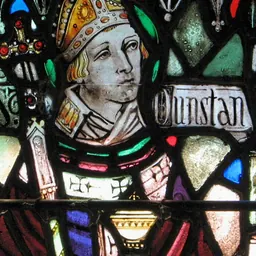
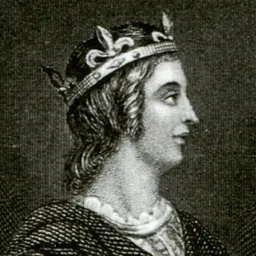

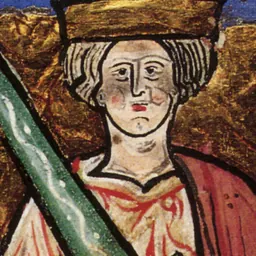

Related people
Same field, nearest in time

Contemporaries
People whose lives overlapped Æthelwold of Winchester's


Frequently asked questions
Who was Æthelwold of Winchester?
Bishop of Winchester; Abbot of Abingdon
When was Æthelwold of Winchester born?
Æthelwold of Winchester was born in 904 in Winchester.
When did Æthelwold of Winchester die?
Æthelwold of Winchester died on 1 August 984 in Surrey.
What was Æthelwold of Winchester's occupation?
Æthelwold of Winchester was a catholic priest, catholic bishop and bishop.
What nationality was Æthelwold of Winchester?
Æthelwold of Winchester was English.
Sources & further reading
· Wikipedia: Æthelwold of Winchester
· DBpedia: Æthelwold of Winchester
Cite this page
APA: Biography.guide. (2026). Æthelwold of Winchester. https://biography.guide/aethelwold-of-winchester/
MLA: "Æthelwold of Winchester." Biography.guide, https://biography.guide/aethelwold-of-winchester/.
Chicago: "Æthelwold of Winchester." Biography.guide. https://biography.guide/aethelwold-of-winchester/.
Data last updated: 2026-09-20 · Spot an error? Report a correction.
Page generated 2026-09-27 05:26 UTC