
About Oded Lipschits
Born 1963. Oded Lipschits is an Israeli archaeologist, university teacher, historian and educator.
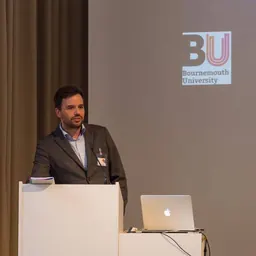
Oded Lipschits (; born May 15, 1963) is an Israeli professor in the Department of Archaeology and Ancient Near East Studies at Tel Aviv University. In 1997 he earned his Ph.D. in Jewish History under the supervision of Nadav Na'aman. He has since become a Senior Lecturer and Full Professor at Tel Aviv University and served as the Director of the Tel Aviv Institute of Archaeology since 2011. Lipschits is an incumbent of the Austria Chair of the Archeology of the Land of Israel in the Biblical Period and is the Head and founder of the Ancient Israel Studies Masters program in the Department of Archaeology and Ancient Near East Studies.
Most of Lipschits' research relates to the history, archaeology, and biblical account of the Southern Levant, specifically narratives related to the development of Judah within its local and regional setting, as well its transformation under imperial control i.e., Assyria, Babylon, Persia, Macedonia. Together with his colleagues, Lipschits has directed several archaeological excavations including Ramat Rachel (2004–2010), Tel Azekah (2012–) and Tel Moza (2018–). He has organized and lectured in over 200 local and international conferences worldwide and has been the recipient of several prestigious awards, grants, and scholarships, including the EMET Prize in the field of Archaeology (2022).
In 2024, he received an "honorary doctorate" from the University of Zurich for his research on the history and archeology of Israel and Judah during the biblical period.6
Biography Oded Lipschits was born in Jerusalem in 1963, and served in the IDF between 1981 and 1985 (in the military reserve until 2008) and ultimately discharged with the rank of major. Lipschits is married to Yael (Moreno) Lipschits and lives in Alon HaGalil. They have four children.
Research The primary focus of Lipschits' research is the Southern Levant, and the land of Judah in the Iron Age, Persian, Hellenistic and Hasmonean periods.
Judah under Babylonian rule
Through his application of Biblical criticism, critical studies of historical sources and archaeological data, Lipschits has maintained that contrary to the conservative interpretation of the Biblical narrative, the country during this period was shaped by the presence of foreign empires, starting in the 8th century BCE with the Neo-Assyrian Empire. This stands in contrast to the understanding of Jewish history as divided into First and Second Temple periods, with a settlement and cultural "gap" in the mid-6th century, explained by the Biblical narrative of the Babylonian exile. Lipschits has demonstrated in his book The Fall and Rise of Jerusalem: Judah Under Babylonian Rule (2004) that significant parts of Judah remained inhabited during the Babylonian rule. This work which is based on his doctoral dissertation has granted him the Ish-Shalom Prize for the Best 'First-Fruit' Book in the Research of the History of Israel.
Ramat Rachel excavations From 2004 to 2010 Oded Lipschits has co-directed the excavations at Ramat Rachel with Manfred Oeming of the Heidelberg University. The expedition unearthed a royal palace and garden, that existed south of Jerusalem from the 7th–2nd centuries BCE. The excavation has provided essential archaeological data on the 6th and 5th century BCE. Lipschits has demonstrated in a series of articles that during the Persian rule the administrative and economic center of the Judean province has shifted from Tell en-Nasbeh north of Jerusalem, to Ramat Rachel, and not to Jerusalem as previously thought. Lipschits then continued the study with his colleagues, expanding the framework to the first appearance of stamp seals in Judah, such as the LMLK seals and published a book titled Age of Empire: The History and Administration of Judah in the 8th-2nd Centuries BCE in Light of Storage-Jar Stamp Impressions.
Tel Moza excavations Since 2018, Lipschits has co-directed the Tel Moza Expedition Project with Shua Kisilevitz. Tel Moza is a key site located a walking distance from Jerusalem. The focus of the project is a temple complex dated to the Iron Age IIA period (10th-9th centuries BCE), which existed parallel to Jerusalem.
Selected publications Authored books (translation of the original Hebrew publication, 2004)
(translation of the original Hebrew publication, 2014)
(translation of the original Hebrew publication, 2018)
Edited books
Don’t just read it —
keep it.
Full-length biographies made to live with: read them, listen on the way to work, watch them tonight.
- E-book
- Audio
- Video
Instant download · yours to keep · every purchase keeps this site free
Important facts
Related people
Same field, nearest in time




Contemporaries
People whose lives overlapped Oded Lipschits's




Frequently asked questions
Who is Oded Lipschits?
Israeli archaeologist
When was Oded Lipschits born?
Oded Lipschits was born on 15 May 1963 in Jerusalem.
What is Oded Lipschits's occupation?
Oded Lipschits is an archaeologist, university teacher, historian and educator.
What nationality is Oded Lipschits?
Oded Lipschits is Israeli.
Sources & further reading
Cite this page
APA: Biography.guide. (2026). Oded Lipschits. https://biography.guide/oded-lipschits/
MLA: "Oded Lipschits." Biography.guide, https://biography.guide/oded-lipschits/.
Chicago: "Oded Lipschits." Biography.guide. https://biography.guide/oded-lipschits/.
Data last updated: 2026-09-23 · Spot an error? Report a correction.
Portrait: Wikimedia Commons · author & licence
Page generated 2026-09-27 05:05 UTC