
About O. E. Lofthus
Lived 1868 – 1960 (aged 91–92). O. E. Lofthus was an American politician.
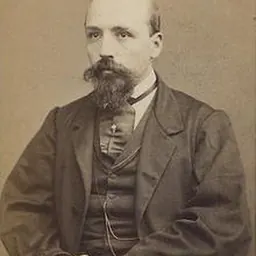
O. E. Lofthus (July 7, 1868 – January 16, 1960) was a teacher, banker, and politician who served as North Dakota State Examiner from 1919 to 1921.
Biography
Early years Ole E. Lofthus was born on July 7, 1868, in Nicollet County, Minnesota. He was born to Norwegian parents, Ole O. Lofthus and Albertina (Beck) Lofthus. His father was a veteran of the Civil War. O. E. Lofthus grew up and attended school in Minnesota. He later became a schoolteacher and farmer for several years.
Sometime between 1890 and 1900, Lofthus moved to North Dakota. In 1907, he opened the First State Bank of Kloten, North Dakota, and worked as the bank's cashier until 1919.
At some point after his foray into Minnesota politics, he turned his attention to politics in North Dakota. In 1914, he ran unsuccessfully for the North Dakota Senate, running as a candidate in Nelson County. Lofthus came in a distant third behind incumbent John Steen, running as a Republican, and Patrick M. Casey, running as the Nonpartisan League (NPL) candidate under the Democratic Party.
North Dakota State Examiner In June 1919, NPL Governor Lynn Frazier appointed Lofthus to be State Examiner, or state bank examiner.
Only a few months after his appointment, Lofthus, as State Examiner, became engrossed with the issue over the Scandinavian American Bank in Fargo, which was one of the many controversies facing the NPL. The bank, which first opened in early 1911, was purchased by the NPL in October 1917. Allegedly, the bank was purchased by Porter Kimball, a former state legislator and wealthy farmer, and John J. Hastings, a former secretary of the NPL, Lemke would later publicly deny this claim. The Scandinavian American Bank would be one of many banks that the NPL would eventually control.
Toward the end of September 1919, Lofthus was sent by the State Banking Board to Florida to investigate the U.S. Sisal Trust Company, which was a business venture with ties to the NPL. The State Banking Board consisted of William Langer (Attorney General), Thomas Hall (Secretary of State), and Lynn Frazier (Governor).
Langer and Hall, already suspicious of the NPL and its banking practices because of previous issues with a bank in Valley City, used the power of the State Banking Board to investigate the Scandinavian American Bank of Fargo. Halldorson was named temporarily receiver. In early October 1919, the Supreme Court sided with Lofthus, and he took control from Halldorson. Lofthus would later fire Halldorson for his role in closing the bank.
Lofthus and other allies of the NPL disregarded the report from Halldorson and Sheets and conducted their own investigation. They concluded there were some excessive loans, but the bank was financially stable and should never have been declared insolvent. The pro-NPL press declared Langer and Hall tried to destroy the bank for political reasons.
The bank would be reopened in late October 1919. The scandal surrounding the bank would drag on for years, and many NPL members, state officials, and bank employees were indicted or called to testify in various legislative hearings. Lofthus was indicted on charges of falsifying reports and perjury, but the charges would be dismissed.
By the end of 1919, scandals and infighting had weakened the NPL. In October 1921, the opponents of the NPL, particularly the Independent Voters Association (IVA), held a successful recall election that removed all members of the Industrial Commission, all of whom were NPL members (Gov. Frazier, Attorney General Lemke, and Commissioner of Agriculture and Labor Hagan).
Right before the new administration was set to take over the state, Lofthus resigned, and Gov. Frazier appointed Gilbert Semingson to replace him. It was largely assumed that Lofthus resigned before the newly elected governor, R. A. Nestos could remove him from office.
Later years In the years following his resignation, Lofthus lived in Minnesota for many years (in Hawley and Minneapolis). He eventually moved to Los Angeles, California, where he remained until his death on January 16, 1960.
Personal life On April 5, 1893, O. E. Lofthus married Christine (or Christena) Evenson in Big Stone County, Minnesota. The couple had four children: Owen, Floyd, Adeline, and Irene.
Don’t just read it —
keep it.
Full-length biographies made to live with: read them, listen on the way to work, watch them tonight.
- E-book
- Audio
- Video
Instant download · yours to keep · every purchase keeps this site free
Important facts
People in O. E. Lofthus's life
Named in this biography and alive at the same time

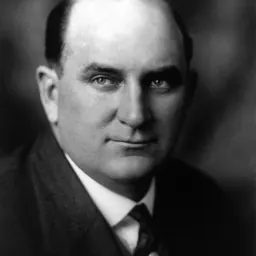

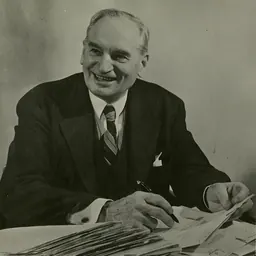

Related people
Same field, nearest in time



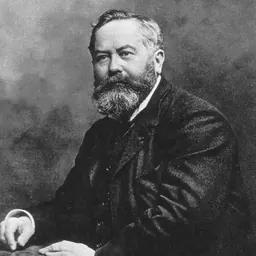
Contemporaries
People whose lives overlapped O. E. Lofthus's

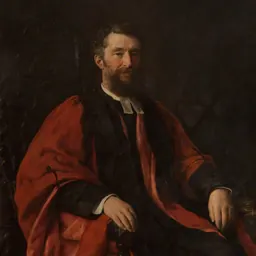


Frequently asked questions
Who was O. E. Lofthus?
American politician
When was O. E. Lofthus born?
O. E. Lofthus was born in 1868.
When did O. E. Lofthus die?
O. E. Lofthus died in 1960.
What was O. E. Lofthus's occupation?
O. E. Lofthus was a politician.
What nationality was O. E. Lofthus?
O. E. Lofthus was American.
Sources & further reading
Cite this page
APA: Biography.guide. (2026). O. E. Lofthus. https://biography.guide/o-e-lofthus/
MLA: "O. E. Lofthus." Biography.guide, https://biography.guide/o-e-lofthus/.
Chicago: "O. E. Lofthus." Biography.guide. https://biography.guide/o-e-lofthus/.
Data last updated: 2026-09-20 · Spot an error? Report a correction.
Page generated 2026-09-27 05:21 UTC