
About Nuno Gonçalves
Lived 1425 – 1492 (aged 66–67). Nuno Gonçalves was a painter and portraitist.
Nuno Gonçalves (c. 1425 – c. 1491, fl. 1450–71) was court painter to Afonso V of Portugal from 1450 to 1471. Gonçalves is widely considered the most accomplished Portuguese painter of the 15th century. His surviving masterpiece is the polyptych known as the Saint Vincent Panels. He is also believed to have been the author of the Pastrana Tapestries.
Life The details of Gonçalves's life are almost completely unknown. His paintings, heavily reminiscent of the works of Jan van Eyck, Hugo van der Goes, and Dieric Bouts, suggest he was a student of an artist familiar with Flemish technique and style. One plausible theory is that he received training in the Low Countries, perhaps in the Brussels workshop of Rogier van der Weyden.
Gonçalves was appointed court painter by King Afonso V on 20 July 1450, occupying the position until at least 1471. In recognition of his contributions, he was knighted by Afonso in 1470. In 1471, Gonçalves was designated official painter for Lisbon.
Legacy Gonçalves is credited with initiating the Portuguese Renaissance in painting. He is depicted, among several other historic figures, on the Padrão dos Descobrimentos, a monument that celebrates the Portuguese Age of Discovery in Belém, Lisbon.
Francisco de Holanda, a 16th-century artist and art essayist, spoke highly of Gonçalves, calling him one of the foremost painters of his era. Art historian Robert Chester Smith described Gonçalves as likely the greatest Portuguese painter of all time, rivalled only by Domingos Sequeira. Chandler Rathfon Post also greatly admired the Portuguese artist, mentioning him often in his lectures at Harvard.
Works Saint Vincent Panels
Gonçalves was largely forgotten before Jose de Figuerdia, the first director of the National Museum of Ancient Art in Lisbon, attributed the Saint Vincent Panels to him in the early 20th century. Figuerdia's attribution was founded on a reference to an altar of St. Vincent produced by Goncalves in Francisco de Holanda's 1548 manuscript, Pintura Antigua. More definitive evidence of Goncalves's authorship is a signature at the bottom, revealed after cleaning, that appears to be his initials.
One of the most renowned works of the 15th century, the Saint Vincent Panels were likely created between 1450 and 1470 to commemorate Afonso V's victories in Morocco. The polyptych compromises six oil paintings on wood, named left to right Panel of the Friars, Panel of the Fishermen, Panel of the Prince, Panel of the Archbishop, Panel of the Knights, and Panel of the Relic. The piece is thought to depict Vincent of Saragossa, present in the two center panels, surrounded by 58 characters representing the royal court and various classes of Portuguese early modern society. Since the discovery of the Panels in the late 19th century, the identities of the figures depicted have been the subject of speculation and debate. Among those commonly identified are Afonso V, Isabella of Coimbra, Henry the Navigator, and Prince John.
Style
Gonçalves's work is marked by the portrayal of distinct and expressive faces. He incorporates limited background details, instead concentrating attention upon persons. Although his luminous oil technique and employment of realism were undeniably influenced by contemporary Flemish and Italian schools of art, Gonçalves's emphasis on individuality was unique.
The Saint Vincent Panels are the only work that can be assigned to Gonçalves with confidence but a few other pieces have been tentatively attributed to him based on similarities of style. The following paintings are often attributed to him: Saint Vincent Panels, c. 1470–1480, National Museum of Ancient Art, Lisbon São Paulo, National Museum of Ancient Art, Lisbon São Francisco, National Museum of Ancient Art, Lisbon Saint Vincent Tied to a Column, National Museum of Ancient Art, Lisbon São Teotónio, National Museum of Ancient Art, Lisbon São Pedro, National Museum of Ancient Art, Lisbon Portrait of Princess Saint Joana, Aveiro
In addition to painting, Goncalves probably designed the scenes for the Pastrana Tapestries.
Don’t just read it —
keep it.
Full-length biographies made to live with: read them, listen on the way to work, watch them tonight.
- E-book
- Audio
- Video
Instant download · yours to keep · every purchase keeps this site free
Important facts
People in Nuno Gonçalves's life
Named in this biography and alive at the same time



Related people
Same field, nearest in time
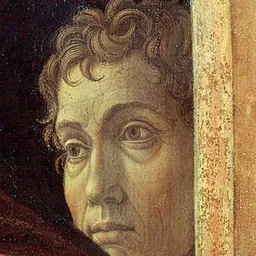

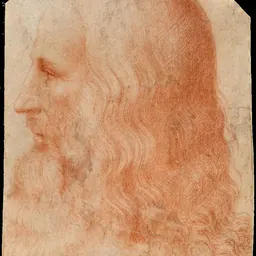
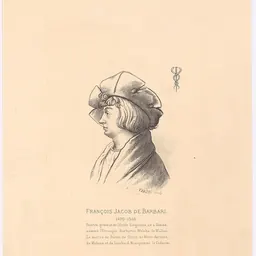
Contemporaries
People whose lives overlapped Nuno Gonçalves's
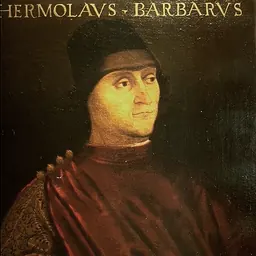

Frequently asked questions
Who was Nuno Gonçalves?
Portuguese artist (1425–1492)
When was Nuno Gonçalves born?
Nuno Gonçalves was born in 1425.
When did Nuno Gonçalves die?
Nuno Gonçalves died in 1492.
What was Nuno Gonçalves's occupation?
Nuno Gonçalves was a painter and portraitist.
What nationality was Nuno Gonçalves?
Nuno Gonçalves's recorded nationality: Kingdom of Portugal.
Sources & further reading
Cite this page
APA: Biography.guide. (2026). Nuno Gonçalves. https://biography.guide/nuno-goncalves/
MLA: "Nuno Gonçalves." Biography.guide, https://biography.guide/nuno-goncalves/.
Chicago: "Nuno Gonçalves." Biography.guide. https://biography.guide/nuno-goncalves/.
Data last updated: 2026-09-20 · Spot an error? Report a correction.
Page generated 2026-09-27 05:32 UTC