
Nubkheperre Intef
Egyptian king of the Seventeenth dynasty of Egypt at Thebes during the Second Intermediate Period
About Nubkheperre Intef
Born 1560 BC. Nubkheperre Intef was an Egyptian statesperson.
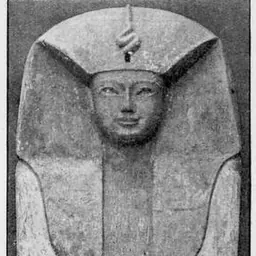
Nubkheperre Intef (or Antef, Inyotef, sometimes referred to as Intef VI) was an Egyptian king of the Seventeenth Dynasty of Egypt at Thebes during the Second Intermediate Period, when Egypt was divided by rival dynasties including the Hyksos in Lower Egypt.
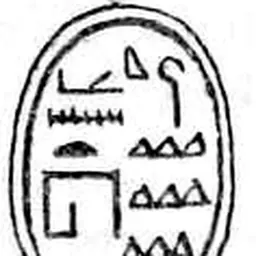
Reign Rise to power He is known to be the brother of Sekhemre-Wepmaat Intef—and this king's immediate successor—since he donated Louvre Coffin E3019 for this king's burial which bears an inscription that it was donated for king Sekhemre Wepmaat Intef "as that which his brother, king Antef (Nubkheperre Intef here) gives", notes Kim Ryholt. As the German scholar Thomas Schneider writes in the 2006 book Ancient Egyptian Chronology (Handbook of Oriental Studies): "From the legend on the coffin Louvre E 3019 (Sekhemre-Wepmaat's coffin), it follows that Inyotef Nebukheperre'...arranged the burial of his brother Inyotef Sekhemre'-upimaat...and must have therefore have followed him on the throne. In his Untersuchungen, Beckerath had viewed Inyotef Sekhemre'-upimaat (VI) and Inyotef Sekhemre-herhermaat (VII) as brothers, whereas he had separated Inyotef Nebukheperre' (VI; coffin BM 6652) from them as a king he considered not necessarily related to them, placing him at the beginning of the dynasty. Ryholt equally bases his arguments upon a consistent paleographic peculiarity (the Pleneschreibung of "j") in the case of the coffin of Inyotef Sekhemre-herhermaat. where only Nubkheperre Intef's nomen contained a reed-leaf of all the three Intef kings."
Intef's father Nubkheperre Intef and, by implication, his brother Sekhemre Wepmaat Intef, were probably the sons of Sekhemre Shedtawy Sobekemsaf (Sobekemsaf II today) on the basis of inscriptions found on a doorjamb discovered in the remains of a 17th Dynasty temple at Gebel-Antef on the Luxor-Farshut road. The doorjamb mentions a king Sobekem[saf] as the father of Nubkheperre Intef/Antef VII--(Antef begotten of Sobekem...) The British Egyptologist Aidan Dodson also endorses Ryholt's interpretation of the doorjamb's text and writes: Ryholt does...introduce the new "Desert Roads" evidence from the Darnells' survey to show that Nubkheperrre Inyotef (dubbed by Ryholt "Inyotef N") was a son of [Sekhemre-shedtawi] Sobekemsaf, thus providing a key genealogical link within the [17th] dynasty.
The German Egyptologist Daniel Polz, who discovered this king's tomb in 2001, also studied the same doorjamb and reached a similar conclusion in a 2007 German language book and in a 2010 article. An association between Nubkheperre Intef and a king Sobekemsaf is also indicated by the discovery of a doorframe fragment by John and Deborah Darnell in the early 1990s which preserved part of an inscription naming a king Intef ahead of a king Sobekemsaf; the hieroglyphic spelling of the king Intef here was that used only by Nubkheperre. Unfortunately, not enough of the inscription was uncovered to reveal the nature of the relationship with any certainty here—or which king Sobekemsaf was intended. Nubkheperre Intef is sometimes referred to as Intef VII, in other sources as Intef VI, and even as Intef V.
King Intef's wife was Sobekemsaf, who perhaps came from a local family based at Edfu. On an Abydos stela mentioning a building of the king are the words king's son, head of the bowmen Nakht.
Building program
Attestations Numerous attestations are known, see Ryholt 1997:394 File 17/4.
Abydos Present location unknown | At Abydos, architectural elements 2x blocks, 1x architrave. BM EA 631 | At Abydos, a relief. Cairo + Pennsylvania University Museum E 11512 | At Abydos, column fragments. Pennsylvania University Museum E 16021 | At Abydos, stela of treasurer. Chicago Oriental Institute 64 | At Abydos, stela of King's Son.
Koptos Present location unknown | At Koptos, blocks from chapel. Ashmolean 1894.106 |At Koptos, blocks from chapel. Berlin 12486-89 | At Koptos, blocks from chapel. Petrie Museum 14492, 14784, 14780, 14781, 14783, 14787, 14788, 14790 | At Koptos, blocks from chapel. Cairo JE 30770 bis | At Koptos, an inscription with a royal decree dated to Year 3, which mentions governor Minemhat of Coptos (PD 251 ) and King's Son and Commander of Koptos Qenen.
Thebes Medinet Habu magazine | At Luxor-Farshut Road, remains of a temple with door-jamb and grafitto. Lost in the Nile | At Dra Abu el-Naga, a pair of obelisks. Auguste Mariette found two broken obelisks with complete Fivefold Titulary, which was then subsequently lost when being transported to the Cairo Museum. BM EA 6652 | At Dra Abu el-Naga, a sarcophagus. Leiden AO 11a | At Dra Abu el-Naga, a collar fragment and diadem. BM EA 10706 | At Dra Abu el-Naga, a linen fragment with text. Louvre E 3019 | At Dra Abu el-Naga, a sarcophagus with dedication to brother. Cairo JE 67857 | At Deir el-Bahri, a wooden panel. In situ (?) | At Deir el-Bahri, a grafitti (nomen). Cairo Temp. 20.6.28.11 | At Karnak, a stela.
Edfu
BM EA 59699-59700 | At [Edfu], jewellery of Queen Sobekemsaf naming Intef. BM EA 57698 | At [Edfu], a signet ring. Present location unknown | At [Edfu], a pendant. BM EA 1645 | At [Edfu], a stela of an individual with dedication to Horus of bhdty and Isis.
Non-contemporary attestations BM EA 10221 "Pap. Abbott" | At Thebes, document about inspection of pyramid-tombs.
Theories Late 17th Dynasty Both Kim Ryholt and the German Egyptologist Daniel Polz concur that this pharaoh did not rule at or near the start of the 17th dynasty but rather late into the 17th dynasty just prior to the final three known kings of this dynasty (Senakhtenre, Seqenenre and Kamose).
Sequence Ryholt (1997) reconstructed the sequence of 17th dynasty rulers with a king Sobekemsaf intervened between the last Intef king and Senakhtenre. Detlef Franke rejects this view (below) and argues that there is no space for a king Sobekemsaf to intervene in the space after Nubkheperre Intef. "Contrary to Ryholt, I see no place for a king Sobekemsaf who ruled after Nubkheperra Antef. Nubkheperra Antef (c.1560 BC) is the best attested (from Abydos to Edfu, e.g. BM 631, EA 1645, coffin 6652) and [the] most important of the three Antefs."
Polz (2007) places Sekhemre-Heruhirmaat Intef as a short-lived king between the reigns of Nubkheperre Intef and Senakhtenre Ahmose—the first ruler of the Ahmoside family of kings.
Burial At Dra' Abu el-Naga, the Tomb of Nubkheperre was rediscovered by an archaeological team led by Polz in 2001. The grave was originally covered with a small pyramid (approximately 11 m at the base, rising to a height of approx. 13 m.)
Nubkheperre Intef's tomb is mentioned in the Abbott Papyrus, which records an investigation into tomb robberies during the reign of Ramesses IX, about 450 years after Intef's interment. Although the authorities found a tunnel that was carved into the pyramid by tomb robbers, his tomb was mentioned as being "uninjured", as the tomb robbers were unable to locate and enter the burial chamber.
Nubkheperre Intef's tomb was originally penetrated by tomb robbers in 1827 but some of its treasures made it into the hands of Western collectors; his unique rishi style coffin was purchased by the British Museum from the Henry Salt collection where its catalogue number is EA 6652.
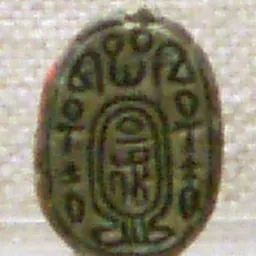
His tomb was later found by early Egyptologists around 1881 but knowledge of its location was lost again until it was rediscovered by German scholars under Daniel Polz, the deputy director of the German Archaeological Institute in 2001 at Dra' Abu el-Naga'. The coffin of Nubkheperre Intef was reportedly found in his tomb complete with a diadem or crown, some bows and arrows, and the heart-scarab of a king Sobekemsaf that may have been deposited from the lost tomb of Sobekemsaf I. Fragments of a pyramidion of Nubkheperre Intef were also found during excavations.
Don’t just read it —
keep it.
Full-length biographies made to live with: read them, listen on the way to work, watch them tonight.
- E-book
- Audio
- Video
Instant download · yours to keep · every purchase keeps this site free
Important facts
Related people
Same field, nearest in time



Frequently asked questions
Who was Nubkheperre Intef?
Egyptian king of the Seventeenth dynasty of Egypt at Thebes during the Second Intermediate Period
When was Nubkheperre Intef born?
Nubkheperre Intef was born in 1560 BC.
What was Nubkheperre Intef's occupation?
Nubkheperre Intef was a statesperson.
What nationality was Nubkheperre Intef?
Nubkheperre Intef was Egyptian.
Sources & further reading
· Wikipedia: Nubkheperre Intef
Cite this page
APA: Biography.guide. (2026). Nubkheperre Intef. https://biography.guide/nubkheperre-intef/
MLA: "Nubkheperre Intef." Biography.guide, https://biography.guide/nubkheperre-intef/.
Chicago: "Nubkheperre Intef." Biography.guide. https://biography.guide/nubkheperre-intef/.
Data last updated: 2026-09-20 · Spot an error? Report a correction.
Page generated 2026-09-27 05:29 UTC