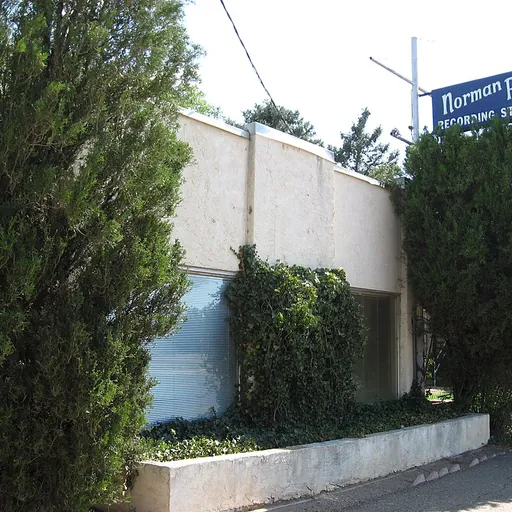
Norman Petty
American musician and record producer, talent manager
About Norman Petty
Lived 1927 – 1984 (aged 57). Norman Petty was an American record producer, singer-songwriter, audio engineer, pianist, talent manager and engineer.
Norman Petty (May 25, 1927 – August 15, 1984) was an American musician, record producer, publisher, and radio station owner. He is considered to be one of the founding fathers of early rock & roll. With Vi Ann Petty—his wife and vocalist—he founded the Norman Petty Trio.
Biography
Petty was born in the small town of Clovis, New Mexico.
With the success of "Almost Paradise", the structure was completed in mid-1957. In his original 7th Street studio, aside from songs for his own musical group, he also produced singles (several which were hits) for West Texas musicians Roy Orbison, Buddy Knox, Waylon Jennings, Charlie "Sugartime" Phillips, Sonny West, Carolyn Hester, Johnny "Peanuts" Wilson, and Billy Walker. Sizeable hits such as "Sugar Shack", "Bottle of Wine" by Jimmy Gilmer and the Fireballs, and "Wheels" by the String-A-Longs were recorded at Petty's studio in the 1960s. Other sources claim that this "was unusual for the 1950s, but today is quite common and even the standard practice in some genres." Petty "was an innovative producer who charged a fixed fee per recording rather than the hourly rate that was standard then and now, and did not take a fixed payment from mechanical royalties. To compensate for his risks and to recognize his contribution to creating the song, Petty was often listed as a cowriter of the songs he produced, and the songs were published by his music publishing company, Nor-Va-Jak Music.... No doubt Petty took risks as the producer and deserved greater compensation for his efforts, but his percentage of performance royalties was greater than Holly's[,] and the question is whether this was more than Petty deserved. Those who would defend Petty's greater share would point to the fact that Holly and the Crickets did not produce any hits before they recorded with Petty in his ... studio." However, at the time, "records sold in shops for between just sixty-nine and eighty-nine cents each, while the royalty was often as low as one cent per side." Petty would recall the split rather more amicably, claiming that "When I asked Buddy if there was anything that I had done to cause the split—I think the question was answered by his wife that time. It wasn’t necessarily anything I had done, I had not done enough to exploit Buddy, the world did not know enough about Buddy Holly. I was not doing a competent job of promoting him as an artist. That to me was the basic reason.... s far as musically speaking goes, I don’t think there ever was a rift between Buddy and myself". It was eventually determined through extensive auditing that "MCA owed the Petty estate and the Holly heirs a combined $251,325 in additional royalties".
Petty purchased the Mesa Theater on Main Street in Clovis in 1960. In 1963, he launched the FM radio station KTQM starting as an easy-listening station, later switching to country-and-western music, and then in 1968 to top-40 rock. The country genre had local appeal, so he applied for a new station license and started KWKA 680 AM in 1971, airing country-and-western music. Petty ran both stations until 1979. The stations were sold by Curry County Broadcasting to Zia Broadcasting in 2010.
Petty died in Lubbock, Texas, in August 1984, of leukemia. Blanas argues that Petty's reputation as "arguably the No. 1 villain in the Buddy Holly story" The idea "that Petty stole the money has been widely shared by various authors, artists and, subsequently, the general public. The fact is, though, that many in the 1950s record business were mobsters, racketeers and money launderers. Most writers forget that there were key middle men between the retailer and Clovis. Norman, as a small independent music businessman, was often dealing with professional crooks with known mob ties[,] and was at their mercy in the same way as exploited artists."
Petty's Nor-Va-Jak record label was revived in 2016–2023 as "Nor-Va-Jak Music", with authorization from Norman Petty Studios, for the purpose of reissuing Petty productions that were not previously available in digital form.
Don’t just read it —
keep it.
Full-length biographies made to live with: read them, listen on the way to work, watch them tonight.
- E-book
- Audio
- Video
Instant download · yours to keep · every purchase keeps this site free
Important facts
People in Norman Petty's life
Named in this biography and alive at the same time


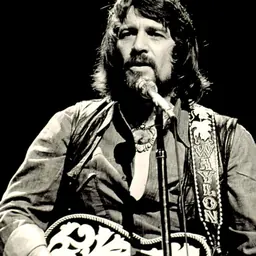




Related people
Same field, nearest in time
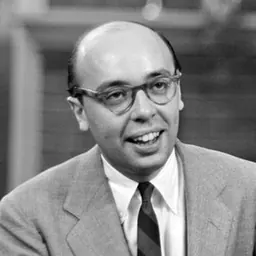


Contemporaries
People whose lives overlapped Norman Petty's

Frequently asked questions
Who was Norman Petty?
American musician and record producer, talent manager (1927-1984)
When was Norman Petty born?
Norman Petty was born on 25 May 1927 in Clovis.
When did Norman Petty die?
Norman Petty died on 15 August 1984 in Lubbock.
What was Norman Petty's occupation?
Norman Petty was a record producer, singer-songwriter, audio engineer, pianist, talent manager and engineer.
What nationality was Norman Petty?
Norman Petty was American.
Sources & further reading
Cite this page
APA: Biography.guide. (2026). Norman Petty. https://biography.guide/norman-petty/
MLA: "Norman Petty." Biography.guide, https://biography.guide/norman-petty/.
Chicago: "Norman Petty." Biography.guide. https://biography.guide/norman-petty/.
Data last updated: 2026-09-21 · Spot an error? Report a correction.
Portrait: Wikimedia Commons · author & licence
Page generated 2026-09-27 04:58 UTC