
About Norman MacCaig
Lived 1910 – 1996 (aged 85). Norman MacCaig was a British poet and writer.
Norman Alexander MacCaig (14 November 1910 – 23 January 1996) was a Scottish poet and teacher. His poetry, in modern English, is known for its humour, simplicity of language and great popularity. He published fifteen volumes of poetry, including The Inward Eye, Riding Lights (1955), Surroundings (1966), and The White Bird (1973). A book of his collected poems was released in 1985, with an expanded edition in 1990. Collections of his poetry continue to appear, with Between Mountain and Sea being issued in 2018.
Life Norman Alexander MacCaig was born at 15 East London Street, Edinburgh, to Robert McCaig (1880–1950?), a chemist from Dumfriesshire, and Joan née MacLeod (1879–1959), from Scalpay in the Outer Hebrides. He was their fourth child and only son. He attended the Royal High School and in 1928 went to the University of Edinburgh, graduating in 1932 with an honours degree in classics, and an M.A. in 1932. He divided his time, for the rest of his life, between his native city and Assynt in the Scottish Highlands. In 1940 he married Isabel Munro, and the couple had two children.
During the Second World War MacCaig registered as a conscientious objector, a move that many at the time criticised. Douglas Dunn has suggested that MacCaig's career later suffered as a result of his outspoken pacifism, although this is disputed. For the early part of his working life, he was employed as a school teacher in primary schools. In 1967, he was appointed Fellow in Creative Writing at Edinburgh. He became a reader in poetry in 1970 at the University of Stirling. He spent his summer holidays in Achmelvich, and Inverkirkaig, near Lochinver.
He received a doctorate in English from the University of Stirling in 1981, an honorary doctor of letters degree from the University of Edinburgh in 1983, and an honorary doctor of laws degree from Dundee University in 1986. He adopted the spelling MacCaig at some point between 1946 and 1955, using this form for his published works, and the original for family and personal matters.
His first collection, Far Cry, was published in 1943. He continued to publish throughout his lifetime and was prolific in the amount that he produced. After his death a still larger collection of unpublished poems was found. MacCaig often gave public readings of his work in Edinburgh and elsewhere; these were extremely popular and for many people were the first introduction to the poet. His life is also noteworthy for the friendships he had with a number of other Scottish poets, such as Hugh MacDiarmid and Douglas Dunn. He described his own religious beliefs as "Zen Calvinism", a comment typical of his half-humorous, half-serious approach to life.
Work
Early MacCaig's first two books were deeply influenced by the New Apocalypse movement of the thirties and forties, one of a number of literary movements that were constantly coalescing, evolving and dissolving at that time. Later he was to all but disown these works, dismissing them as obscure and meaningless. His poetic rebirth took place with the publication of Riding Lights in 1955. It was a complete contrast to his earlier works, being strictly formal, metrical, rhyming and utterly lucid. The timing of the publication was such that he could have been associated with The Movement, a poetic grouping of poets at just that time. Indeed many of the forms and themes of his work fitted with the ideas of The Movement but he remained separate from that group, perhaps on account of his Scottishness—all of the Movement poets were English. One label that has been attached to MacCaig and one that he seemed to enjoy (as an admirer of John Donne) is Metaphysical.
Later
In his later years he relaxed some of the formality of his work, losing the rhymes and strict metricality but always strove to maintain the lucidity. He became a free verse poet with the publication of Surroundings in 1966. Seamus Heaney described his work as "an ongoing education in the marvellous possibilities of lyric poetry". Ted Hughes wrote, "whenever I meet his poems, I'm always struck by their undated freshness, everything about them is alive, as new and essential, as ever". Another poet, beside Donne, whom MacCaig claimed was a great influence on his work was Louis MacNeice. Although he never lost his sense of humour, much of his very late work, following the death of his wife in 1990, is more sombre in tone. The poems appear to be full of heartbreak but they never become pessimistic.
An example of this is his poem "Praise of a Man" which was quoted by Gordon Brown in the eulogy he gave at the funeral of Robin Cook in 2005: The beneficent lights dim but don't vanish. The razory edges dull, but still cut. He's gone: but you can see his tracks still, in the snow of the world. In schools MacCaig's poems are studied in schools in Scotland at National 5 and Higher levels. The poems which are currently studied are:
"Aunt Julia" "Basking Shark" "Hotel Room, 12th Floor" "On Lachie's Croft" "Landscape and I" "Old Highland Woman"
Previously, the poems studied were:
"Assisi" "Visiting Hour" "Basking Shark" "Brooklyn Cop" "Hotel Room, 12th Floor" "Aunt Julia"
Awards 1985 Queen's Gold Medal for Poetry 1979 Order of the British Empire
Don’t just read it —
keep it.
Full-length biographies made to live with: read them, listen on the way to work, watch them tonight.
- E-book
- Audio
- Video
Instant download · yours to keep · every purchase keeps this site free
Important facts
People in Norman MacCaig's life
Named in this biography and alive at the same time
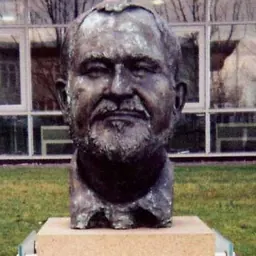


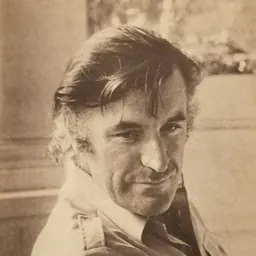

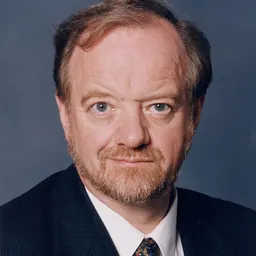
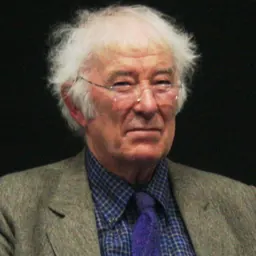

Related people
Same field, nearest in time


Contemporaries
People whose lives overlapped Norman MacCaig's





Frequently asked questions
Who was Norman MacCaig?
poet (1910-1996)
When was Norman MacCaig born?
Norman MacCaig was born on 14 November 1910 in Edinburgh.
When did Norman MacCaig die?
Norman MacCaig died on 23 January 1996 in Edinburgh.
What was Norman MacCaig's occupation?
Norman MacCaig was a poet and writer.
What nationality was Norman MacCaig?
Norman MacCaig was British.
Sources & further reading
Cite this page
APA: Biography.guide. (2026). Norman MacCaig. https://biography.guide/norman-maccaig/
MLA: "Norman MacCaig." Biography.guide, https://biography.guide/norman-maccaig/.
Chicago: "Norman MacCaig." Biography.guide. https://biography.guide/norman-maccaig/.
Data last updated: 2026-09-20 · Spot an error? Report a correction.
Page generated 2026-09-27 05:32 UTC