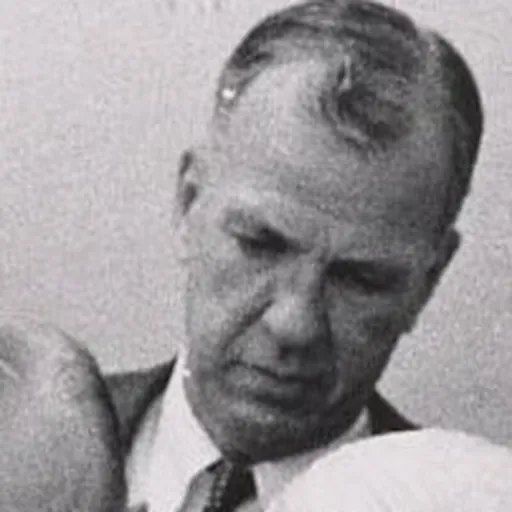
Norman Livermore
American environmentalist, lumber industry executive, state official
About Norman Livermore
Lived 1911 – 2006 (aged 95). Norman Livermore was an American baseball player, environmentalist and environmentalism.
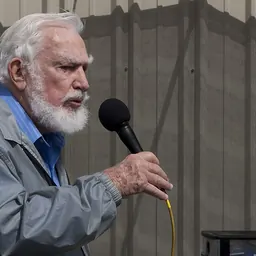
Norman Banks "Ike" Livermore Jr. (March 27, 1911 – December 5, 2006) was an American environmentalist, lumber industry executive, and state official. He was the only member of California governor Ronald Reagan's cabinet to serve during the full eight years of his administration. He played baseball at the 1936 Summer Olympics in Berlin.
Early life and education
Livermore was descended from a pioneer California family with roots in Maine. An ancestor, Elijah Livermore, built a grist mill and a saw mill on the Androscoggin River in 1791. The town of Livermore Falls, Maine, is named after that ancestor.
His great-grandfather, Horatio Gates Livermore, came to California from Maine during the Gold Rush in 1850, and later became a State Senator from Eldorado County. His great-grandfather and his grandfather, Horatio Putnam Livermore, who came to California in 1856, used their Maine mill experience to become involved in the earliest days of hydroelectric power, helping to build the original Folsom Dam. His father, Norman Banks Livermore, was a founding board member of Pacific Gas and Electric. His mother, Caroline Sealy Livermore, was a conservationist in the San Francisco Bay Area, working on protection of the Marin Headlands and Richardson Bay; Mount Livermore on Angel Island is named after her. He had four brothers, geologist John Livermore (1918-2013), Putnam Livermore, Robert Livermore, and George Livermore.
Livermore was born in San Francisco in 1911, and grew up on Russian Hill. His summers in childhood were spent at his family's Montesol Ranch on the slopes of Mount Saint Helena that extended into Napa County, Sonoma County, and Lake County. He attended The Thacher School, a private boarding school in Ojai, California, where the "challenges of academics are combined with those of mountains and horses." At age 15, he rode his horse from Ojai to Big Sur, a distance of nearly . He also climbed the Grand Teton in tennis shoes as a youth.
Livermore attended Stanford University, receiving a bachelor's degree in Social Science/Social Thought in 1933. He went on to study briefly at the Harvard Business School after graduation. Missing the mountains of the west, he returned to California and earned an MBA from the Stanford Business School in 1936. His thesis was called The Economic Significance of California's Wilderness Areas.
Olympic athlete
Livermore had been the captain of the Stanford University baseball team. Former professional baseball player Les Mann was an advocate for baseball as an Olympic sport. As a result of Mann's efforts, baseball was selected as a demonstration sport in the 1936 Summer Olympics played in Berlin. Originally, the United States team was scheduled to play a Japanese team, but the Japanese withdrew. The American team was separated into two squads who competed against each other in a single game. Livermore was the catcher for the "World Champions" lineup which beat the "U. S. Olympics" lineup to win the demonstration game 6-5 before a crowd of 90,000 people on August 12, 1936.
Pack station operator
In 1929, Livermore rode a motorcycle up and down the Sierra Nevada, searching for a summer job. On the advice of a park ranger in Sequoia National Park, he was hired at a pack station in Mineral King because of his experience with horses and mules. That first summer, he shod mules, helped the camp cook, and did various chores. The following summer, he began leading mule trains into the wilderness of the High Sierra. The Great Depression hit the pack station business hard, and work was negligible the next two summers. He worked a bit in the summer of 1933, and business picked up for the summer of 1934.
In the fall of 1934, he interviewed the operators of dozens of pack stations throughout the Sierra Nevada, questioning them in depth about their business operations. He compiled a list of 71 pack stations operating in California's wilderness areas. This formed the basis for his MBA thesis at Stanford.
Beginning in 1934, he advocated for a trade group for pack station operators. By 1936, the High Sierra Packers Association had 35 members, and he served as its executive secretary.
In 1937, he bought an interest in the Mineral King Pack Station, and in 1946, bought two pack stations in the eastern Sierra that he merged to form the Mount Whitney Pack Trains. He was the largest wilderness outfitter in the Sierra Nevada for a number of years in the 1940s.
World War II service
Livermore was commissioned a lieutenant in the United States Navy during World War II, and participated in the amphibious landings on Sicily, Iwo Jima, Palau and Okinawa.
Sierra Club
Livermore joined the Sierra Club in the 1930s. He was the outfitter for many of its High Trips and served on the board of directors of the Sierra Club from 1941 to 1949. He came up with the concept for the first of the club's Biennial Wilderness Conferences, which was held on April 8–9, 1949. These conferences continued for more than 20 years.
During a bitter faction fight in 1969, he consulted with opponents of club executive director David Brower, including Ansel Adams and Richard M. Leonard, to develop a plan to restructure the club after Brower's departure. Brower resigned under pressure during a board meeting held May 3–4, 1969.
Lumberman
He served as treasurer for the Pacific Lumber Company from 1952 to 1967, when it was committed to sustainable yields, in the years long before the company was acquired by Maxxam, Inc. and went bankrupt.
Governor Reagan's cabinet
Livermore, who did not know Ronald Reagan before he was elected Governor of California in 1966, was selected to serve as Reagan's Secretary of Resources. A shared love for horseback riding helped cement a relationship between the men. Livermore served from 1967 to 1975, and was the only Reagan cabinet official who served during the entire eight years of Reagan's administration. He developed a close friendship with Reagan during those years.
Livermore convened a meeting between Governor Reagan and Nevada Governor Paul Laxalt that resulted in an agreement to preserve the Lake Tahoe basin.
Livermore worked with Reagan to defeat the proposed Trans-Sierra Highway, which would have divided the longest stretch of wilderness area in the contiguous 48 states and would have bisected the John Muir Trail. Livermore organized a wilderness trip by Ronald Reagan beginning on June 27, 1972. Departing from Red's Meadow near Devils Postpile National Monument, the Reagan party was carried by 100 packhorses. Reagan gave a ringing speech pledging that the Trans-Sierra Highway would never be built. Although Livermore organized the trip, he did not participate in it himself, because he was serving as a U. S. delegate to the 1st United Nations Conference on the Human Environment in Stockholm at the time.
Livermore negotiated the compromise land deal that made it possible for the Reagan administration to endorse the campaign for a Redwoods National Park, leading to its success.
Livermore also convinced Reagan to oppose construction of the Dos Rios Dam on the Eel River in Round Valley, saving the ancestral home of the local Indian tribe. When advocates of the dam urged him to consider facts not emotions, he responded, "Look, emotion is a fact. The solitude of the wilderness, the beauty of a flower - those are facts."
Reagan biographer Lou Cannon said that Livermore succeeded because he "worked with the governor instead of against him. He never criticized Reagan to outsiders, and he wrote letters to newspapers extolling his environmental record. Inside the Cabinet, however, he waged a valiant struggle to educate Reagan on the need to get beyond the minimalist positions of the lumber companies."
Environmentalist and author Martin Litton summarized Livermore's role in the Reagan administration, "Ike was a Republican. He was a good person to have there because he was so pro-wilderness. If he had an obsession at all, it was to keep the Sierra Nevada wild for the whole stretch from Tioga Pass in Yosemite National Park south to Walker Pass. And that meant keeping the trans-Sierra roads out of there."
Livermore died in Novato, California, on December 5, 2006.
Don’t just read it —
keep it.
Full-length biographies made to live with: read them, listen on the way to work, watch them tonight.
- E-book
- Audio
- Video
Instant download · yours to keep · every purchase keeps this site free
Important facts
People in Norman Livermore's life
Named in this biography and alive at the same time




Related people
Same field, nearest in time


Contemporaries
People whose lives overlapped Norman Livermore's





Frequently asked questions
Who was Norman Livermore?
American environmentalist, lumber industry executive, state official (1911-2006)
When was Norman Livermore born?
Norman Livermore was born on 27 March 1911 in San Francisco.
When did Norman Livermore die?
Norman Livermore died on 5 December 2006 in Novato.
What was Norman Livermore's occupation?
Norman Livermore was a baseball player, environmentalist and environmentalism.
What nationality was Norman Livermore?
Norman Livermore was American.
Sources & further reading
Cite this page
APA: Biography.guide. (2026). Norman Livermore. https://biography.guide/norman-livermore/
MLA: "Norman Livermore." Biography.guide, https://biography.guide/norman-livermore/.
Chicago: "Norman Livermore." Biography.guide. https://biography.guide/norman-livermore/.
Data last updated: 2026-09-22 · Spot an error? Report a correction.
Portrait: Wikimedia Commons · author & licence
Page generated 2026-09-27 05:00 UTC