
About Norbert Glanzberg
Lived 1910 – 2001 (aged 90). Norbert Glanzberg was a French and Austrian composer, pianist, film score composer, choir director, conductor and lyricist.
Norbert Glanzberg (né Nathan Glanzberg; 12 October 1910 – 25 February 2001) was a Galician-born French composer. Mostly a composer of film music and songs, he was also notable for some famous songs of Édith Piaf.
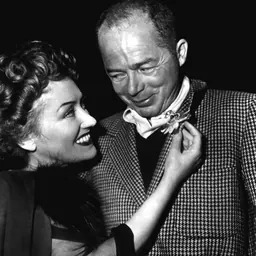
In his twenties he lived in Germany, where he began his career scoring films for directors including Billy Wilder and Max Ophüls. When the Nazi regime came to power there in 1933, he, as a Jew, fled to Paris, where he performed in nightclubs under bandleaders such as Django Reinhardt, which is where he first met Piaf.
At different times from 1939 to 1945 he toured with Piaf, when he wrote many of her songs and accompanied her on piano when she sang. For many of those years they were lovers, and Piaf saved his life on more than one occasion by hiding him from both the French Vichy police, who were helping the Nazis round up Jews for deportation, and later from the Nazi occupiers themselves.
After the war he continued writing film scores for French films along with composing classical music, which included works and songs from Berlin and romantic classics. At the end of his career he wrote a concerto for two pianos in 1985 which was inspired by the novels of Isaac Bashevis Singer.
Early years Norbert Glanzberg was born from Jewish parents in Rohatyn in Galicia in the dual Austro-Hungarian Royal and Imperial Monarchy. His original name was Nathan, changed to Norbert when he arrived in Germany.
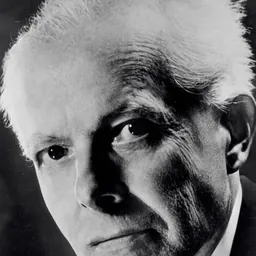
In 1911, his family moved to Würzburg in Bavaria, where Norbert received his first harmonica from his mother, which gave rise to the question: "Why does music laugh, why does music cry?" He entered the Conservatory of Würzburg in 1922, already a passionate, and he was appointed as assistant conductor of Aix-la-Chapelle in 1929, where he would meet Béla Bartók and Alban Berg.
Career Hired by the UFA (Universum Film AG) as a composer in 1930, 21-year-old Glanzberg wrote a film scores for Billy Wilder's German comedy The Wrong Husband and for Max Ophüls' comedy Cod Liver Oil is Preferred. He also wrote scores for opera music and was musical director for concerts in 1930, including ones by dancer Ellen Von Frankenberg. When the Nazi regime came into power in Germany in 1933, Joseph Goebbels referred to Glanzberg in the NSDAP newspaper, Der Angriff, as a degenerate Jewish artist. Glanzberg then went into exile in Paris.
In 1935 he met another exile in Paris, guitarist and bandleader Django Reinhardt, and became his pianist when his band played in Paris clubs. They played the evening that Edith Piaf first performed in front of an audience, after the club's manager heard her singing in the street and persuaded her to perform on stage. Piaf's powerful voice made an impression on Glanzberg, writes biographer Carolyn Burke.
He performed and composed songs in music-halls in Paris in the years before the war. In 1938, he met French singer Lily Gauty, and wrote Le bonheur est entré dans mon cœur (Happiness has entered my heart) for her. He also accompanied singers performing in fashion collections shows.
War years In 1939, Glanzberg was enlisted into the Polish army, stationed in England. After he was discharged, he returned to France's Free Zone in the south of the country, which had not yet been occupied by Germany. There, he met the impresario Felix Marouani who hired him to tour with Piaf as her pianist. They began their tour in Lyon, France, within the Free Zone, in 1939. Along with being her pianist, he began writing some of her songs.
He and Piaf continued touring throughout France. But he always feared that his physical features might betray him to the French police or informers who had begun rounding up Jews and other undesirable refugees. They toured at various times between 1939 and 1942, and became lovers. "Mon Manege A Moi", "Il fait bon t'aimer" ("It's good loving you"). and "Au bal de la chance". Actress Marie Bell and Corsican singer Tino Rossi, with Piaf's financial help, organized his successful escape just before he was to be deported to a concentration camp. and in 1956 the score for La mariée est trop belle (The Bride Is Much Too Beautiful), featuring Brigitte Bardot.
In 1959, Glanzberg's son Serge, now a producer in the music business, was born.
According to the biographical book "Chanson für Edith", the Petula Clark hit Chariot, later recorded as I Will Follow Him was actually written by Glanzberg and not, as often cited, by Franck Pourcel (and alleged co-composer Paul Mauriat), who actually only made the first recording of the song as an instrumental.
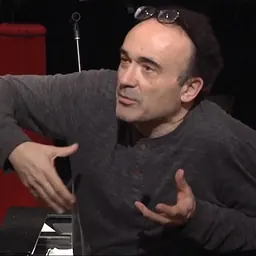
In 1983, Glanzberg went back to classical music and composed a series of lieder from a collection of poems written during the war by concentration camp inmates, La mort est un maître de l’Allemagne (der Tod ist ein ... Meister aus Deutschland), the chorus of what is perhaps the greatest poem by Paul Celan, Todesfuge (Death Fugue). He put into music, in two cycles each of ten works, songs from Berlin and romantic leader classics. In 1985, he wrote a concerto for two pianos, La suite yiddish, inspired from the novels of Isaac Bashevis Singer. This work would be arranged for a symphonic orchestra by his friend, the composer and conductor Frédéric Chaslin.
Filmography 1931: The Wrong Husband 1931: On préfère l’huile de foie de morue (Dann schon lieber Lebertran) 1938: La Goualeuse 1948: Neuf garçons, un cœur 1948: Bichon 1949: Brilliant Waltz 1951: Les deux Monsieur de madame 1952: Le costaud des Batignolles 1952: It Happened in Paris 1953: Double or Quits 1953: My Brother from Senegal 1953: On ne chasse pas sans son chien 1954: La rage au corps 1954: Ma petite folie (My Little Madness) 1954: The Pirates of the Bois de Boulogne 1955: Blackmail 1955: La lumière d’en face 1956: La sorcière (The Blonde Witch) 1956: Quand vient l’amour 1956: The Bride Is Much Too Beautiful 1956: Michel Strogoff 1958: Mon oncle 1958: La moucharde 1959: Les bateliers de la Volga (I Battellieri del Volga) 1960: La Française et l’amour (Love and the Frenchwoman) (segment "Adultery") 1962: La marine à travers les âges 1963: Une blonde comme ça 1963: Janique aimée 1968: Le bal des voyous
Compositions Der Tod ist ein Meister aus Deutschland: anthology of poems from victims of Nazism (title taken from a line of the poem by Paul Celan: Todesfuge) Holocaust Lieder: 9 Lieder for baritone and piano (1983) on poems inspired by the concentration camps. Given in concert in Würzburg with Hanna Schygulla in 1998 Transport (Gerry Spies) Ausflug machen (Rainer Kirsch) Die letzte (Gerson Stern) Ein Koffer spricht (Ilse Weber) Der Gute Ort zu Wien (Franz Werfel) Ballade von der Judenhure (Berthold Brecht) Holocaust Songs: 11 songs for mezzo-soprano and piano or orchestra (1984) Concerto for two pianos (1985)
Selected recordings Glanzberg: In Memoriam – Lieder & Chamber Music : Invitation à la valse In Memoriam Suite Yiddish original piano versions – Markus Bellheim (piano), Heinrich Martin (piano), Jakob Johannes Koch (baritone) Castigo Classics Glanzberg Holocaust Lieder & Suite Yiddish – Spngs and Suite Yiddish for two clarinets, in orchestrated versions by Frédéric Chaslin and Daniel Klajner. Roman Trekel (baritone) Orchestre symphonique de Mulhouse, Daniel Klajner MDG "Padam padam", song Anne Sofie von Otter (mezzo soprano), Bengt Forsberg (piano) on Douce France recital
Don’t just read it —
keep it.
Full-length biographies made to live with: read them, listen on the way to work, watch them tonight.
- E-book
- Audio
- Video
Instant download · yours to keep · every purchase keeps this site free
Important facts
People in Norbert Glanzberg's life
Named in this biography and alive at the same time



Related people
Same field, nearest in time



Contemporaries
People whose lives overlapped Norbert Glanzberg's






Frequently asked questions
Who was Norbert Glanzberg?
French composer
When was Norbert Glanzberg born?
Norbert Glanzberg was born on 12 October 1910 in Rohatyn.
When did Norbert Glanzberg die?
Norbert Glanzberg died on 25 February 2001 in Neuilly-sur-Seine, Paris.
What was Norbert Glanzberg's occupation?
Norbert Glanzberg was a composer, pianist, film score composer, choir director, conductor and lyricist.
What nationality was Norbert Glanzberg?
Norbert Glanzberg was French and Austrian.
Sources & further reading
· Wikipedia: Norbert Glanzberg
Cite this page
APA: Biography.guide. (2026). Norbert Glanzberg. https://biography.guide/norbert-glanzberg/
MLA: "Norbert Glanzberg." Biography.guide, https://biography.guide/norbert-glanzberg/.
Chicago: "Norbert Glanzberg." Biography.guide. https://biography.guide/norbert-glanzberg/.
Data last updated: 2026-09-20 · Spot an error? Report a correction.
Page generated 2026-09-27 05:28 UTC