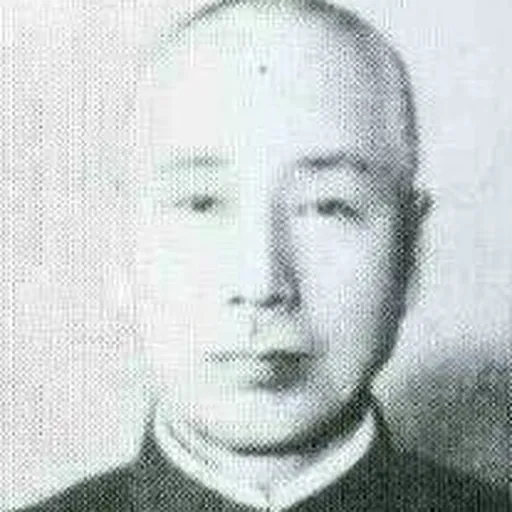
About Nobuyoshi Mutō
Lived 1868 – 1933 (aged 65). Nobuyoshi Mutō was a Japanese military personnel.
Gensui Baron was a marshal in the Imperial Japanese Army, who served as Commander of the Kwantung Army and ambassador to Manchukuo.
Biography Mutō was born into a samurai family from Saga Domain. After graduating from the Imperial Japanese Army Academy, he served in the First Sino-Japanese War as a lieutenant in the infantry. After the war (and his promotion to captain) he was sent twice to Russia as a military attaché, spending time in Vladivostok and in Odessa. He was fluent in the Russian language, which proved invaluable during the Russo-Japanese War. After his promotion to major, then colonel, he returned to Japan in a posting with the Imperial Guards.
From 1915 to 1916, Mutō was Chief of 2nd Section (Maneuvers), 1st Bureau, Imperial Japanese Army General Staff. From 1917, he was assigned to military intelligence and headed the Harbin Special Agency and operational offices in Irkutsk and Omsk. He returned to administrative positions in Japan from 1919–1921, before being appointed commander of the IJA 3rd Division in 1921 and being dispatched to Russia during the Siberian Expedition against the Bolshevik Red Army.
With the death of General Taro Utsunomiya in 1922, Muto became the leader of the Saga clique within the army. This had been formed by officers descended from the Saga Domain to protect their interests against the dominant Chōshū clique, but had also attracted officers outside the domain. Participants included Sadao Araki, Jinzaburō Masaki and Heisuke Yanagawa, who later formed the core of the Kōdōha. During the 1920s, the group joined forces with Marshal Yūsaku Uehara to oppose the mainstream Ugaki faction.
Mutō returned to Japan in 1922 as Vice Chief of the General Staff under Uehara. He left the position in 1925, and was member of the Supreme War Council from 1925-1926. He was briefly appointed commander of Tokyo Defense Command before assuming the role of Commander in Chief of the Kwantung Army, from 28 July 1926 – 26 August 1927. He was then appointed Inspector-General of Military Training.
Upon the retirement of General Sōroku Suzuki in 1930, Uehara attempted to promote Mutō to Chief of General Staff. Mutō was widely admired and a strong campaign arose for his appointment within the army, but Ugaki regarded this as an interference in his prerogatives in personnel matters, and forced the appointment of his protege Hanzō Kanaya.
He was reappointed commander of the Kwantung Army in 1932. The political and military importance of this position had increased after the Japanese invasion of Manchuria and the foundation of Manchukuo. Mutō concurrently served as ambassador to Manchukuo and Governor of the Kwantung Leased Territory. As ambassador, Mutō signed the Japan-Manchukuo Protocol of September 1932. In 1933, he supervised Operation Nekka, the invasion of Jehol. In early 1933, he was promoted to Gensui.
Diagnosed with jaundice, Mutō died in a hospital in Xinjing, Manchukuo. His elevation to the title of danshaku (baron) was posthumous, as were his awards of the Order of the Golden Kite (1st class) and Order of the Rising Sun (1st class). His grave is at the Buddhist temple of Gokoku-ji in Tokyo, and the sword he received on his promotion to gensui is on display at the Yūshūkan Museum at Yasukuni Shrine in Tokyo.
Alternative theory of death Amleto Vespa, a spy and former mercenary active in Manchukuo, and the journalist Edgar Snow claimed that Mutō did not die of jaundice; that he had, rather, committed seppuku to protest against the corruption and abuses he found in Manchukuo.
Don’t just read it —
keep it.
Full-length biographies made to live with: read them, listen on the way to work, watch them tonight.
- E-book
- Audio
- Video
Instant download · yours to keep · every purchase keeps this site free
Important facts
People in Nobuyoshi Mutō's life
Named in this biography and alive at the same time


Related people
Same field, nearest in time





Contemporaries
People whose lives overlapped Nobuyoshi Mutō's


Frequently asked questions
Who was Nobuyoshi Mutō?
Japanese general (1868-1933)
When was Nobuyoshi Mutō born?
Nobuyoshi Mutō was born on 15 July 1868 in Saga.
When did Nobuyoshi Mutō die?
Nobuyoshi Mutō died on 27 July 1933 in Changchun.
What was Nobuyoshi Mutō's occupation?
Nobuyoshi Mutō was a military personnel.
What nationality was Nobuyoshi Mutō?
Nobuyoshi Mutō was Japanese.
Sources & further reading
Cite this page
APA: Biography.guide. (2026). Nobuyoshi Mutō. https://biography.guide/nobuyoshi-muto/
MLA: "Nobuyoshi Mutō." Biography.guide, https://biography.guide/nobuyoshi-muto/.
Chicago: "Nobuyoshi Mutō." Biography.guide. https://biography.guide/nobuyoshi-muto/.
Data last updated: 2026-09-22 · Spot an error? Report a correction.
Portrait: Wikimedia Commons · author & licence
Page generated 2026-09-27 05:04 UTC