
About Nobuhiko Jinbo
Lived 1900 – 1978. Nobuhiko Jinbo was a Japanese military personnel.
was a Japanese officer of the Imperial Japanese Army during World War II. He is best known for his actions in preventing the execution of future Philippine president Manuel Roxas during the Japanese occupation of the Philippines.
After the war, Jimbo was spared execution in China following an appeal by President Roxas. In his later years, he worked as a trader and became an advocate for post-war reconciliation and stronger relations between Japan and the Philippines.
Biography Jimbo was born on January 1, 1900, at Kazumicho, Yamagata, Yamagata Prefecture, as the second son of Bunji and Sada Jimbo. He entered the Sendai Local Military Preparatory School in September 1914 and graduated from the 33rd class of the Imperial Japanese Army Academy in October 1921. He attempted to enter the Army War College twice, but failed both times because he quarreled with the examiners during his interviews. By 1930, Jimbo was serving at the Tokyo Akasaka Infantry 1st Regiment and later became company commander of the Manchurian Independent Garrison in 1936. but was captured by Japanese forces in April 1942 while on his way to secret pickup point where a submarine would take him to Australia. Roxas was then sent to a prisoner camp in Malaybalay, Bukidnon. Upon learning of his identity, the Japanese transferred Roxas to the mayor's house in Davao City where Jimbo met him for the first time. Instead of resenting him, Jimbo grew to admire and respect Roxas for his resolve and intelligence.
On June 22, 1942, Jimbo's superior, Major General Torao Ikuta, received an order from the chief-of-staff of the Fourteenth Army ordering him to "execute secretly and immediately Manuel Roxas, former Finance Minister and Speaker of the Chamber of Deputies, now under your arrest." Both Ikuta and Jimbo balked at the order. They discussed it but were unable to reach a decision. Unwilling to carry out the execution, Ikuta ordered Jimbo to assume full responsibility of Roxas. Defying direct orders, Jimbo drove Roxas and another high-ranking captive (a governor) to a small village outside Davao and instructed his men to keep the two Filipinos safe. Eventually, an officer from Manila discovered the ruse and told Jimbo that he was to be court-martialed for his "high-handed" actions, though he was not put under arrest. Wachi went to the office of Major General Yoshihide Hayashi demanding to know who gave the order, and then called on Jimbo to show the original copy of the execution order, which bore Hayashi's stamp. Hayashi and the other staff officers eventually confessed that they had stamped the order "without giving it too much thought." Chiang issued a special order for Jimbo's release. Jimbo returned home to Yamagata in Japan in July 1947, where newspaper reporters and photographers were waiting for him at the train station.
Jimbo and Roxas exchanged their final letters on April 9, 1948, with Roxas writing his desire to visit Jimbo as soon as he can and tasking the chairman of the Philippine Delegation to Japan to assist Jimbo's efforts in repairing relations between the Philippines and Japan. Despite initially wanting to keep the story between him and Roxas private, Jimbo eventually publicized their story in the April 15, 1950, issue of the newspaper Jiji Shimpō, on the 2nd anniversary of Roxas' death.
Post-war activities For three years after his repatriation, Jimbo was "absorbed in self-reflection" and dedicated his time researching about Japanese-Philippine commerce. He appeared in court to testify as a witness during the Yokohama War Crimes Trials.
On May 1, 1949, through a directive issued by Roxas' successor President Elipidio Quirino, Jimbo was given a post as liaison official of the Philippines Mission in Japan. He negotiated with President Quirino and foreign affairs secretary Joaquín Miguel Elizalde to ensure the safe repatriation of Japanese soldiers remaining in the Philippines, while the Philippine government maintained that no Japanese soldiers were in the country. Jimbo worked with the Philippine Constabulary to convince Japanese holdouts in Lubang Island to surrender by flying in a small plane that made low-level passes at the island, dropped leaflets, and pleaded at the holdouts to turn themselves. Jimbo also regularly visited convicted Japanese war criminals who were imprisoned in the New Bilibid Prison in Muntinlupa, including General Kiyotake Kawaguchi and General Shizuo Yokoyama. He helped establish the Japan-Philippines Friendship Association (later known as the Rizal Society of Japan), serving as society president. He also established the Jimboras Company, an export-import business, and was key to securing a $2 million deal to import Philippine bananas after meeting with the Department of Commerce and Industry in 1960. He also wrote a book on the Philippine banana industry in 1962. Jimbo died sometime in 1978.
Personal life Jimbo married his wife Ryuko Uyematsu on May 8, 1929. Together, they had two sons and three daughters.
He was also an anti-communist and had openly supported the Philippine government's efforts in suppressing the Hukbalahap rebellion.
Honors and legacy Jimbo was conferred the title of Knight of Rizal and was made vice president of the Tokyo chapter of the Order of the Knights of Rizal.
In 1995, Philippine President Fidel V. Ramos awarded a certificate of commendation to Jimbo's widow Ryuko and his eldest son in recognition of his actions in saving the life of President Roxas.
Don’t just read it —
keep it.
Full-length biographies made to live with: read them, listen on the way to work, watch them tonight.
- E-book
- Audio
- Video
Instant download · yours to keep · every purchase keeps this site free
Important facts
People in Nobuhiko Jinbo's life
Named in this biography and alive at the same time




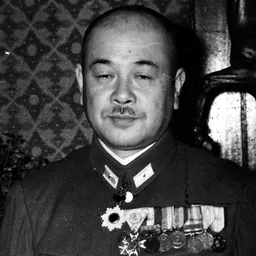

Related people
Same field, nearest in time


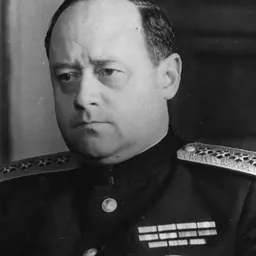


Contemporaries
People whose lives overlapped Nobuhiko Jinbo's
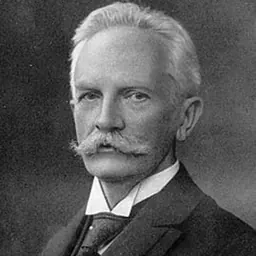


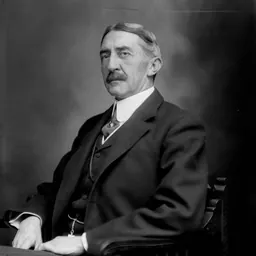

Frequently asked questions
Who was Nobuhiko Jinbo?
Japanese military personnel
When was Nobuhiko Jinbo born?
Nobuhiko Jinbo was born in 1900 in Takahata.
When did Nobuhiko Jinbo die?
Nobuhiko Jinbo died in 1978.
What was Nobuhiko Jinbo's occupation?
Nobuhiko Jinbo was a military personnel.
What nationality was Nobuhiko Jinbo?
Nobuhiko Jinbo was Japanese.
Sources & further reading
Cite this page
APA: Biography.guide. (2026). Nobuhiko Jinbo. https://biography.guide/nobuhiko-jinbo/
MLA: "Nobuhiko Jinbo." Biography.guide, https://biography.guide/nobuhiko-jinbo/.
Chicago: "Nobuhiko Jinbo." Biography.guide. https://biography.guide/nobuhiko-jinbo/.
Data last updated: 2026-09-20 · Spot an error? Report a correction.
Page generated 2026-09-27 05:04 UTC