
About Ninurta-apal-Ekur
Lived 1300 BC – 1200 BC. Ninurta-apal-Ekur was a sovereign.
Ninurta-apal-Ekur, inscribed mdMAŠ-A-é-kur, meaning "Ninurta is the heir of the Ekur," was a king of Assyria in the early 12th century BC who usurped the throne and styled himself king of the universe and priest of the gods Enlil and Ninurta. His reign overlaps the reigns of his Babylonian contemporaries Adad-šuma-uṣur and Meli-Šipak.
Biography
There is some dispute as to how long he reigned, based on discrepancies among various copies of the Assyrian King List. The Nassouhi King List, sometimes considered to be older than the other versions of the King List we have, gives him 13 years of reign, but the other king lists give him only three. More recent scholarship has tended to support the longer reign,
Provenance
His father was Ilī-padâ, who had followed his father, Aššur-iddin, and grandfather, Qibi-Aššur, as grand vizier, or sukkallu rabi’u, of Assyria and king of the dependant state of Ḫanigalbat. Qibi-Aššur may be one of three officials who are attested as limmu’s, the sons of Šamaš-aḫa-iddina, Ṣilli-Marduk, Ibašši-ili, respectively and it is this latter one, whose limmu year directly follows that of Tukulti-Ninurta I, that has led some to speculate that Ninurta-apal-Ekur was a descendant of Adad-nirari I, a genealogy that is unlikely as he claims descent only from Eriba-Adad I in his inscriptions. The earlier two have their limmu years during the reign of Shalmaneser I which better fits the chronology.
Ascendancy
The preceding Assyrian king, Enlil-kudurri-usur, a son of the earlier king Tukulti-Ninurta I, was vanquished in battle against the Kassite monarch, Adad-šuma-uṣur, a defeat so ignoble that the Assyrian officers "seized [Enlil-kudurri-uṣur] their lord and gave (him) to Adad-šuma-uṣur." Perhaps to secure their passage, the Assyrians also handed over renegade Babylonians who had fled to the Assyrian side. The Kings List tells us that he "came up from Karduniaš, seized the throne," He was the recipient of gifts from Meli-Šipak, who sent teams of horses and rugs, as a recently discovered text records, unearthed during excavations at Assur.
Palace decrees He issued one of the nine palace decrees (riksu) relating to conduct of the court and the oppressive discipline of the royal harem (known as harem edicts or Middle Assyrian palace decrees), suggestive of insecurity in the succession, although he need not have worried as his descendants would continue to rule Assyria until at least the eighth century BC. The first relates to the conduct of a eunuch approaching the harem and that of the concubines. The second threatens the harem women with having their throats cut, if when quarreling they should blaspheme against a god. The third punished men guilty of lèse majesté and the remaining are too fragmentary to be certain of their contents, but regulate curses against, for example, the royal furniture, i.e. bed and stool. Minor infractions were dealt with severely, with the guilty woman having her nose pierced and being beaten with rods.
A text records his gift of jewellery to his daughter Muballitaṭ[...], the great high priestess.
Don’t just read it —
keep it.
Full-length biographies made to live with: read them, listen on the way to work, watch them tonight.
- E-book
- Audio
- Video
Instant download · yours to keep · every purchase keeps this site free
Important facts
Family & relationships
Related people
Same field, nearest in time

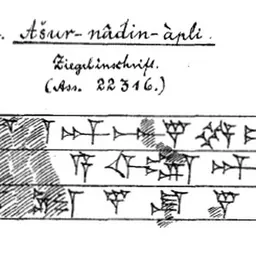


Contemporaries
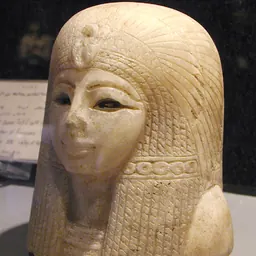
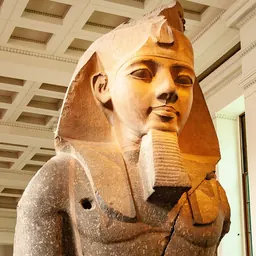
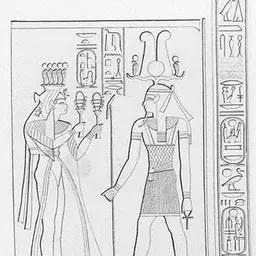
People whose lives overlapped Ninurta-apal-Ekur's


Frequently asked questions
Who was Ninurta-apal-Ekur?
Assyrian king
When was Ninurta-apal-Ekur born?
Ninurta-apal-Ekur was born in 1300 BC.
When did Ninurta-apal-Ekur die?
Ninurta-apal-Ekur died in 1200 BC.
What was Ninurta-apal-Ekur's occupation?
Ninurta-apal-Ekur was a sovereign.
What nationality was Ninurta-apal-Ekur?
Ninurta-apal-Ekur's recorded nationality: Assyrian Empire.
Sources & further reading
· Wikipedia: Ninurta-apal-Ekur
Cite this page
APA: Biography.guide. (2026). Ninurta-apal-Ekur. https://biography.guide/ninurta-apal-ekur/
MLA: "Ninurta-apal-Ekur." Biography.guide, https://biography.guide/ninurta-apal-ekur/.
Chicago: "Ninurta-apal-Ekur." Biography.guide. https://biography.guide/ninurta-apal-ekur/.
Data last updated: 2026-09-20 · Spot an error? Report a correction.
Page generated 2026-09-27 05:32 UTC