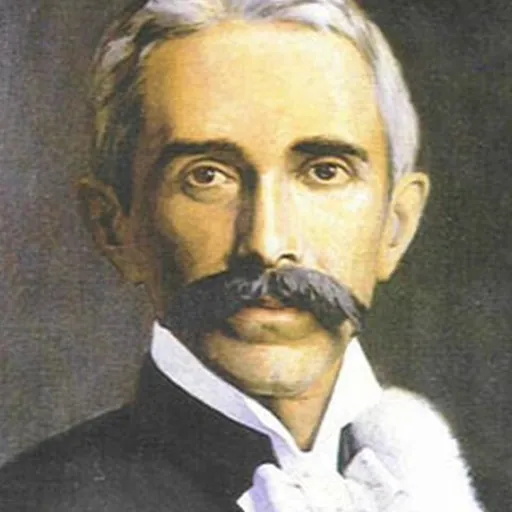
About Nina Rodrigues
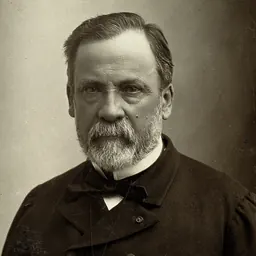
Lived 1862 – 1906 (aged 43). Nina Rodrigues was a Brazilian psychiatrist, university teacher, sociologist, anthropologist and medical examiner.
Raimundo Nina Rodrigues (4 December 1862 – 17 July 1906) was a Brazilian coroner, psychiatrist, teacher, writer, anthropologist and ethnologist. A notable eugenicist, he was also a dietologist, tropicalist, sexologist, hygienist, biographer and epidemiologist.
Nina Rodrigues is considered the founder of Brazilian criminal anthropology and a pioneer in studies on black culture in the country. A nationalist, he was the first Brazilian scholar to address the theme of black people as a relevant social issue for understanding the racial formation of the Brazilian population, despite adopting a racist, nationalist, scientistic and deterministic perspective, in his book (1890–1905).
Life
His parents were Colonel Francisco Solano Rodrigues and Dona Luísa Rosa Nina Rodrigues, who is believed to be a descendant of a group of Jews fleeing persecution in the Iberian Peninsula. Nina was born on the Primavera Farm, in the municipality of Vargem Grande, Maranhão, where he spent his childhood under the care of his Black godmother, who helped his mother with her seven children. He married Maria Amélia Couto Nina Rodrigues, known as Dona Maricas, and the couple had only one daughter, Alice, who died soon after her father. He was also the son-in-law of Councilor Almeida Couto and brother-in-law of Alfredo Thomé de Britto, director of the Bahia School of Medicine from 21 August 1901 to 4 June 1908. He was married to Dona Júlia de Almeida Couto Britto. In 1889, he became an adjunct professor of Clinical Medicine at the Bahia School of Medicine. During this time, he dedicated himself to writing articles for the Bahia Medical Gazette, becoming its director in 1891. That same year, he was transferred to the chair of Public Health, becoming a professor of forensic medicine. He attempted several times to create a specific qualification for medical experts, which only came to fruition years later. Upon arriving in Portugal, he received medical attention. A lung X-ray ruled out possible pulmonary tuberculosis, and a newspaper in the Portuguese capital, "Correo da Europa," published in its edition that Nina suffered from liver cancer. Although the newspaper stated this, medical diagnoses also pointed to possible calculous cholecystitis. The solution was surgery, which Nina refused.
Salvador: Tropicalist, Forensic Scientist, and Anthropologist
In Salvador, which had more than two thousand Africans registered at the time of the abolition of slavery (1888), he also dedicated himself to clinical medicine and to serving the underprivileged, mostly Black population, and was then called Doctor of the Poor.
In 1889, he took the exam for the Faculty of Medicine of Bahia, becoming an assistant professor of Clinical Medicine, held by Councilor José Luís de Almeida Couto, a longtime republican, abolitionist, and nationally renowned politician.
But his object of study and research lay outside the physical confines of the academic institution. Therefore, he refused to give up on the hardships of the population excluded from the center of power, no matter how much criticism he received. "Nina is crazy! He frequents Candomblés, sleeps with the inhaôs [sic], and eats the food of the orixás," was a typical remark from the petty squabbles of his fellow professors, as recounted by his disciple and admirer Estácio de Lima in the book "Old and New Nina." In his manuscripts, he emphasized the role of women in Candomblé circles, especially when discussing Salvador's best-known terreiros, located in the neighborhoods of Gantois, Engenho Velho, and Garcia. According to him, it was necessary to note that all these spaces were led by mothers-of-saints, citing the names of the mothers-of-saints Julia, Isabel, Livaldina, Thecla, the mother of Calçada do Bonfim, among others, reinforcing the idea that the "African Salvador" had many female leaders.
After the end of the Canudos War, Antônio Conselheiro's skulls were exhumed in 1897 and sent to the Bahia School of Medicine for study, where it was hoped to find signs of "innate criminality," according to the conception of criminal anthropology at the time. Along with the director of the faculty, Pacífico Pereira, and the psychiatrist Juliano Moreira, Nina Rodrigues' diagnosis did not inspire "any abnormality that demonstrates traces of degeneration".
Nina Rodrigues and Alfredo Thomé de Britto, also a physician and later dean of the Bahia School of Medicine, married daughters of Counselor Almeida Couto. he was a full member and vice-president of the New York Legal Medical Society; an honorary member of the National Academy of Medicine in Rio de Janeiro; and a foreign member of the Societé Médico Psychologique in Paris, in addition to belonging to the Tropicalist School of Bahia. was a group formed around 1860 around the Gazeta Médica da Bahia (Medical Gazette of Bahia). The group was informally composed of physicians who dedicated themselves to researching the etiology of tropical diseases that affected the country's poor, especially black slaves. The group developed anatomopathological studies. Initially, Nina dedicated himself to research on beriberi, defending Pasteur's microbial doctrine; but he eventually abandoned this work, citing a lack of specialized personnel and laboratory equipment necessary to keep up with developments in medical science, based on the discoveries of Pasteur, Koch (1843-1910), Claude Bernard (1813-1878), and others. He left the group in 1897, after having served as the main contributor to the Gazeta Médica da Bahia, of which he was director between 1890 and 1893, having published articles on topics that were part of the tropicalists' agenda, such as beriberi and leprosy, in addition to addressing the most prevalent diseases in Brazil and the need for reform of the health system in Bahia. In forensic medicine, as in everything else, he promoted important transformations. Afrânio Peixoto tells us that Nina "gave such luster to the specialty that, throughout the country, it was the most coveted chair."
In 1904, he again appealed to Congress for the importance of regulating the role of forensic experts, so as to unify procedural laws in Rio de Janeiro, then the federal capital. He compiled several forensic cases, which were published in the Revista dos Cursos (Review of Courses). The same journal also published the terms of the agreement between the Faculty and the Secretariat of Public Security so that police forensic examinations could be conducted under his direction, as a professor of Forensic Medicine. These would be the first formal documents relating to a collaboration between the Faculty and the police.
Nina Rodrigues's unique position in the history of Brazilian anthropological thought (which should be attributed to works such as Human Races and Criminal Responsibility in Brazil, Fetish Animism of Black People in Bahia, and Africans in Brazil) was studied by Professor Mariza Corrêa (Unicamp) in The Illusions of Freedom: The Nina Rodrigues School and Anthropology in Brazil
Much of Rodrigues's work was destroyed in a fire in January 1905, which occurred in part of the Bahia School of Medicine's facilities. The Forensic Medicine laboratory, where Rodrigues worked, was amidst all this destruction. According to the newspaper of the time, the Diário da Bahia, “several of his works of scientific importance were consumed by the fire; a laborious collection of human bones, around 50, measured and treated; the head of Antonio Conselheiro, the skull of Lucas da Feira, as well as another collection of selected skulls, which was an enormous loss.”
For over a decade, the ethnologist conducted research on issues related to the recovery of the memory of the Black population in Brazil. His activities included investigating the origins of deported slaves, researching the languages spoken in the tribes, and their customs and traditions. One of his activities was conducting oral history through interviews in different regions of Bahia, with the aim of recording the lives, habits, and daily lives of Africans. He also attempted to decipher the enigma created by the Portuguese to conceal the reality of the slave trade.
Nina Rodrigues is identified with the character, Professor Nilo Argolo, from Jorge Amado's book Tent of Miracles. The title of the book written by the character is Mestiçagem, Degenerescência e Crime, which directly links him to Nina Rodrigues.
Theoretical Production
It is estimated that his work includes around sixty books and articles on topics spanning various medical specialties, particularly forensic medicine, anthropology, law, psychology, and sociology, published in periodicals such as the Gazeta Médica da Bahia (of which he was editor-in-chief); Jornal do Comércio; Revista Médica de São Paulo; Revista Brazileira; and Revista Médico Legal da Bahia (a journal of the Society, of which he was a member of the editorial board). There were also international publications in the South American journals La Semana Médica and Archivos de Criminologia, Medicina Legal y Psichiatria, in Buenos Aires; and European editions, such as the Italian Archivio di Psichiatria, Scienze Penali e Antropologia Criminale, in Turin, and the Annales de la Societé de Médicine Légale de Belgique, in Belgium. Some of his works published in French are still unpublished in Portuguese, such as "Atavisme psychique et paranóia", published in the Archives de Anthropologie Criminel de Lion in 1902 and "La paranóia chez les nègres", published the following year in the same journal. Articles were also published in the Parisian journals Annales Médico-Psychologiques, Annales d’Hygiène Publique et de Médicine Légale. Among his books, the following stand out: As raças humanas e a responsabilidade penal no Brasil (Human Races and Criminal Responsibility in Brazil) (1894), O animismo fetichista dos negros da Bahia (Fetish Animism of Black People in Bahia) (1900) and Os Africanos no Brasil (The Africans in Brazil) (1932). O Animismo Fetichista dos Negros Baianos (1900) O Alienado no Direito Civil Brasileiro (1901) Manual de Autópsia Médico-Legal (1901) Os Africanos no Brasil (1932) SILVA, Leonardo Dantas,; RODRIGUES, Nina. Estudos sobre a escravidão negra. Recife: Fundação Joaquim Nabuco, Editora Massangana, 1988. 2 v. (Serie Abolição; 15, 17). (v. 1). RODRIGUES, MARIA REGINA NINA; MARANHÃO. Maranhão: do europeismo ao nacionalismo: politica e educação. São Luis: Plano Editorial, SECMA, 1993. 224p. As Coletividades Anormais (1939)
Don’t just read it —
keep it.
Full-length biographies made to live with: read them, listen on the way to work, watch them tonight.
- E-book
- Audio
- Video
Instant download · yours to keep · every purchase keeps this site free
Important facts
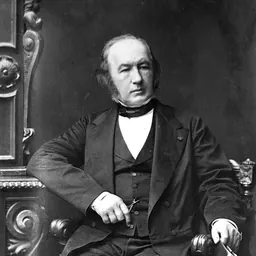
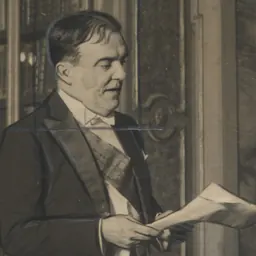
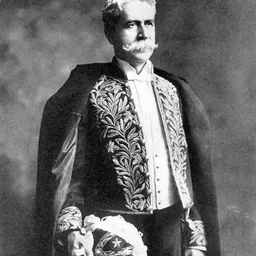
People in Nina Rodrigues's life
Named in this biography and alive at the same time
Related people
Same field, nearest in time




Contemporaries
People whose lives overlapped Nina Rodrigues's




Frequently asked questions
Who was Nina Rodrigues?
Brazilian intellectual (1862–1906)
When was Nina Rodrigues born?
Nina Rodrigues was born on 4 December 1862 in Vargem Grande.
When did Nina Rodrigues die?
Nina Rodrigues died on 17 July 1906 in Paris.
What was Nina Rodrigues's occupation?
Nina Rodrigues was a psychiatrist, university teacher, sociologist, anthropologist and medical examiner.
What nationality was Nina Rodrigues?
Nina Rodrigues was Brazilian.
Sources & further reading
· DBpedia: Raimundo Nina Rodrigues
Cite this page
APA: Biography.guide. (2026). Nina Rodrigues. https://biography.guide/nina-rodrigues/
MLA: "Nina Rodrigues." Biography.guide, https://biography.guide/nina-rodrigues/.
Chicago: "Nina Rodrigues." Biography.guide. https://biography.guide/nina-rodrigues/.
Data last updated: 2026-09-23 · Spot an error? Report a correction.
Portrait: Wikimedia Commons · author & licence
Page generated 2026-09-27 05:05 UTC