
About Nimbarkacharya
Lived 1162 – 1300. Nimbarkacharya was a philosopher.
Nimbarka, also known as Nimbarkacharya, Nimbaditya or Niyamananda, was a Hindu philosopher, theologian and the chief proponent of the theology of Dvaitādvaita (dvaita–advaita) or dualistic–non-dualistic sometimes known as Svābhāvika bhedābheda. He played a major role in spreading the worship of the divine couple Radha and Krishna, and founded the Nimbarka Sampradaya. he spent most of his life in Mathura, Uttar Pradesh. He is sometimes identified with another philosopher named Bhaskara, but this is considered to be a misconception due to the differences between the spiritual views of the two saints.
Etymology and epithets The word 'Nimbārka' (निंबार्क) is derived from two Sanskrit words nimba (निम्ब) and arka (अर्क). It is believed that Nimbarka was given the name 'Niyamananda' at his birth. According to a folk tale, Niyamananda achieve the name Nimbarka because he trapped some rays of sunlight (arka) in the leaves of Neem (nimba). He was also referred as Nimbaditya by his followers. Sometimes Bhaskara is also considered his epithet because of the identification of Nimbarka with the philosopher Bhaskara.
Datings Nimbarka's traditional followers believe that he appeared in 3096 BCE, but this dating is controversial as historians believe that he lived between 7th and 11th century CE. According to Roma Bose, Nimbarka lived in the 13th century, on the presupposition that Nimbarkacharya was the author of the work Madhvamukhamardana. Meanwhile, Vijay Ramnarace concluded that the work Madhvamukhamardana has been wrongly attributed to Nimbarkacharya. This view is also supported by traditional scholars. Bhandarkar places Nimbārka after Rāmānuja, suggesting 1162 CE as the approximate date of his demise, though he acknowledged that this estimation is highly speculative. S.N. Dasgupta, on the other hand, dates Nimbārka to the mid-14th century. Dasgupta bases this dating on the absence of Nimbārka's mention in the Sarvadarśanasaṅgraha, a doxography by 14th-century author Mādhava Vidyāraṇya. However, none of the Bhedābhedins—whether Bhartṛprapañca, Nimbārka, Bhāskara, or Yādavaprakāśa—are referenced in the Sarvadarśanasaṅgraha. While S. A. A. Rizvi assigns a date of c.1130–1200 CE.
According to Satyanand, Bose's dating of the 13th century is an erroneous attribution. Malkovsky, following Satyanand, notes that in Bhandarkar's own work it is clearly stated that his dating of Nimbarka was an approximation based on an extremely flimsy calculation; yet most scholars chose to honour his suggested date, even until modern times. According to Malkovsky, Satyanand has convincingly demonstrated that Nimbarka and his immediate disciple Srinivasacharya flourished well before Ramanuja (1017–1137 CE), arguing that Srinivasacharya was a contemporary, or just after Sankaracarya (early 8th century). According to Ramnarace, summarising the available research, Nimbarka must be dated in the 7th century CE.
Biography Little is known about Nimbarka's life. He is said to have been born into a Telugu Brahmin family Vedāntalaghumañjūṣā of Śrī Giridhara dāsa
Mantrarahasyaṣoḍaśī and Prapannakalpavallī Mantrarahasyaṣoḍaśī is a work consisting of 18 verses, with the first 16 dedicated to exposition of the revered 18-syllable Gopāla Mantra, a central element of the Nimbārka tradition. Sundara bhaṭṭācharya has authored a commentary on this work titled Mantrārtharahasya.
The Prapannakalpavallī explains the mukunda śaraṇāgati mantra. On this, Sundara bhaṭṭācharya has written an extensive commentary titled Prapannasuratarumañjarī.
Philosophy
Nimbarka's Dvaitadvaita philosophy emphasizes a dualistic non-dualism where the soul is both distinct and non-distinct from God. His teachings emphasize devotion to Krishna and Radha.
Brahman According to Nimbarka, the ultimate reality or Brahman is Krishna, recognized by various names such as Purushottama, Hari, and Bhagavan. He is accompanied by Radha. Brahman, as described by Nimbarka, is flawless, possessing auspicious qualities and transcending the influence of karma, and with attributes such as knowledge, power, and compassion; Brahman is also both the material and efficient cause of creation, likened to a sovereign emperor engaging in playful activities without specific outcomes in mind.
Jiva Nimbarka considered the jiva to possess inherent knowledge (jnana), which distinguishes it from non-sentient elements such as the body, sense organs, and mind. This inherent knowledge permeates every state of the jiva, including waking, dreaming, and deep sleep. Nimbarka explains that the jiva is both knowledge and knower, likening their relationship to that of a gem and its radiance, where they are distinct yet inseparable, existing in a relationship of substrate and attribute.
Difference and Non-difference Nimbarka's philosophy distinctively outlines the differences between jiva and Brahman by emphasizing their intrinsic relationship as cause and effect, part and whole. Brahman is portrayed as the ultimate cause and the whole, whereas jiva, the individual soul that experiences pleasure and pain, is seen as an effect or a transformation of Brahman. This relationship is analogous to clay transforming into pottery or a tree bearing leaves and fruits, showing differences between the source material and its derivatives. Using scriptural references, Nimbarka asserted that jiva, as a part of the omnipotent Brahman, lacks independence and fullness of power.
Relation to other Vedanta schools Like Nimbarka, acharyas of other Vedanta schools also accept the concepts of difference and non-difference between Jiva and Brahman as real, but they explain and reconcile these ideas in various ways:
Nimbarka asserts that the relationship of both difference and non-difference between Jiva and Brahman is natural (svabhavika) and fully compatible, meaning these aspects coexist without conflict. Ramanuja and Srikantha explain the relationship using the analogy of the soul and body (sariri-sarira), where non-difference is principal and difference is subordinate. Chaitanya Mahaprabhu considers the concepts of difference and non-difference to be inconceivable (acintya), implying that human understanding is limited in fully grasping how both can be true simultaneously.
From a comparative perspective, Martine Chifflot situates Nimbarka's bhedābheda within the broader spectrum of Vedāntic schools by contrasting the dualist-non-dualist position with the strictly non-dualist Advaita of Śaṅkara. Where Advaita dissolves all ontological difference between jīva and Brahman, Nimbarka's svābhāvika bhedābheda preserves their simultaneous distinction and identity as an irreducible natural relation.
Don’t just read it —
keep it.
Full-length biographies made to live with: read them, listen on the way to work, watch them tonight.
- E-book
- Audio
- Video
Instant download · yours to keep · every purchase keeps this site free
Important facts
Related people
Same field, nearest in time


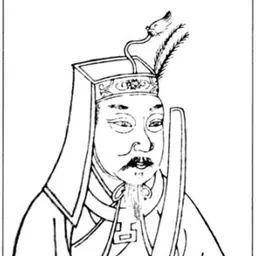
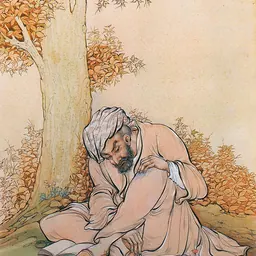
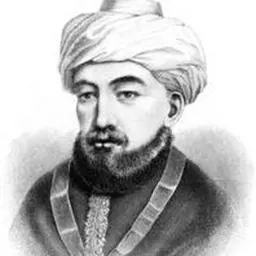

Contemporaries
People whose lives overlapped Nimbarkacharya's




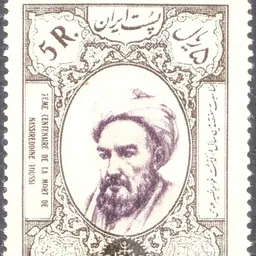
Frequently asked questions
Who was Nimbarkacharya?
Indian guru
When was Nimbarkacharya born?
Nimbarkacharya was born in 1162.
When did Nimbarkacharya die?
Nimbarkacharya died in 1300.
What was Nimbarkacharya's occupation?
Nimbarkacharya was a philosopher.
Sources & further reading
Cite this page
APA: Biography.guide. (2026). Nimbarkacharya. https://biography.guide/nimbarkacharya/
MLA: "Nimbarkacharya." Biography.guide, https://biography.guide/nimbarkacharya/.
Chicago: "Nimbarkacharya." Biography.guide. https://biography.guide/nimbarkacharya/.
Data last updated: 2026-09-20 · Spot an error? Report a correction.
Page generated 2026-09-27 05:21 UTC