
About Nikolay Kobozev
Lived 1903 – 1974 (aged 70). Nikolay Kobozev was a Russian chemist and physical chemist, known for Electrocatalyst.
Nikolay Ivanovich Kobozev (Russian: Николай Иванович Кобозев; May 12, 1903, Moscow – February 24, 1974, Moscow) was a Soviet physico-chemist, one of the pioneers of electrocatalysis, founder of the Department of Catalysis and Gas Electrochemistry at Moscow State University.
Background and personal life Kobozev was born in a wealthy family of a Kharkov lawyer. His father, Ivan Josefovich Kobozev (1874, Kharkov – 1943, Moscow) graduated from Kharkov Imperial University. His mother, Sophia Adolfovna Feist (d. 1952) was a granddaughter of the German-born Taganrog watchmaker Franz Feist (1805–1888). Her family was Lutheran. Her father, Adolf Feist, was first a teacher of German; in 1891 he became a member of the board of Kharkov Land Bank. His mother's aunt, Maria Feist, was a sweetheart of Alexander Chekhov. His grandson, Dmitry Kosmin syn Kobyzev (1697–1752) became a merchant in Belgorod. His wife, Agrafena Fedotovna Maslova (1689–1770) was the daughter of a local poor nobleman. Their son, Stepan, was a merchant too; he was married to the daughter of another Belgorod merchant, Stephanida Rodionovna Dubinina. Stepan's brother, Ivan Dmitrievich Kobozev, was the salt head in Belgorod since 1778. Yakov Stepanovich Kobozev was a Belgorod merchant and ratman. The latter's son, Nikolay Yakovlevich (1781–1834), was a merchant too, but his son, Aleksey Nikolayevich (1804–?) left the merchant guild for the status of an ordinary burger in 1858. He had long periods of staying at hospitals or was down in bed recovering. His wife had stayed loyal and supportive throughout his life. Since 1929 he was a lecturer at the Physical Chemistry Department of MSU. He saw the main issue of the contemporary catalysis theories in the concept of crystalline nature of catalytic activity. he introduced the theory of active ensembles which regarded how many atoms of metal catalyst can produce a catalytically active center.
In his research he had estimated the minimal number of catalytically active atoms in aggregates for some chemical reactions. He argued that the active centers were factored by energy rather than crystalline structures. Kobozev had studied dissolution of active substance on an inert carrier and found out that increased dissolution resulted in rise in catalytic activity, while minimum of active substance brought about formation of maximally active catalysts.
Kobozev's research showed that the most active ensembles consisted of 2 or 3 atoms, which corresponded with Balandin's theory.
Kobozev and his students argued that activation of catalyst particles for the reaction has two factors: adsorbsion, i.e. interaction of an ion or atom with particles of a catalyst, and formation of an active center, i.e. interaction of catalyst's particles, when increase of catalyst's activity is factored by complication of its molecule (increase of molecular mass).
Further research of the relationship between dispersion and catalytic activity showed that crystalline structures, indeed, had catalystic activity, and his theory hadn't been accepted.
Kobozev expressed the idea of recuperation of energy that, held by the group of atoms connected to the active center, can partly activate molecules of a new substrate contacting the catalyst. In order to explain it, he introduced the concept of special particles called psychons. His work was focused on nitrogen oxidation, methane electro-cracking to acetylene, methane explosion conversion, as well as ozone synthesis and synthesis of peroxide from hydrogen in discharge. Together with his co-workers, Kobozev had developed the methods of studying kinetic reaction and introduced the energy catalysis theory explaining the mechanism of activation in the reaction in discharge, as well as the mechanism of reaction activating additives, such as mercury vapor in methane electro-cracking or nitrogen in ozone synthesis. The laboratory had managed to synthesize nitric acid, nitroleum and nitric anhydride.
In 1947 he founded the Laboratory of Catalysis and Gas Electrochemistry aimed at secret research for the government. First, the laboratory was charged with tasks regarding rocket fuel, but later on professor Kobozev had managed to initiate fundamental research in catalysis, gas electrochemitry and thermodynamics. Kobozev had published about 400 academic works. However, it was A. Frumkin who suggested that Kobozev would get employed with the Karpov Institute of Physical Chemistry and abandon the Moscow University, which Kobozev declined. Kobozev had developed much interest in Solzhenitsyn's ideas and asked his wife for an introduction. The family of Kobozev's executed brother kept all Solzhenitsyn's primary manuscripts between 1962 and 1969. a profile of Kobozev and their friendship comprises Chapter 2.
Don’t just read it —
keep it.
Full-length biographies made to live with: read them, listen on the way to work, watch them tonight.
- E-book
- Audio
- Video
Instant download · yours to keep · every purchase keeps this site free
Important facts
People in Nikolay Kobozev's life
Named in this biography and alive at the same time
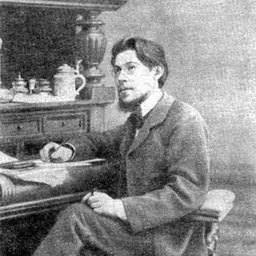
Related people
Same field, nearest in time

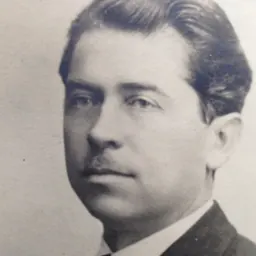

Contemporaries
People whose lives overlapped Nikolay Kobozev's

Frequently asked questions
Who was Nikolay Kobozev?
Russian chemist (1903–1974)
When was Nikolay Kobozev born?
Nikolay Kobozev was born on 12 May 1903 in Moscow.
When did Nikolay Kobozev die?
Nikolay Kobozev died on 24 February 1974 in Moscow.
What was Nikolay Kobozev's occupation?
Nikolay Kobozev was a chemist and physical chemist.
What was Nikolay Kobozev known for?
Nikolay Kobozev was known for Electrocatalyst.
What nationality was Nikolay Kobozev?
Nikolay Kobozev was Russian.
Sources & further reading
· DBpedia: Nikolay Kobozev (scientist)
Cite this page
APA: Biography.guide. (2026). Nikolay Kobozev. https://biography.guide/nikolay-kobozev/
MLA: "Nikolay Kobozev." Biography.guide, https://biography.guide/nikolay-kobozev/.
Chicago: "Nikolay Kobozev." Biography.guide. https://biography.guide/nikolay-kobozev/.
Data last updated: 2026-09-20 · Spot an error? Report a correction.
Page generated 2026-09-27 05:27 UTC