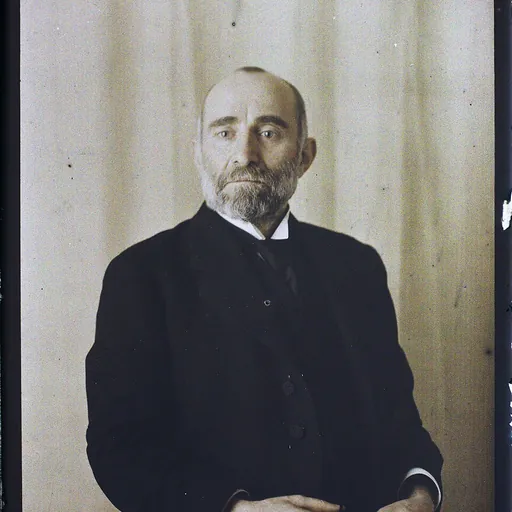
About Nikolay Chkheidze
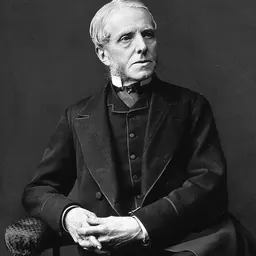
Lived 1864 – 1926 (aged 62). Nikolay Chkheidze was a Russian politician, diplomat and revolutionary.
Nikoloz Chkheidze ( – 13 June 1926), commonly known as Karlo Chkheidze, was a Georgian politician and statesman. In the 1890s, he promoted the Social Democratic movement in Georgia, and later became a leading Social Democrat in the Russian Empire. He was a key figure in the February Revolution as the Menshevik president of the Executive Committee of Petrograd Soviet. He later served as president of the Transcaucasian Sejm in from February to May 1918, and as parliamentary president of the Democratic Republic of Georgia from 1918 to 1921.
Early life and family Chkheidze was born into the House of Chkheidze, an aristocratic family in Puti, Kutais Governorate (in the present-day Zestaponi Municipality of the Imereti province of Georgia). From his marriage with Alexandra Taganova (X-1943), he would have four children including a daughter who would accompany him in exile.
Political career In 1892 Chkheidze, together with Egnate Ninoshvili, Silibistro Jibladze, Noe Zhordania and Kalenike Chkheidze (his brother), became a founder of the first Georgian Social-Democratic group, Mesame Dasi (the third team).
Russia From 1907 to 1917 Chkheidze was a member of the Russian State Duma representing the Tiflis Governorate and gained popularity as a spokesman for the Menshevik faction within the Russian Social Democratic Party. He was an active member of the irregular freemasonic lodge, the Grand Orient of Russia’s Peoples. In 1917 the year of the Russian Revolution, Chkheidze became Chairman of the Petrograd Soviet. He failed to prevent the rise of Bolshevism and refused a post in the Russian Provisional Government. However, he did support its policies and advocated revolutionary oboronchestvo (defencism). He also voted to continue the war against the German Empire.
Transcaucasia In October 1917 the Bolsheviks seized power in Russia. At the time, Chkheidze was in Georgia. He remained in Georgia and on 23 February 1918, became leader of the Transcaucasian Federation in Tiflis. Some months later the federation was dissolved.
Democratic Republic of Georgia
On 26 May 1918 the Act of Independence of Georgia was adopted, Chkheidze was elected chairman of the National Council of Georgia: this Georgian Provisional Assembly decided to appoint a government, to prepare elections and to create a constitutional commission. In February 1919 he was elected a member of the Constituent Assembly of Georgia and on 12 March president of this assembly, but could not participate in its first session because he was located in Paris. Chairing the Georgian delegation to the Versailles Conference, he tried to gain the Entente's support for the Democratic Republic of Georgia. He also proposed to Georges Clemenceau and to David Lloyd George a French or British protectorate for Georgian foreign affairs and defense, but was unsuccessful. Chkheidze, who had 14 years of parliamentary life experience, oversaw the writing of the Constitution by Razhden Arsenidze and 14 other MPs of the majority and the opposition.
France In March 1921 when the Red Army invaded Georgia, Chkheidze fled with his family to France via Constantinople. In 1923 and 1924, as part of the Social Democratic Labour Party of Georgia in exile, Chkheidze opposed a national uprising in Georgia. Chkheidze, Irakli Tsereteli, Datiko Sharashidze, and Kale Kavtaradze formed a group called Oppozitsia. In their mind, the Red Army and Cheka were too strong, and the unarmed Georgian people too weak. After the August Uprising of 1924, 10,000 Georgians were executed, and between 50,000 and 100,000 Georgians were deported to Siberia or to Central Asia.
Death
On 13 June 1926 Chkheidze committed suicide at his official residence in Leuville-sur-Orge, France. He was buried in Paris, in the Père Lachaise Cemetery.
Don’t just read it —
keep it.
Full-length biographies made to live with: read them, listen on the way to work, watch them tonight.
- E-book
- Audio
- Video
Instant download · yours to keep · every purchase keeps this site free
Important facts
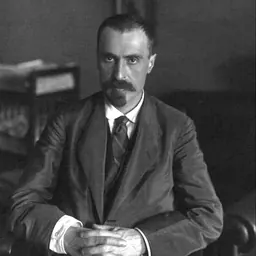
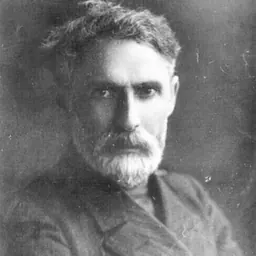
People in Nikolay Chkheidze's life
Named in this biography and alive at the same time


Related people
Same field, nearest in time





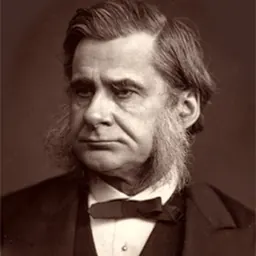
Contemporaries
People whose lives overlapped Nikolay Chkheidze's



Frequently asked questions
Who was Nikolay Chkheidze?
Georgian politician (1864-1926)
When was Nikolay Chkheidze born?
Nikolay Chkheidze was born on 9 April 1864 in Puti.
When did Nikolay Chkheidze die?
Nikolay Chkheidze died on 11 June 1926 in Levill Manor.
What was Nikolay Chkheidze's occupation?
Nikolay Chkheidze was a politician, diplomat and revolutionary.
What nationality was Nikolay Chkheidze?
Nikolay Chkheidze was Russian.
Sources & further reading
· Wikipedia: Nikolay Chkheidze
Cite this page
APA: Biography.guide. (2026). Nikolay Chkheidze. https://biography.guide/nikolay-chkheidze/
MLA: "Nikolay Chkheidze." Biography.guide, https://biography.guide/nikolay-chkheidze/.
Chicago: "Nikolay Chkheidze." Biography.guide. https://biography.guide/nikolay-chkheidze/.
Data last updated: 2026-09-23 · Spot an error? Report a correction.
Portrait: Wikimedia Commons · author & licence
Page generated 2026-09-27 05:05 UTC