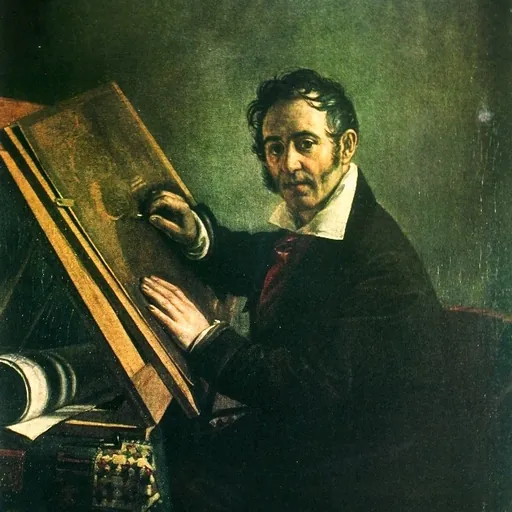
About Nikolai Utkin
Lived 1780 – 1863 (aged 82). Nikolai Utkin was a Russian copper engraver.
Nikolai Ivanovich Utkin (; 19 May 1780 – 17 March 1863) was a Russian graphic artist, engraver and illustrator. He also served as curator of prints at the Hermitage and superintendent of the museum at the Imperial Academy of Arts.
Biography Catherine the Great Out for a Walk, after a painting by Vladimir Borovikovsky; his most familiar work. His mother was a serf on the estate of the poet Mikhail Nikitich Muravyov, who is generally assumed to have been his father. She was later given in marriage to Muravyov's chamberlain, Ivan Utkin. Shortly after Nikolai's birth, they moved to Saint Petersburg. In 1785, he was manumitted and began his education at the Imperial Academy which, at that time, had a primary school.
At the age of fourteen, having shown a talent for drawing, he was transferred to the engraving school, where he studied with Antoine Radigues and the German engraver, Ignaz Sebastian Klauber. Four years later, he created eighteen engravings of antique statues, which earned him a gold medal and the right to continue at the Academy for three more years. However, in 1802, he was awarded another gold medal that also conferred the right to travel abroad and he took advantage of that right as soon as possible; leaving for Paris in 1803.
Once there, he was engaged at the workshop of Charles Clément Balvay (known as "Bervic"), where he helped fulfill orders as well as study. In 1810, he exhibited at the Salon, receiving a gold medal from the Académie des Beaux-Arts and the title of "Academician" from the Imperial Academy. During the French invasion of Russia, he was under house arrest and police surveillance for two years, until Napoleon's defeat.
He returned to Saint Petersburg upon his release and, after Klauber's death, took his positions at the Academy and the Hermitage. In 1819, he was appointed official engraver to the Tsar, at a salary of 3,000 rubles per year. His best-known students at the Academy included Antoni Oleszczyński, Fyodor Iordan and . In addition to his regular engravings, he provided illustrations for works by Vasily Zhukovsky and Gavrila Derzhavin, as well as a translation of the Iliad by Nikolai Gnedich.
He became a Professor in 1831 and was named Professor Emeritus in 1840 but, at that point, he was already past the height of his creative powers. In 1850, he handed over his engraving class to Iordan. In 1860, the Academy honored him with an embossed gold medallion. His last known work, a depiction of the Holy Family, was completed just before his death in 1863.
Selected works
Don’t just read it —
keep it.
Full-length biographies made to live with: read them, listen on the way to work, watch them tonight.
- E-book
- Audio
- Video
Instant download · yours to keep · every purchase keeps this site free
Important facts
People in Nikolai Utkin's life
Named in this biography and alive at the same time
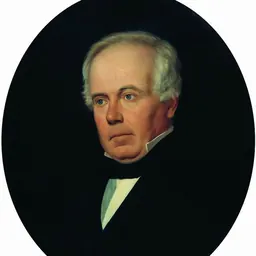
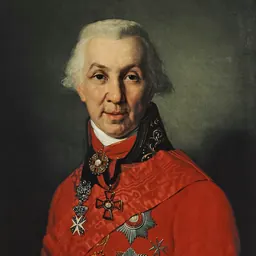
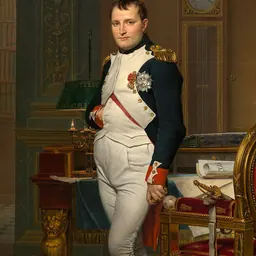


Related people
Same field, nearest in time

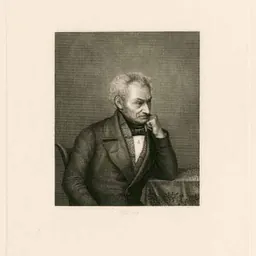
Contemporaries
People whose lives overlapped Nikolai Utkin's

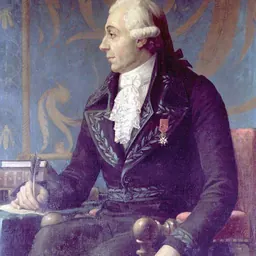
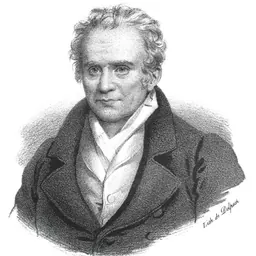

Frequently asked questions
Who was Nikolai Utkin?
Russian engraver
When was Nikolai Utkin born?
Nikolai Utkin was born on 8 May 1780 in Tver.
When did Nikolai Utkin die?
Nikolai Utkin died on 5 March 1863 in Saint Petersburg.
What was Nikolai Utkin's occupation?
Nikolai Utkin was a copper engraver.
What nationality was Nikolai Utkin?
Nikolai Utkin was Russian.
Sources & further reading
Cite this page
APA: Biography.guide. (2026). Nikolai Utkin. https://biography.guide/nikolai-utkin/
MLA: "Nikolai Utkin." Biography.guide, https://biography.guide/nikolai-utkin/.
Chicago: "Nikolai Utkin." Biography.guide. https://biography.guide/nikolai-utkin/.
Data last updated: 2026-09-21 · Spot an error? Report a correction.
Portrait: Wikimedia Commons · author & licence
Page generated 2026-09-27 05:00 UTC