
About Nikolai Rubinstein
Lived 1835 – 1881 (aged 45). Nikolai Rubinstein was a Russian composer, pianist, conductor, music educator, clarinetist and music teacher.
Nikolai Grigoryevich Rubinstein (; – ) was a Russian pianist, conductor, and composer. He was the younger brother of Anton Rubinstein and a close friend of Pyotr Ilyich Tchaikovsky.
Life Born to Jewish parents in Moscow, where his father had just opened a small factory, Rubinstein showed talent at the keyboard early on. He studied piano first with his mother, and while the family was in Berlin between 1844 and 1846, he studied piano with Theodor Kullak and harmony and counterpoint with Siegfried Dehn; during this time both he and his brother Anton attracted the interest and support of Mendelssohn and Meyerbeer. When the family returned to Moscow, Nikolai studied with Alexander Villoing, who also toured with him. He studied medicine to avoid army conscription, graduating from Moscow University in 1855. in Paris. He also gave the first performance of Balakirev's piano work Islamey, the work for which he is best known today.
According to Harold C. Schonberg, Anton Rubinstein is reported to have said that "if Nikolai had really worked on it, he could have been the better pianist of the two." One of Nikolai's pupils, Emil von Sauer, wrote a comparison of the two brothers' playing styles in 1895:
It is difficult to say which was the better pianist. In every way as different as the brothers were in personal appearance—the one dark, almost to blackness; the other very fair — so different was their playing. The playing of Nicholas was more like that of Tausig, only warmer and more impulsive. Perhaps Anton Rubinstein was the more inspired player of the two, but he was unequal. Nicholas never varied; his playing both in private and in public was always the same, and he kept up the same standard of excellence.
Students Nikolai Rubinstein's best-known piano students were Sergei Taneyev, Emil von Sauer and Alexander Siloti. His other notable pupils included Ina Lange, Ernst Jedliczka and Henryk Pachulski.
As a composer Grave of Nikolai Rubinstein in Novodevichy Cemetery, Moscow. Rubinstein was also a composer of some note, though Garden dismisses his music as "unimportant. When asked why he did not compose more than he did, he replied that his brother Anton "composed enough for three."
Worklist (incomplete) Op. 11 - Two mazurkas Op. 13 - Bolero Op. 14 - Tarentelle in G minor (pub. 1861 for solo piano; pub. 1877 for piano duet; also arranged for 2 pianos) Op. 15 - Polka for piano in E-flat major Op. 16 - Valse in A-flat major (later arranged for 2 pianos) Op. 17 - Scene de Bal (later arranged for 2 pianos) WoO - Two Feuilles d'Album
Don’t just read it —
keep it.
Full-length biographies made to live with: read them, listen on the way to work, watch them tonight.
- E-book
- Audio
- Video
Instant download · yours to keep · every purchase keeps this site free
Important facts
People in Nikolai Rubinstein's life
Named in this biography and alive at the same time

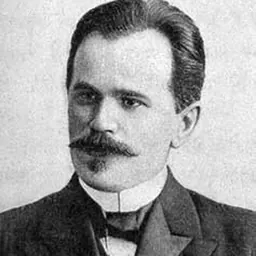
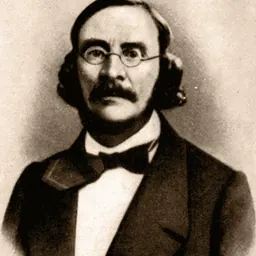
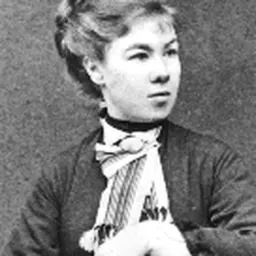
Related people
Same field, nearest in time

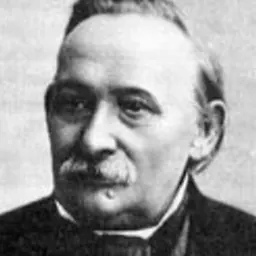
Contemporaries
People whose lives overlapped Nikolai Rubinstein's





Frequently asked questions
Who was Nikolai Rubinstein?
Russian pianist, conductor and composer (1835-1881)
When was Nikolai Rubinstein born?
Nikolai Rubinstein was born on 2 June 1835 in Moscow.
When did Nikolai Rubinstein die?
Nikolai Rubinstein died on 11 March 1881 in Paris.
What was Nikolai Rubinstein's occupation?
Nikolai Rubinstein was a composer, pianist, conductor, music educator, clarinetist and music teacher.
What nationality was Nikolai Rubinstein?
Nikolai Rubinstein was Russian.
Sources & further reading
· Wikipedia: Nikolai Rubinstein
Cite this page
APA: Biography.guide. (2026). Nikolai Rubinstein. https://biography.guide/nikolai-rubinstein/
MLA: "Nikolai Rubinstein." Biography.guide, https://biography.guide/nikolai-rubinstein/.
Chicago: "Nikolai Rubinstein." Biography.guide. https://biography.guide/nikolai-rubinstein/.
Data last updated: 2026-09-20 · Spot an error? Report a correction.
Page generated 2026-09-27 05:21 UTC