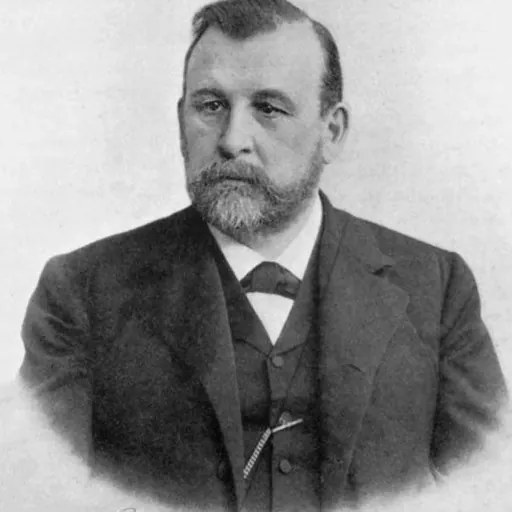
About Nikolai Menshutkin
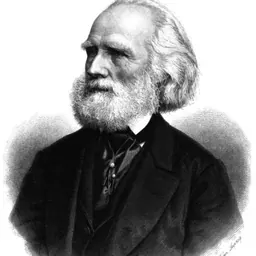
Lived 1842 – 1907 (aged 64). Nikolai Menshutkin was a Russian chemist, inventor and university teacher, known for Menshutkin reaction.
Nikolai Aleksandrovich Menshutkin (; – ) was a Russian chemist who discovered the process of converting a tertiary amine to a quaternary ammonium salt via the reaction with an alkyl halide, now known as the Menshutkin reaction.
Biography Menshutkin was born in a merchant family as the sixth son of Alexander Nikolaevitch Menshutkin. He graduated with honors from gymnasium in December 1857, but only by autumn 1858 managed to enroll to the Saint Petersburg State University, as he was still under the prescribed age of 16. He studied at the faculty of physics and mathematics and was nearly expelled in the autumn of 1861 due to some political disturbances. Nevertheless, by the spring of 1862 he attained the master's degree. During the last years he became interested in chemistry, which he studied under Dmitri Mendeleev. While he acquired a sufficient knowledge of theory he was lacking practice, as at that time the entire laboratory of the university consisted of only two small rooms. Therefore, he went abroad, and in the following three years spent two semesters with Adolph Strecker at the University of Tübingen, a year (1864–5) with Charles-Adolphe Wurtz at the University of Paris, and a semester with Adolph Wilhelm Hermann Kolbe at the University of Marburg. In 1890 Menshutkin discovered that a tertiary amine can be converted into a quaternary ammonium salt by reaction with an alkyl halide.
Menshutkin further studied the influence of isomerism among alcohols and acids on esterification and showed that, both in respect of rate and limit, the primary, secondary, and tertiary alcohols differ from one another, and that unsaturated differ from saturated alcohols. The molecular weight of the alcohol concerned has also a considerable influence on the result, the limit rising generally with molecular weight, although the rate is diminished. The first series of experiments were made with acetic acid and alcohols and were extended to a variety of acids. Subsequently, the rate of chemical change was studied in the case of the formation of amides and anilides by the action of ammonia and aniline on acids by means of the same method as was employed in the esterification experiments. Here again the influence of isomeric differences was equally manifest. These researches led on to others, such as the study of the mutual displacement of bases in homogeneous systems, and the influence of temperature on the rate of several reactions.
Menshutkin further studied the effect of different solvents on the reaction rates. Although the solvent is unaltered after the reaction, its influence on the reaction rate was significant.
Between 1889 and 1895 Menshutkin focused on amines, on the kinetics of their interaction with alkyl halogen compounds and its dependence on the isomerism. Continuing these investigations down to the end of his life, he succeeded in establishing a large number of other relations between the structure or constitution and chemical activity, as well as physical properties, such as boiling point, melting point and specific gravity. He is regarded as a pioneer in chemical kinetics, not for the priority, but for systematic development of this field.
Don’t just read it —
keep it.
Full-length biographies made to live with: read them, listen on the way to work, watch them tonight.
- E-book
- Audio
- Video
Instant download · yours to keep · every purchase keeps this site free
Important facts
People in Nikolai Menshutkin's life
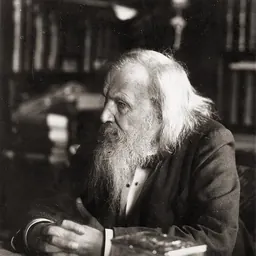
Named in this biography and alive at the same time

Related people
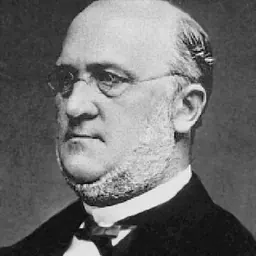
Same field, nearest in time

Contemporaries
People whose lives overlapped Nikolai Menshutkin's
Frequently asked questions
Who was Nikolai Menshutkin?
Russian chemist (1842-1907)
When was Nikolai Menshutkin born?
Nikolai Menshutkin was born on 24 October 1842 in Saint Petersburg.
When did Nikolai Menshutkin die?
Nikolai Menshutkin died on 5 February 1907 in Saint Petersburg.
What was Nikolai Menshutkin's occupation?
Nikolai Menshutkin was a chemist, inventor and university teacher.
What was Nikolai Menshutkin known for?
Nikolai Menshutkin was known for Menshutkin reaction.
What nationality was Nikolai Menshutkin?
Nikolai Menshutkin was Russian.
Sources & further reading
· Wikipedia: Nikolai Menshutkin
Cite this page
APA: Biography.guide. (2026). Nikolai Menshutkin. https://biography.guide/nikolai-menshutkin/
MLA: "Nikolai Menshutkin." Biography.guide, https://biography.guide/nikolai-menshutkin/.
Chicago: "Nikolai Menshutkin." Biography.guide. https://biography.guide/nikolai-menshutkin/.
Data last updated: 2026-09-21 · Spot an error? Report a correction.
Portrait: Wikimedia Commons · author & licence
Page generated 2026-09-27 05:00 UTC