
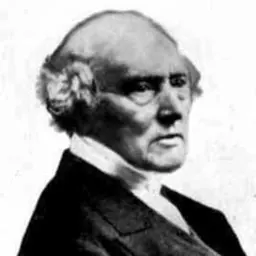
Nikodim Milaš
Serbian expert on church law
About Nikodim Milaš
Lived 1845 – 1915 (aged 69). Nikodim Milaš was a Croatian eastern Orthodox priest, church historian and bishop.
(; born , ; 16 April 1845 – 2 April 1915), also known as Nicodemus of Dalmatia was a Serbian Orthodox bishop, theologian, university professor and academic. He was a writer, one of the most respected experts on Eastern Orthodox canon law, and less on church history. As a canon lawyer in Dalmatia, he defended the Serbian Orthodox Church against the state and he is regarded as the founder of canon law amongst the Serbs.
was a polyglot, fluently speaking eight languages. He authored a large number of books. His major work is Orthodox Church and Canon Law in six volumes. He also wrote Orthodox Dalmatia (1901), which was criticized and received a mixed critical reception. Over the course of more than 40 years of scientific work, Milaš's bibliography includes more than 180 works. In some of his historiographical writings, he portrayed the Eastern and Western Churches in a simplistic manner and fabricated certain historical statements about the history of the Eastern Orthodox Church, which was used during the rise of Serbian nationalism and the Yugoslav breakup. Beyond his work in canonical and ecclesiastical law, he was dedicated to countering Roman Catholic proselytism and Austro-Hungarian efforts to downplay Serbian Orthodox heritage. He was one of the founders of the Serb People's Party in Dalmatia and served in the Diet of Dalmatia from 1889 to 1901.
For his work, he was awarded five state orders, elected a member of several scientific academies and societies, and included amongst The 100 most prominent Serbs. The Serbian Orthodox Church canonised him as a saint in 2025, ranking him as a hieroconfessor.
Biography Early life His family hailed from Duvno and settled in Dalmatia at the end of the 17th century. His mother was a seamstress and his father engaged in small-scale trade. She married his father on 14 July 1851 in an Orthodox church. As a successful student, he skipped a grade in school received two scholarships. In his fourth year he published his first scientific work, which received positive reviews. He wrote his dissertation on the topic of Nomocanon of Patriarch Photius. and graduated as an outstanding student, He spoke very positively of his studies in Russia and even considered staying there but he abandoned that idea after learning of his father's death. His public proclamations caused him further enmity amongst Croats, and he recalled in his memoirs, amongst many Serbs.
Because of his fluency in German, French, Italian, Russian, English, as well as Greek and Latin, he was able to read primary sources and contribute to the field of history. He advocated for the Serbian language in secondary schools, organised and helped educational and humanitarian foundations, and engaged in missionary work fostering Orthodoxy and Serbian identity in Dalmatia. He also directed fiery passion at what he saw as proselytisation by the Roman Catholic Church's high priesthood. published a monograph "Sts. Cyril and Methodius and the Truth of Orthodoxy". In this work, he contrasts the popes of Rome with the missionary brothers Cyril and Methodius, emphasising their importance for Orthodoxy and describing them as "great warriors of Orthodoxy ... in the battle against the enemies of Orthodoxy".
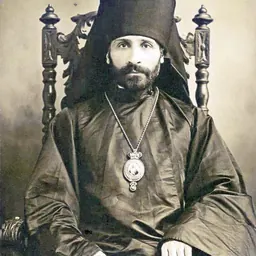
Undated portrait of wearing the vestments of a bishop, the cross he received upon being proclaimed Master of canon law, as well as several medals, including the Order of St. Sava (left medal)
In 1886 he went on to be rector of the Belgrade Seminary in the Kingdom of Serbia. The overall condition of the Seminary was poor, and Milaš took actions to improve the students’ living conditions and the overall discipline within the institution. As rector, he publicly advocated for importance of classical education among priests and all citizens of Serbia. His address on Saint Sava's Day (1887) on this subject provoked public debates and disputes concerning the significance of classical education. As rector of the Seminary, he was a regular member of the Main Educational Council of Serbian Kingdom, which decided on educational matters within its jurisdiction. In Belgrade, amidst an ongoing political conflict, he was accused by the liberal party of being an agent of the Vatican, which caused him distress. He withdrew from politics by 1903 after a period of party strife. With the ongoing Croat-Serb Coalition (1905), refused to participate in the Resolution (14 November 1905), possibly due to his rising unwelcoming attitude towards Croats, as expressed in Orthodox Dalmatia a few years prior.
He founded the newspapers Primorski srpski list (1903) and Novi srpski list published for a short period.
Under pressure from civil authorities and other affairs, forcibly retired from the position of Bishop of Dalmatia in early 1912. A state investigation confirmed that bishop was responsible for the embezzlement In the Serbian public and media the scandal was perceived as a significant disappointment and disgrace. He wrote an Autobiography based on his extensive manuscript legacy, and published in 1983 and 2005. It is preserved in the Archive of the Serbian Academy of Sciences and Arts. He stated that he wrote the autobiographical work because of numerous jealous individuals with whom he had difficulties during his life, and whom he believed would attempt to tarnish his reputation after his death. Milaš's work is considered among the more significant and richer autobiographical writings done by church figures of that period.
In 1914 Austria-Hungary declared war against Serbia. was sick and in a hospital in Rogaška Slatina, Styria. During this time, the police searched his apartment and took possession of some of his private correspondences and latest work . He was subsequently buried there. He critiqued Vatican policies and refuted Pope Leo XIII's encyclical . Milaš's works in church history largely have an apologetic character. They were written to defend the position of Orthodox Serbs in Dalmatia and to counter Roman Catholic claims about the "newcomers — Eastern schismatics". His professor and academic role model was the historian, academic, and priest . His approach sometimes distanced him from the historical-critical principles of Ilarion Ruvarac, with whom, as well as with his brother Dimitrije Ruvarac, he maintained correspondence. Although he did not fully belong to Ruvarac's critical school, he was much closer to it than to the "romantics" led by Panta Srećković. His work can be seen as positioned between these two currents.
Contemporaries described Milaš as exceptionally hardworking and committed, working on his writing between 10 and 14 hours every day.
Legacy
In contemporary historiography, he is regarded amongst the Serbs as the founder of canon law. He was one of the most respected experts and authorities on Eastern Orthodox canonical and ecclesiastical law. Moreover, some authors consider him the leading church canonist in recent history and regard some of his works as definitive on the subject. his works continues to be influential and relevant. He produced a number of collections of canonical texts and was particularly interested in the churches of North Africa in the Roman period. He was largely active on the matter of Church-State relations, a subject which preoccupied most of his work. Most of his work was translated into Russian, German, Romanian, Bulgarian and Greek, and has greatly influenced modern Orthodox canonists.
s correspondence was highly significant. He corresponded with leading church historians and theologians from both East and the West, According to Croatian historian Stjepan Antoljak, it is "" written, and "the goal of this book was clear and full of unverified claims and fabrications, which even today are not fully noticed and not pointed out, and not completely refuted",
Due to his relation to the Serbian romantic nationalist ideology of the 19th and early 20th century, in the work claimed, fabricated and invented a number of factual inaccuracies about the history of Dalmatia, pre-Ottoman presence of Serbs, and foundation of Serb Orthodox monasteries and churches in Dalmatia, which influenced Serbian national historiography and nationalist sentiment. His work was inspired and guided by an idea of continuous intolerance towards Serb Orthodoxy in Dalmatia, was highly critical and made heavy accusations against the pope and Roman church. He promoted a black-and-white thinking, arguing that everything related to Orthodoxy and Serbs is positive, in comparison to Catholicism and Croats that are negative.
The book was reprinted in 1989 in Belgrade, receiving praise from a Serbian editor and coinciding with the period when nationalism, including Serbian nationalism, was rising in a lead up to the breakup of Yugoslavia. Croatian church historians and have contended that the re-printing of such ideas was used as argument and justification for Serbian politics during the Yugoslav Wars. Danish historian Emil Hilton Saggau notes how his work echoed the "many classic Serbian historical arguments used during the war in Croatia and Bosnia".
Honours and awards was an honorary member of the Moscow Theological Academy, Saint Petersburg Theological Academy, the Bulgarian Slavic Charitable Society in Sofia, corresponding member of the Serbian Academy of Sciences and Arts (SANU), member of the Society for recent history of Austria in Vienna, the Society of Philologists in Athens, , , the Serb Archaeological Society and the Society of Saint Sava in Belgrade. In 1994, a bust of Milaš was erected at the source of the Cetina river, but it was damaged during the war in Croatia in 1995.
Sainthood In 2012, he was locally glorified as a saint by the Eparchy of Dalmatia of the Serbian Orthodox Church. He was canonised by the Serbian Orthodox Church with the feast day being 21 September and 12 October.
Selected works
Historical-Canonical view on establishment of Serbo-Romanian Metropolis of Bukovina and Dalmatia (1873) Clerical dignities in the Orthodox Church (1879) Slavic Apostles Ss. Cyril and Methodius (1881) (1881) St. Sava's Kormchya Book (1884) Roman Catholic Propaganda, its foundation and rules today (1889; translated in Russian 1889, and in Bulgarian 1890) Question of Eastern Church and task of Austria in it (1889; 1890 translated in Romanian and German) Orthodox Church and Canon Law in six volumes (first edition 1890; second revised edition 1890, translated in Russian 1897, in German 1897, in Bulgarian 1903) Rules (Κανόνες) of Orthodox Church with commentary (I 1895, II 1896) (I, 1899) (; 1901) (; 1901) Crkveno kazneno pravo, Mostar (1911) Bezbračnost episkopa (1920) Ikonomija u crkvenom pravu (1924)
Don’t just read it —
keep it.
Full-length biographies made to live with: read them, listen on the way to work, watch them tonight.
- E-book
- Audio
- Video
Instant download · yours to keep · every purchase keeps this site free
Important facts
People in Nikodim Milaš's life
Named in this biography and alive at the same time

Related people
Same field, nearest in time


Contemporaries
People whose lives overlapped Nikodim Milaš's


Frequently asked questions
Who was Nikodim Milaš?
Serbian expert on church law (1845–1915)
When was Nikodim Milaš born?
Nikodim Milaš was born on 4 April 1845 in Šibenik.
When did Nikodim Milaš die?
Nikodim Milaš died on 20 March 1915 in Dubrovnik.
What was Nikodim Milaš's occupation?
Nikodim Milaš was an eastern Orthodox priest, church historian and bishop.
What nationality was Nikodim Milaš?
Nikodim Milaš was Croatian.
Sources & further reading
Cite this page
APA: Biography.guide. (2026). Nikodim Milaš. https://biography.guide/nikodim-milas/
MLA: "Nikodim Milaš." Biography.guide, https://biography.guide/nikodim-milas/.
Chicago: "Nikodim Milaš." Biography.guide. https://biography.guide/nikodim-milas/.
Data last updated: 2026-09-22 · Spot an error? Report a correction.
Page generated 2026-09-27 05:23 UTC