
About Nikita Dhawan
Born 1972. Nikita Dhawan is an Indian professor and political scientist.
Nikita Dhawan (born 1972) is an Indian political scientist, author, and academic. She is the professor of political theory and history of ideas at TU Dresden, Germany, as well as the chair of political science. Her research interests are in the areas of global justice, human rights, democracy and decolonization.
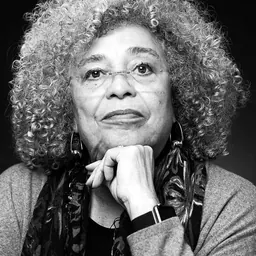
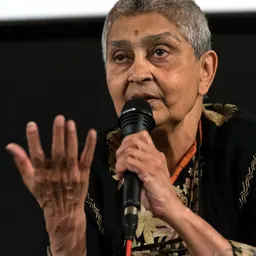
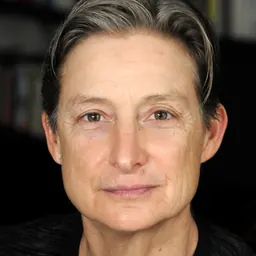
Early life and education Dhawan was born in 1972 in Thane, Mumbai, India. She was named after Nikita Khrushchev. She studied philosophy and German studies at the University of Mumbai, as well as gender studies at the Research Centre for Women's Studies, Shreemati Nathibai Damodar Thackersey (SNDT) Women's University. She completed her PhD in philosophy from Ruhr University Bochum, Germany in 2006. In collaboration with fellow-political scientist María do Mar Castro Varela, she wrote the first critical introduction to postcolonial theory to "analyze the different levels of colonial encounters in textual, figurative, spatial, historical, political and economic perspectives." FRCPS was equipped with its own library, invited international scholars such as Gayatri Chakravorty Spivak, Judith Butler and Angela Davis for expert-led discussions, and offered courses beyond the mainstream. She also served as the principal investigator of the Cluster of Excellence "The Formation of Normative Orders" (known as Research Centre Normative Orders today), a research network funded by German Research Foundation as part of the Excellence Initiative of the German federal and state governments. In addition, she was a member of the board of directors of the Cornelia Goethe Center for Women's Studies and the Study of Gender Relations.
When she received an offer to join University of Innsbruck, Austria, she attempted to negotiate a permanent position at University of Frankfurt. Despite receiving support from Cluster of Excellence, the Department of Social Sciences and the Student Council, the university did not retain her. In a statement released by the Presidium, the university confirmed that Dhawan had been "presented with an offer within the framework of university possibilities" and losing an "excellent scientist" was regrettable. Rainer Forst, professor of political theory and spokesperson of the Cluster of Excellence credited her for building "an internationally visible research center" and initiating a "very fruitful" dialogue between the critical and the postcolonial theory. The Student Council criticized the university's decision, accusing the Presidium of ignoring and overlooking the department's interests. Between 2018 and 2021, Dhawan was the professor of political science with a focus on gender studies the University of Giessen, Germany.
Dhawan has been a visiting scholar at the Indian Institute of Technology (IIT), Bombay, (2019–2020) Universidad de Costa Rica, Costa Rica (2013), Institute for International Law and the Humanities, University of Melbourne, Australia (2013), University of California, Berkeley (2012),University of La Laguna, Spain (2011), Pusan National University, South Korea (2011), University of Kassel, Germany (2011), University of Witwatersrand, South Africa (2010) and Columbia University, New York (2008).
Social movements as producers and reinforcers of hegemonic relationships While transnational social movements advocate for civil rights implementation and improvement, Dhawan argues that such movements are often embedded within existing structures of global inequality and unequal power distributions." Although social movements may be perceived as a "public manifestation of people's power that can reclaim democracy," Dhawan warns that "in reality, civil society does not always live up to its emancipatory self-image." She calls for a close examination of relationships "between those that provide help and those that receive help" within and around such movements, given that "cosmopolitan compassion" actively reinforces and "reproduces neoliberal structures of social inequality" leading to the "marginalization of specific groups and societies."
Dhawan is of the opinion that the prevailing queerphobia in diasporic and postcolonial contexts is a direct consequence of and a reaction to Western imperialism and racism. She recommends that anti-imperialist and anti-racist critique should accompany the critique of heteronormative structures in a post colonial contexts. According to her, "homonationalism is based on a unidimensional understanding of power and violence" and by focusing predominantly on the power and violence that floats from Western liberal states to the Global South, Puar ignores or overlooks the power and violence that queer people experience in the global south. Dhawan argues that "power and violence are deeply entangled and flow from multiple sources." She uses the example of migration to further support her argument: Queer migrants, in addition to the queerphobia and heteronormative assumptions within their own communities, struggle with the "racialized, classed, orientalist, and heterosexist attitudes and practices" in the country they have migrated to. This relates to her widespread criticism of "state phobia" wherein she argues that Puar does not critique the state and actively dismisses state involvement thereby rendering instances of queer negotiation with the state as homonationalism. Dhawan believes that while the state is responsible for perpetuating hetero- and homonormative structures, it can "play a prominent role in protecting queer people."
Awards and recognition Dhawan is the recipient of the 2017 Käthe Leichter Prize for her achievements in the field of gender studies and in support of the women's movement and the achievement of gender equality.
Selected publications
Books
Cooper, Davina; Dhawan, Nikita; Newman, Janet (2020). Reimagining the state: theoretical challenges and transformative possibilities. Social justice. Abingdon, Oxon: Routledge, Taylor & Francis Group. . Dhawan, Nikita, ed. (2014). Decolonizing enlightenment: transnational justice, human rights and democracy in a postcolonial world. Politik und Geschlecht. Opladen: Barbara Budrich. .
Journal articles
Dhawan, Nikita. 2021. "The Death of Leviathan: Feminist Dilemmas and State Phobia". Social Politics: International Studies in Gender, State & Society. 28 (3): 682–703. . Dhawan, Nikita. 2018. "Marxist Critique of Post-Colonialism". Krisis | Journal for Contemporary Philosophy 38 (2): 105–7. Dhawan, Nikita. 2017. Can Non‐Europeans Philosophize? Transnational Literacy and Planetary Ethics in a Global Age. Hypatia, 32(3), 488–505. Dhawan, Nikita; Varela, Maria do Mar Castro. 2018. "What difference does difference make?: Diversity, intersectionality and transnational feminist politics". Tijdschrift voor Genderstudies. 21 (1): 45–67. .
Don’t just read it —
keep it.
Full-length biographies made to live with: read them, listen on the way to work, watch them tonight.
- E-book
- Audio
- Video
Instant download · yours to keep · every purchase keeps this site free
Important facts
People in Nikita Dhawan's life
Named in this biography and alive at the same time

Related people
Same field, nearest in time




Contemporaries
People whose lives overlapped Nikita Dhawan's


Frequently asked questions
Who is Nikita Dhawan?
Indian professor
When was Nikita Dhawan born?
Nikita Dhawan was born in 1972 in Thane.
What is Nikita Dhawan's occupation?
Nikita Dhawan is a professor and political scientist.
What nationality is Nikita Dhawan?
Nikita Dhawan is Indian.
Sources & further reading
Cite this page
APA: Biography.guide. (2026). Nikita Dhawan. https://biography.guide/nikita-dhawan/
MLA: "Nikita Dhawan." Biography.guide, https://biography.guide/nikita-dhawan/.
Chicago: "Nikita Dhawan." Biography.guide. https://biography.guide/nikita-dhawan/.
Data last updated: 2026-09-20 · Spot an error? Report a correction.
Page generated 2026-09-27 05:27 UTC