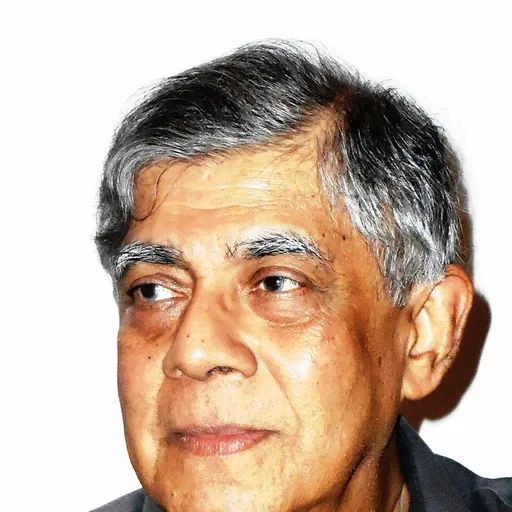
About Nihal Jayawickrama
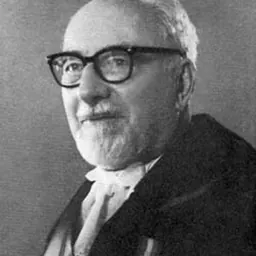
Born 1937. Nihal Jayawickrama is a lawyer, jurist, legal counselor and university teacher.
Nihal Mahendra Sudrikku Jayawickrama (born 1937) is a Sri Lankan academic. He was the former Permanent Secretary to the Ministry of Justice (1970–1977), Professor of Law at University of Hong Kong (1984–1997), Ariel F Sallows Professor of Human Rights at the University of Saskatchewan, Canada (1992–1993), and executive director of Transparency International (1997–2000). He is now an independent legal consultant, and has been the Coordinator of the UN-sponsored Judicial Integrity Group since 2000.
Early life and education Nihal Jayawickrama was born to a family of lawyers. His father, Alfred Sudrikku Jayawickrama, was a solicitor in the southern city of Galle, and belonged to a family that included several solicitors, advocates, queen's counsel, judges, and a minister of justice. His mother's elder brother, T.C.P.Fernando, was a district judge, while her younger brother, Justice T.S.Fernando QC was Solicitor General, Attorney General, Judge of the Supreme Court and President of the Court of Final Appeal.
Jayawickrama was educated at Richmond College, Galle and at the Royal College Colombo. Thereafter he entered the Law Faculty of the University of Ceylon, Peradeniya, from where he graduated in 1961. While in the university, he was actively involved in two student strikes: one over poor staff-student relations, and the other that sought acceptance of the principle of a fair and just inquiry before a student was punished.
He was called to the bar in 1962 after apprenticing in the chambers of A. H. C. de Silva, QC and C.Renganathan QC.
Legal career He commenced his practice under Dr Colvin R. de Silva, and also worked in the chambers of Vernon Wijetunge QC, R.A.Kannangara, and S.Ambalavanar. He practised in both original and appellate courts, and appeared in several cases of political significance at the time involving constitutional, administrative, election and human rights law. In 1968, he was elected to the Bar Council to represent the junior bar, and in 1969 was elected its honorary secretary. In his annual report for that year, he described the judicial system of Ceylon at the time as “an antique labyrinth with tortuous passages and cavities through which the potential litigant must grope, often blindfolded, in his search for justice”.
Jayawickrama was a founder member of the Ceylon Section of Amnesty International. Awarded a UNESCO Youth Leadership Grant in 1966, he studied the working of non-governmental organisations in western and eastern Europe, and was attached to the legal staff of the International Commission of Jurists, Geneva, then headed by secretary-general Sean MacBride. He was also the general secretary, and later president, of the UN Association of Ceylon, and vice-president of the World Federation of United Nations Associations, Geneva.
Government service In 1970, at the age of 32, following the general election of that year, he was appointed Permanent Secretary to the Ministry of Justice in the Government of Sirimavo Bandaranaike. He held that office for the next seven years, except for a short period as Attorney General. During his tenure, extensive reforms were implemented in the court structure and to simplify civil, criminal and appellate procedures. A unified legal profession was established by the fusion of advocates and proctors (solicitors). Conciliation boards were established in every judicial district. He played a major role in the establishment of a Criminal Justice Commission for the trial of over 16,000 persons who were arrested, or had surrendered, in the wake of the 1971 JVP Insurrection, and was then responsible for overseeing their rehabilitation and return to society.
Following the change of government in 1977, Jayawickrama resigned his office and left for London where he was appointed a Research Fellow at King's College, University of London. In 1978, while on a visit to Sri Lanka, his passport was impounded and proceedings against him were commenced before the Special Presidential Commission of Inquiry appointed by the new government to investigate the alleged abuse and/or misuse of power by the previous government. Among the 45 charges laid against him were that he promoted the concept of "barefoot lawyers" ("thereby undermining the legal profession"), instituted an annual public dialogue between the executive and the judiciary in the form of a "judges' conference" ("thereby undermining the independence of the judiciary"), and refused to authorise solitary confinement for remand prisoners when requested to do so by the CID ("thereby interfering with criminal investigations"). After a seven-month inquiry at which he was defended by S.Nadesan, QC with J.C.T. Kotelawela and Faiz Mustapha, he was found guilty on most charges, and in 1980 after a two-day debate, Parliament imposed "civic disabilities" on him. Accordingly, he was prohibited from seeking election to parliament, holding public office or making political speeches for seven years. In the same year, after two other short inquiries, civic disabilities were similarly imposed on the Leader of the Opposition, Sirimavo Bandaranaike, and the leading opposition politician, Felix R. Dias Bandaranaike. In 1986, all three received unsolicited free pardons from the president.
Academic career During his academic life, Jayawickrama researched the international law of human rights under Professor James Fawcett, President of the European Commission of Human Rights. His research was incorporated in Paul Sieghart's pioneering work, The International Law of Human Rights, published by Oxford University Press in 1983. In the same year, he was awarded the degree of Doctor of Philosophy by the University of London (School of Oriental and African Studies) for his research on the application of international human rights law. He regularly contributed a weekly column on current affairs to the Hong Kong Standard.
In 1992–93, he occupied, on invitation, the Ariel F Sallows Chair of Human Rights at University of Saskatchewan, Canada, an award made for "distinguished contribution to research in or practice of human rights".
Later work In October 1997, following his controversial and much publicised departure from the University of Hong Kong, Dr Jayawickrama was appointed executive director of Transparency International in Berlin. In 2000 he moved to the United Nations Centre for International Crime Prevention in London and worked as a Co-ordinator of the UN sponsored Judicial Integrity Group. He served as general counsel, and coordinated a programme on strengthening integrity systems in seven countries in Asia, Africa, Eastern Europe and Latin America.
He is a member of the Legal Advisory Board of the US-based Genetics Policy Institute, and was the Chair of the Trustees of the Commonwealth Human Rights Initiative, London. He presented the keynote paper on the impact of corruption on human rights at the 2006 UN Conference on Good Governance and Human Rights in Warsaw, and was a member of the advisory group on the project on Corruption and Human Rights of the International Council on Human Rights Policy, Geneva.
Family He married Sarojini Amarasuriya, the daughter of Senator Thomas Amarasuriya, President of the Senate, in 1965. Sarojini is the author of 'Writing that Conquers – Re-reading Robert Knox, 'An Historical Relation of the Island Ceylon' (Colombo, Social Scientists Association, 2004). They have two daughters. Their elder daughter, Nishana Jayawickrama, who is married to Antony Jackson, is Adviser and Head, Asia and Europe, in the Political Affairs Division of the Commonwealth Secretariat, London. Their younger daughter, Sharanya Jayawickrama, who was married to Barry Crosbie, was an assistant professor at Hong Kong Shue Yan University until her death in September, 2019.
Don’t just read it —
keep it.
Full-length biographies made to live with: read them, listen on the way to work, watch them tonight.
- E-book
- Audio
- Video
Instant download · yours to keep · every purchase keeps this site free
Important facts
People in Nihal Jayawickrama's life
Named in this biography and alive at the same time



Related people
Same field, nearest in time


Contemporaries
People whose lives overlapped Nihal Jayawickrama's



Frequently asked questions
Who is Nihal Jayawickrama?
Law professor
When was Nihal Jayawickrama born?
Nihal Jayawickrama was born in 1937.
What is Nihal Jayawickrama's occupation?
Nihal Jayawickrama is a lawyer, jurist, legal counselor and university teacher.
Sources & further reading
· Wikipedia: Nihal Jayawickrama
Cite this page
APA: Biography.guide. (2026). Nihal Jayawickrama. https://biography.guide/nihal-jayawickrama/
MLA: "Nihal Jayawickrama." Biography.guide, https://biography.guide/nihal-jayawickrama/.
Chicago: "Nihal Jayawickrama." Biography.guide. https://biography.guide/nihal-jayawickrama/.
Data last updated: 2026-09-22 · Spot an error? Report a correction.
Portrait: Wikimedia Commons · author & licence
Page generated 2026-09-27 05:04 UTC